Mulugeta Henok, Wagnew Fasil, Dessie Getenet, Biresaw Henok, Habtewold Tesfa Dejenie
1Lecturer of Nursing, Department of Nursing, College of Health Science, Debre Markos University, P.O. Box 269, Debre Markos, Ethiopia.
2Lecturer of Nursing, Department of Nursing, School of Health Science, College of Medicine and Health Science, Bahir Dar University, P.O. Box 79, Bahir Dar, Ethiopia.
BMC Nurs. 2019 Jul 8;18:27. doi: 10.1186/s12912-019-0348-9. eCollection 2019.
Patient satisfaction with nursing care has been considered as the most important predictor of the overall patient satisfaction with hospital service and quality of health care service at large. However, the national level of patient satisfaction with nursing care remains unknown in Ethiopia. Hence, the objective of this systematic review and meta-analysis was to estimate the level of patient satisfaction with nursing care and its associated factors in Ethiopia.
Studies were accessed through an electronic web-based search strategy from PubMed, Cochrane Library, Google Scholar, Embase, PsycINFO, and CINAHL by using a combination of search terms. The quality of each included article was assessed using a modified version of the Newcastle-Ottawa Scale for cross-sectional studies. All statistical analyses were done using STATA version 14 software for windows, and meta-analysis was carried out using a random-effects method. The Preferred Reporting Items for Systematic Reviews and Meta-Analyses (PRISMA) guideline was followed for reporting results.
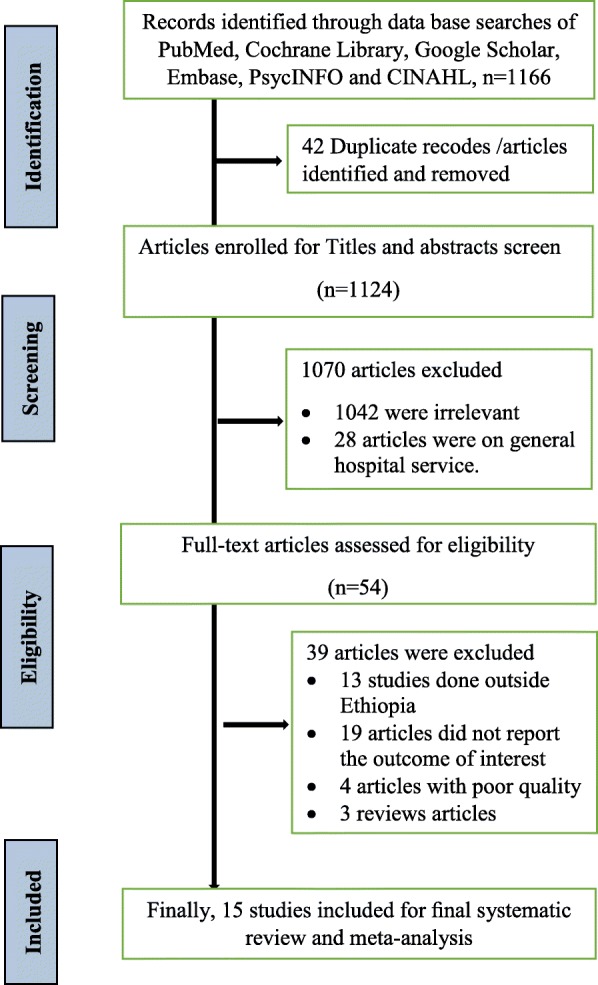
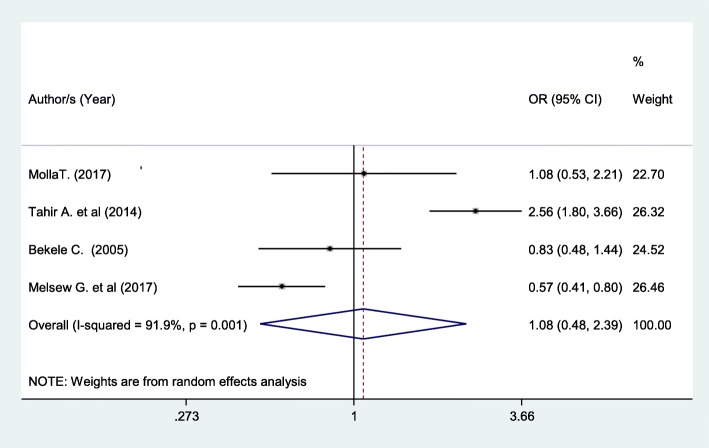
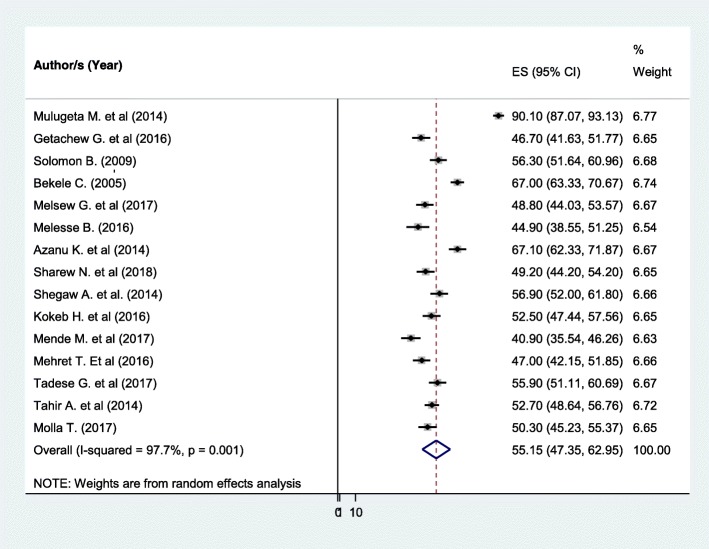
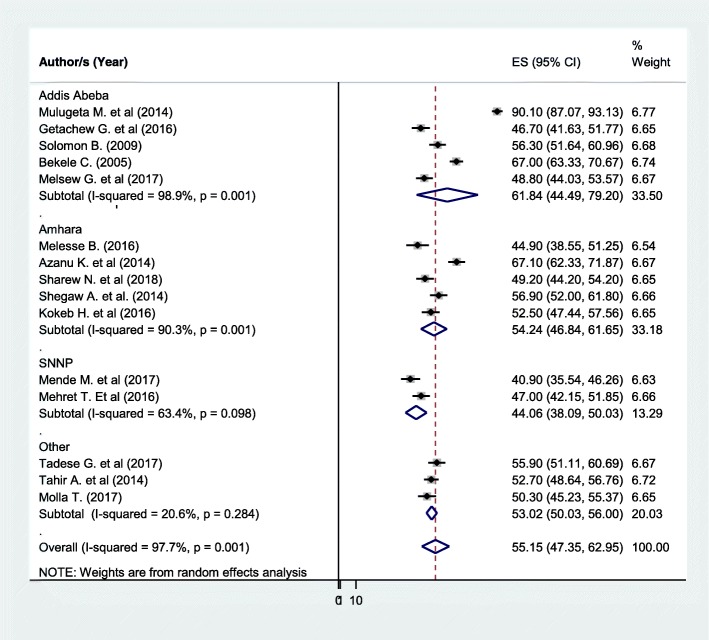
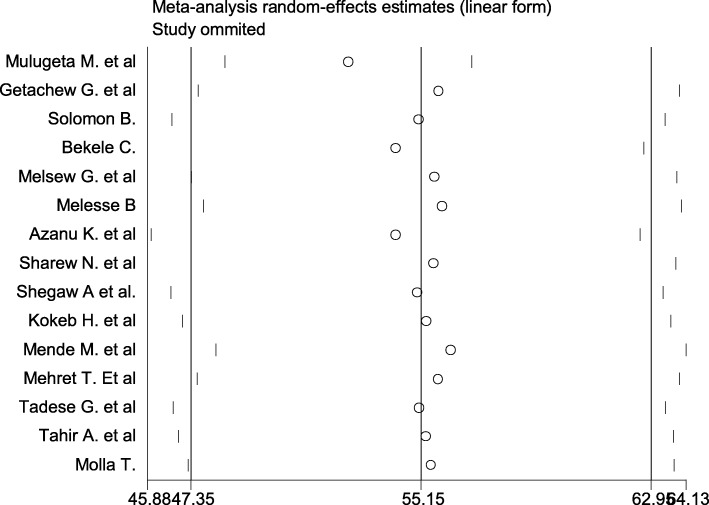
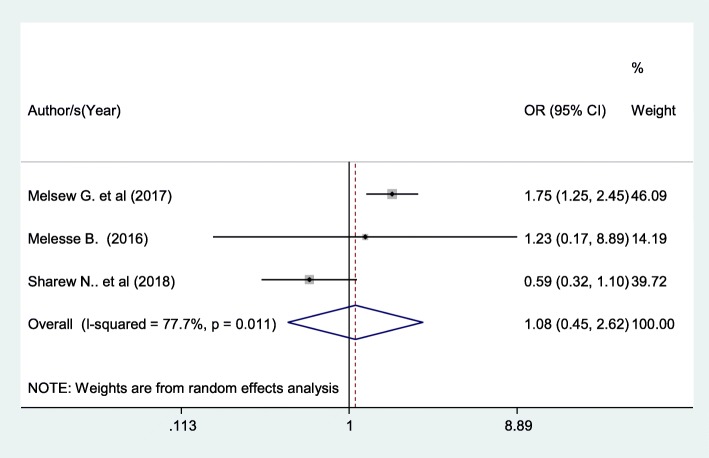
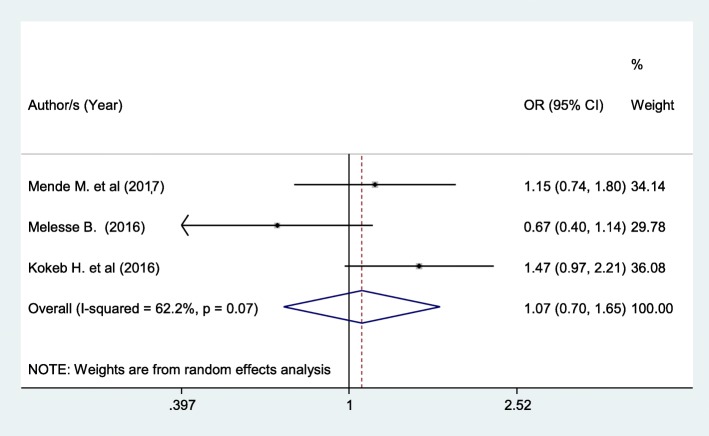
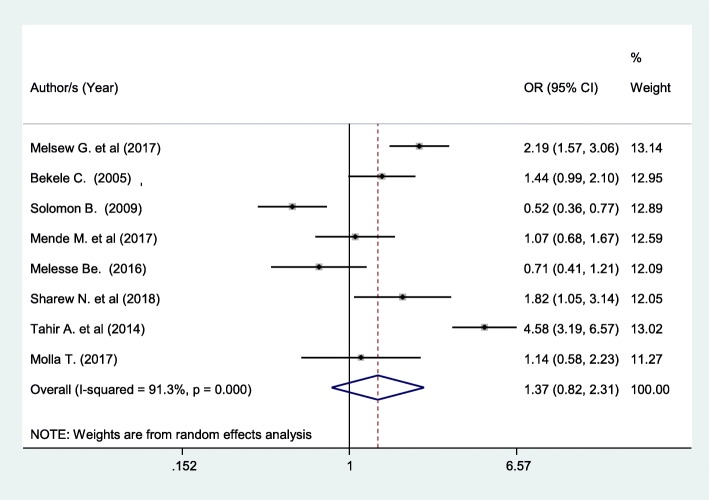
Of 1166 records screened, 15 studies with 6091 patients fulfilled the inclusion criteria and were included in the meta-analysis. The estimated pooled level of patient satisfaction with nursing care in Ethiopia was 55.15% (95% CI (47.35, 62.95)). Patients who have one nurse in charge (OR: 1.08, 95% CI: 0.45-2.62, I: 77.7%), with no history of previous hospitalization (OR: 1.37, 95% CI: 0.82-2.31, I: 91.3%), living in the urban area (OR: 1.07, 95% CI: 0.70-1.65, I: 62.2%), and those who have no comorbid disease (OR: 1.08, 95% CI: 0.48-2.39, I: 91.9%) were more likely to be satisfied with nursing care compared with their counterparts although it was not statistically significant.
About one in two patients were not satisfied with the nursing care provided in Ethiopia and may be attributed to several factors. Therefore, the Ministry of Health should give more emphasis to the quality of nursing care in order to increase patient satisfaction and improve the overall quality of healthcare service in Ethiopia.
患者对护理服务的满意度一直被视为患者对医院服务总体满意度以及整体医疗服务质量的最重要预测指标。然而,埃塞俄比亚全国范围内患者对护理服务的满意度水平尚不清楚。因此,本系统评价和荟萃分析的目的是评估埃塞俄比亚患者对护理服务的满意度水平及其相关因素。
通过基于网络的电子检索策略,使用搜索词组合从PubMed、Cochrane图书馆、谷歌学术、Embase、PsycINFO和CINAHL中检索研究。使用横断面研究的纽卡斯尔-渥太华量表的修订版评估每篇纳入文章的质量。所有统计分析均使用适用于Windows的STATA 14软件进行,荟萃分析采用随机效应方法。报告结果遵循系统评价和荟萃分析的首选报告项目(PRISMA)指南。
在筛选的1166条记录中,15项研究共6091例患者符合纳入标准并被纳入荟萃分析。埃塞俄比亚患者对护理服务满意度的估计合并水平为55.15%(95%可信区间(47.35, 62.95))。与对照组相比,由一名护士负责护理的患者(比值比:1.08,95%可信区间:0.45 - 2.62,I²:77.7%)、无既往住院史的患者(比值比:1.37,95%可信区间:0.82 - 2.31,I²:91.3%)、居住在城市地区的患者(比值比:1.07,95%可信区间:0.70 - 1.65,I²:62.2%)以及无合并症的患者(比值比:1.08,95%可信区间:0.48 - 2.39,I²:91.9%)更有可能对护理服务感到满意,尽管差异无统计学意义。
在埃塞俄比亚,约二分之一的患者对所提供的护理服务不满意,这可能归因于多种因素。因此,埃塞俄比亚卫生部应更加重视护理服务质量,以提高患者满意度并改善整体医疗服务质量。