Biomedical Physics, School of Physics and Astronomy, College of Engineering, Mathematics and Physical Sciences , University of Exeter , Exeter , EX4 4QL , United Kingdom.
Central Laser Facility, Research Complex at Harwell , STFC Rutherford Appleton Laboratory , Harwell Oxford , OX11 0QX , United Kingdom.
Anal Chem. 2019 Sep 3;91(17):10984-10987. doi: 10.1021/acs.analchem.9b01015. Epub 2019 Aug 12.
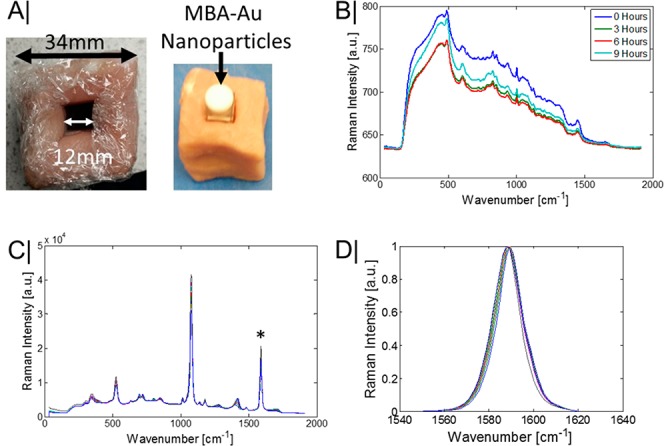
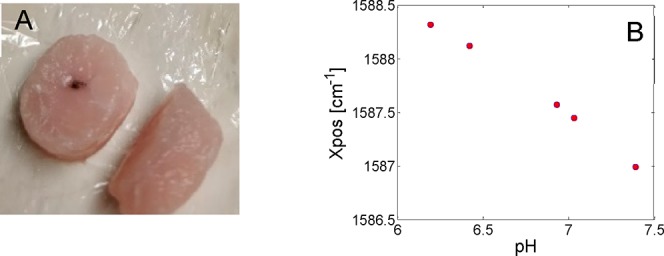
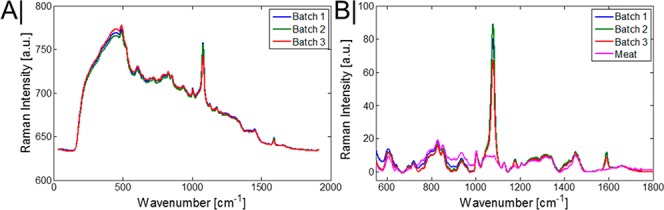
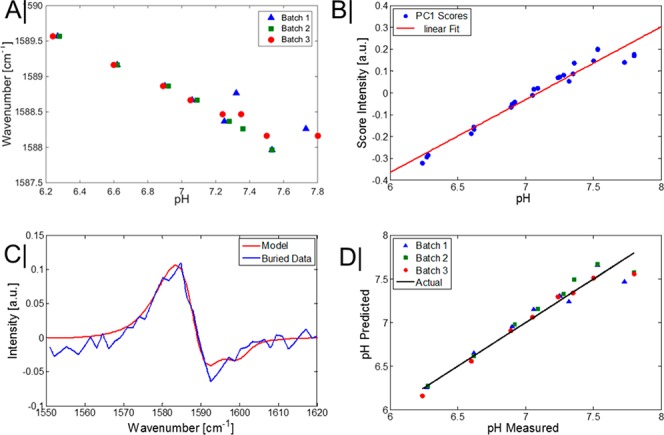
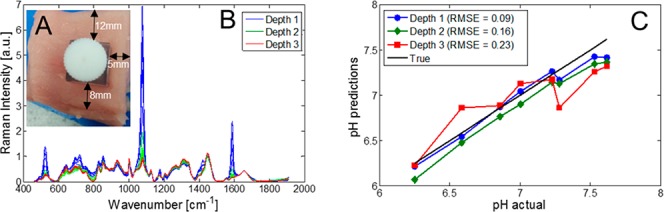
There is much interest in using nanosensors to monitor biologically relevant species such as glucose, or cellular pH, as these often become dysregulated in diseases such as cancer. This information is often inaccessible at depth in biological tissue, due to the highly scattering nature of tissue. Here we show that gold nanoparticles labeled with pH-sensitive reporter molecules can monitor pH at depth in biological tissues. This was achieved using deep Raman spectroscopy (spatially offset Raman and transmission Raman) in combination with surface-enhanced Raman spectroscopy, allowing chemical information to be retrieved significantly deeper than conventional Raman spectroscopy permits. Combining these approaches with chemometrics enabled pH changes to be monitored with an error of ±∼0.1 pH units noninvasively through 22 mm of soft tissue. This development opens the opportunity for the next generation of light-based medical diagnostic methods, such as monitoring of cancers, known to significantly alter pH levels.
人们非常关注使用纳米传感器来监测生物相关的物质,如葡萄糖或细胞 pH 值,因为这些物质在癌症等疾病中经常失调。由于组织的高度散射性质,这些信息在生物组织的深处往往无法获得。在这里,我们展示了用 pH 敏感报告分子标记的金纳米粒子可以在生物组织的深处监测 pH 值。这是通过使用深度 Raman 光谱(空间偏移 Raman 和透射 Raman)与表面增强 Raman 光谱相结合来实现的,允许比传统 Raman 光谱更深地获取化学信息。将这些方法与化学计量学相结合,使得能够在不侵入性地通过 22 毫米软组织监测 pH 值变化,误差约为±∼0.1 pH 单位。这一发展为下一代基于光的医疗诊断方法开辟了机会,例如监测癌症,众所周知,癌症会显著改变 pH 值水平。