Key Laboratory of Biomedical Polymers of Ministry of Education, Department of Chemistry, Wuhan University, Wuhan, 430072, P.R. China.
The Institute for Advanced Studies, Wuhan University, Wuhan, 430072, P.R. China.
Nat Commun. 2019 Jul 19;10(1):3199. doi: 10.1038/s41467-019-11157-1.
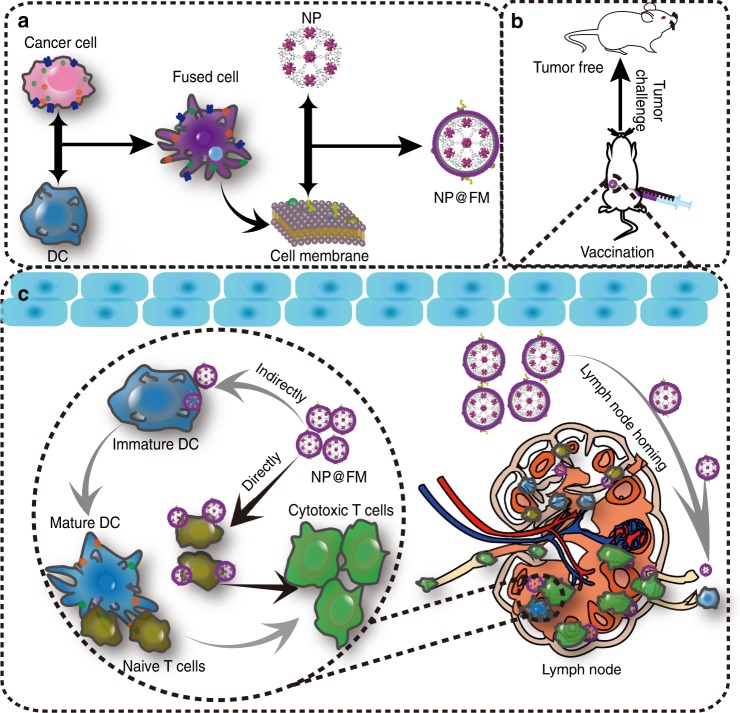
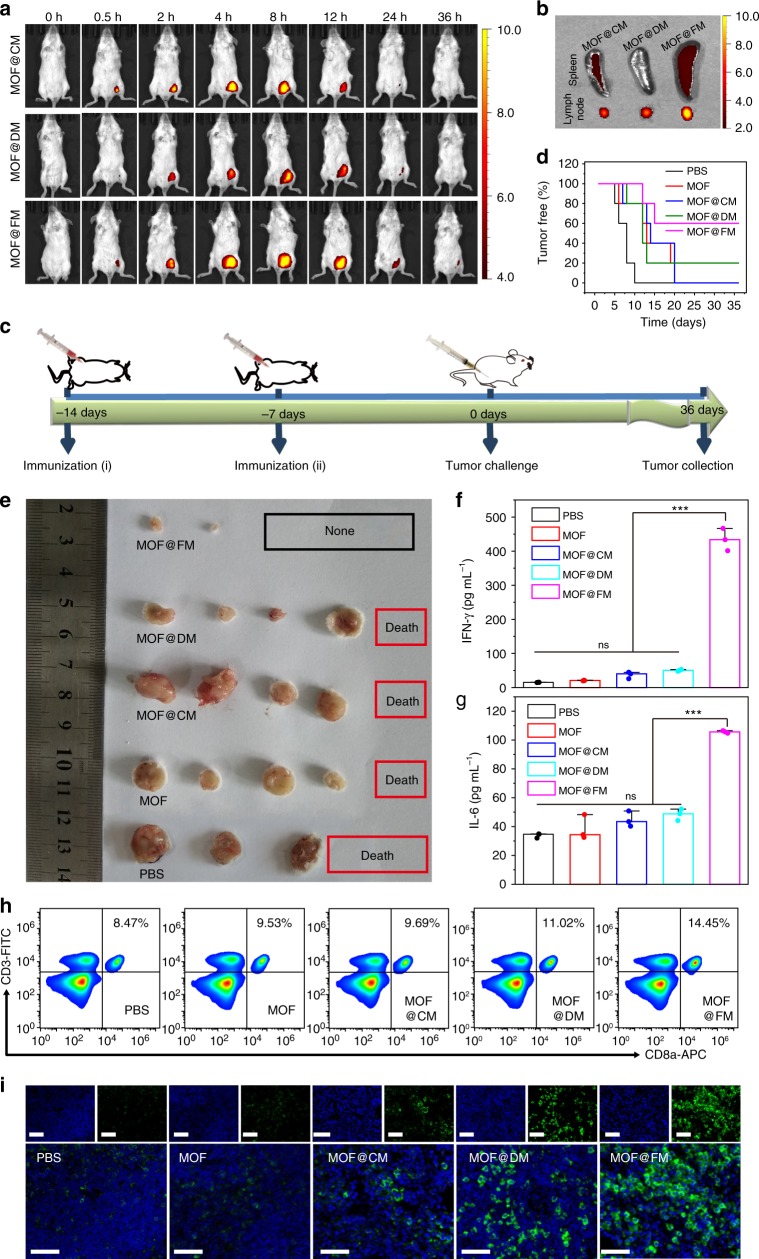
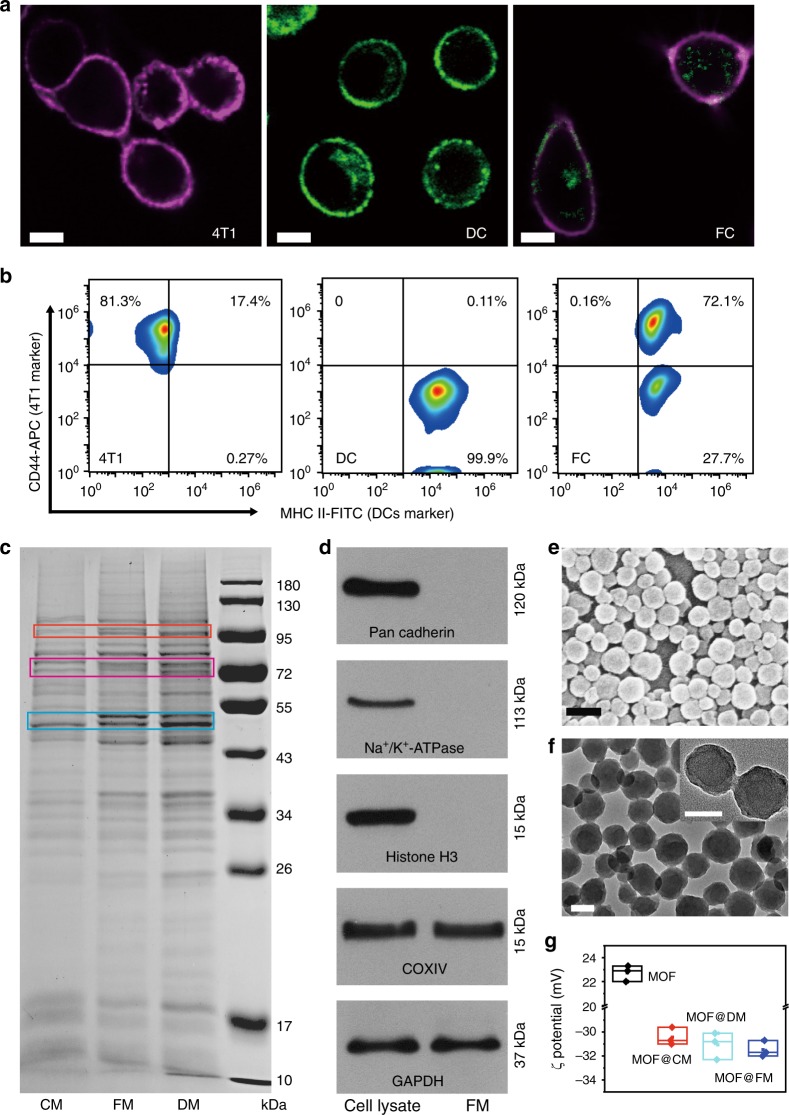
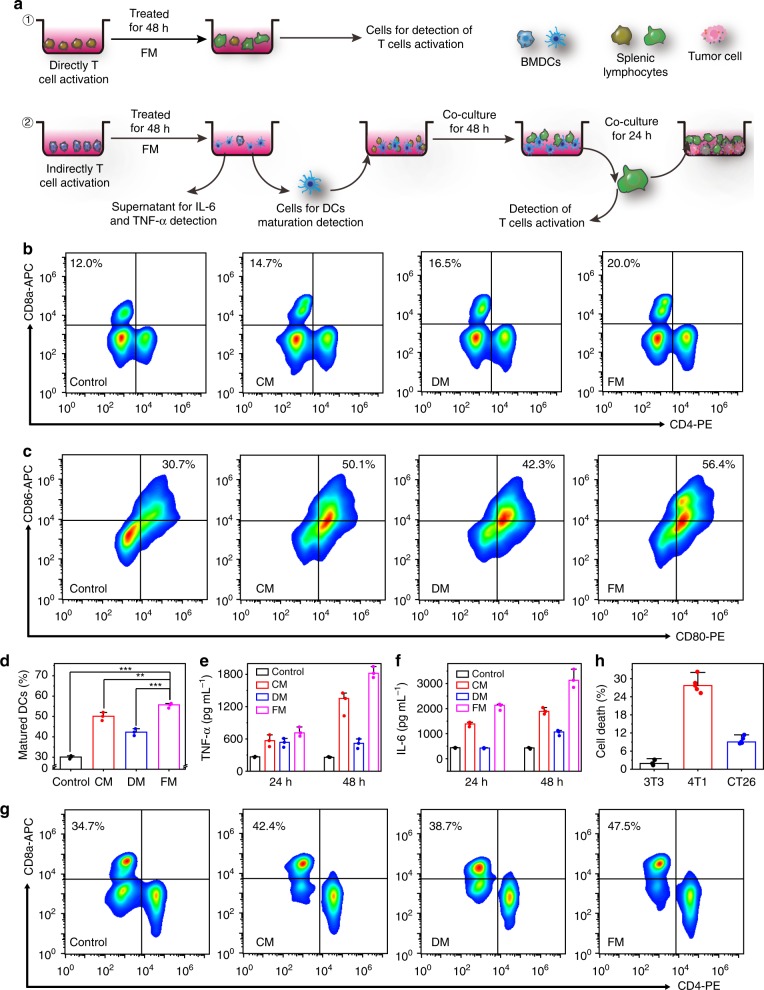
Most cancer vaccines are unsuccessful in eliciting clinically relevant effects. Without using exogenous antigens and adoptive cells, we show a concept of utilizing biologically reprogrammed cytomembranes of the fused cells (FCs) derived from dendritic cells (DCs) and cancer cells as tumor vaccines. The fusion of immunologically interrelated two types of cells results in strong expression of the whole tumor antigen complexes and the immunological co-stimulatory molecules on cytomembranes (FMs), allowing the nanoparticle-supported FM (NP@FM) to function like antigen presenting cells (APCs) for T cell immunoactivation. Moreover, tumor-antigen bearing NP@FM can be bio-recognized by DCs to induce DC-mediated T cell immunoactivation. The combination of these two immunoactivation pathways offers powerful antitumor immunoresponse. Through mimicking both APCs and cancer cells, this cytomembrane vaccine strategy can develop various vaccines toward multiple tumor types and provide chances for accommodating diverse functions originating from the supporters.
大多数癌症疫苗在引发临床相关效果方面都不成功。我们在不使用外源性抗原和过继细胞的情况下,提出了一种利用源自树突状细胞 (DC) 和癌细胞的融合细胞 (FC) 的生物重编程细胞外膜作为肿瘤疫苗的概念。两种免疫相关类型的细胞融合导致整个肿瘤抗原复合物和细胞膜上的免疫共刺激分子 (FM) 的强表达,使纳米颗粒支持的 FM (NP@FM) 能够像抗原呈递细胞 (APC) 一样发挥作用,以激活 T 细胞免疫。此外,带有肿瘤抗原的 NP@FM 可以被 DC 生物识别,从而诱导 DC 介导的 T 细胞免疫激活。这两种免疫激活途径的结合提供了强大的抗肿瘤免疫反应。通过模拟 APC 和癌细胞,这种细胞膜疫苗策略可以针对多种肿瘤类型开发各种疫苗,并为来自支持者的各种功能提供机会。