Graduate School of Pharmaceutical Sciences, Kyoto University, Sakyo-ku, Kyoto, 606-8501, Japan.
Sci Rep. 2019 Jul 19;9(1):10503. doi: 10.1038/s41598-019-46385-4.
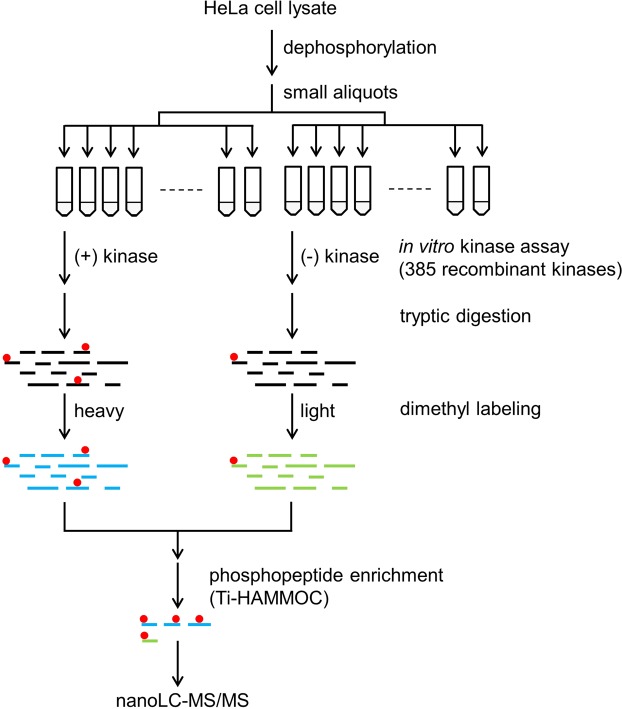
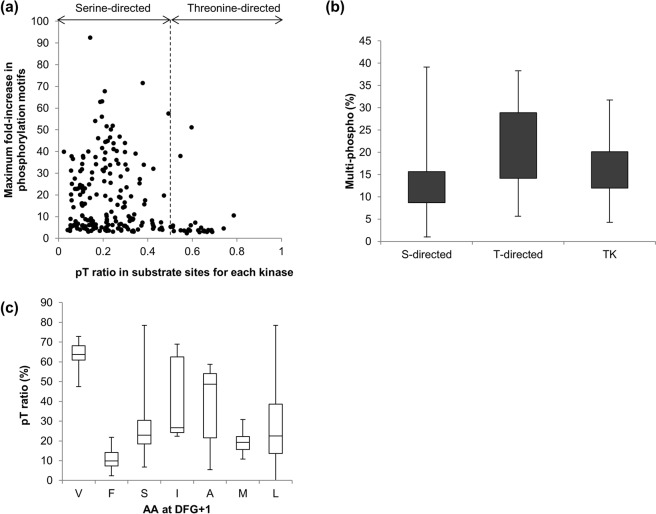
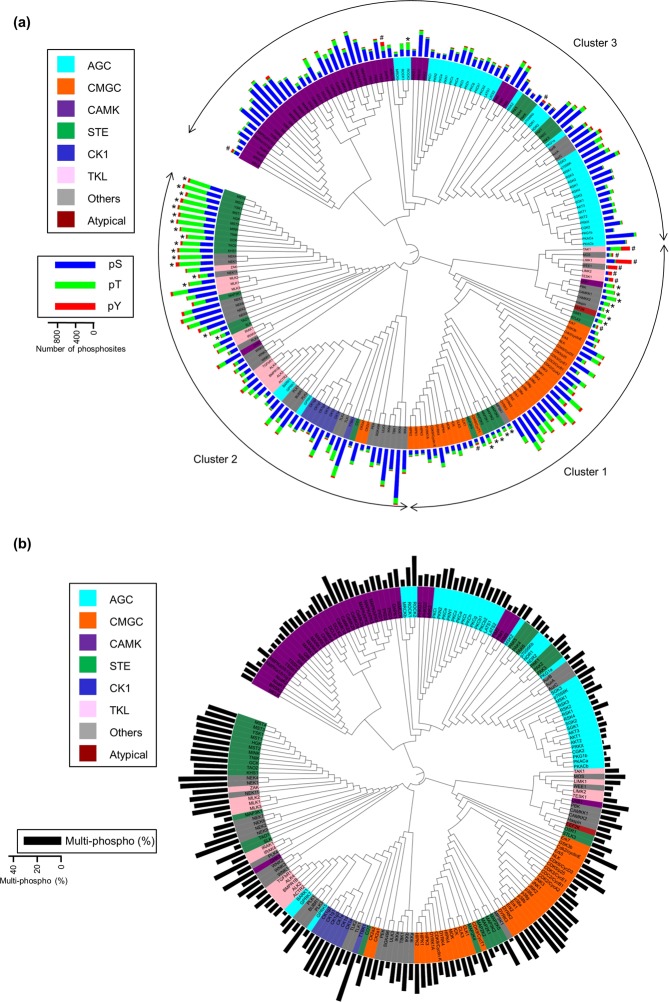
Kinase networks are important for cellular signal transduction. Despite tremendous efforts to uncover these signaling pathways, huge numbers of uncharacterized phosphosites still remain in the human proteome. Because of the transient nature of kinase-substrate interactions in vivo, it is almost impossible to identify direct substrates. Here, we present a strategy for the rapid, accurate and high-throughput discovery of in vitro kinase substrates using quantitative proteomics. Using 385 purified kinases (354 wild-type protein kinases, 21 mutants and 10 lipid kinases), we identified a total of 175,574 potential direct kinase substrates. In addition, we identified novel kinase groups, such as one group containing 30 threonine-directed kinases and another containing 15 serine/threonine/tyrosine kinases. Surprisingly, we observed that the diversity of substrates for tyrosine kinases was much higher than that for serine-threonine kinases.
激酶网络对于细胞信号转导非常重要。尽管人们付出了巨大的努力来揭示这些信号通路,但在人类蛋白质组中仍有大量未被描述的磷酸化位点。由于激酶-底物相互作用在体内的瞬时性质,几乎不可能直接鉴定出底物。在这里,我们提出了一种使用定量蛋白质组学快速、准确和高通量发现体外激酶底物的策略。使用 385 种纯化激酶(354 种野生型蛋白激酶、21 种突变体和 10 种脂质激酶),我们总共鉴定出了 175574 种潜在的直接激酶底物。此外,我们还鉴定出了新的激酶群,如一组包含 30 种苏氨酸定向激酶和另一组包含 15 种丝氨酸/苏氨酸/酪氨酸激酶。令人惊讶的是,我们观察到酪氨酸激酶的底物多样性远高于丝氨酸-苏氨酸激酶。