De Palma Fatima Domenica Elisa, D'Argenio Valeria, Pol Jonathan, Kroemer Guido, Maiuri Maria Chiara, Salvatore Francesco
CEINGE-Biotecnologie Avanzate s.c.ar.l., 80145 Naples, Italy.
Department of Molecular Medicine and Medical Biotechnologies, University of Naples Federico II, 80131 Naples, Italy.
Cancers (Basel). 2019 Jul 20;11(7):1017. doi: 10.3390/cancers11071017.
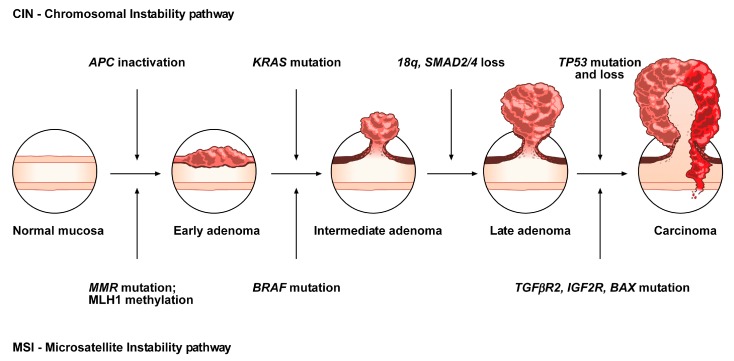
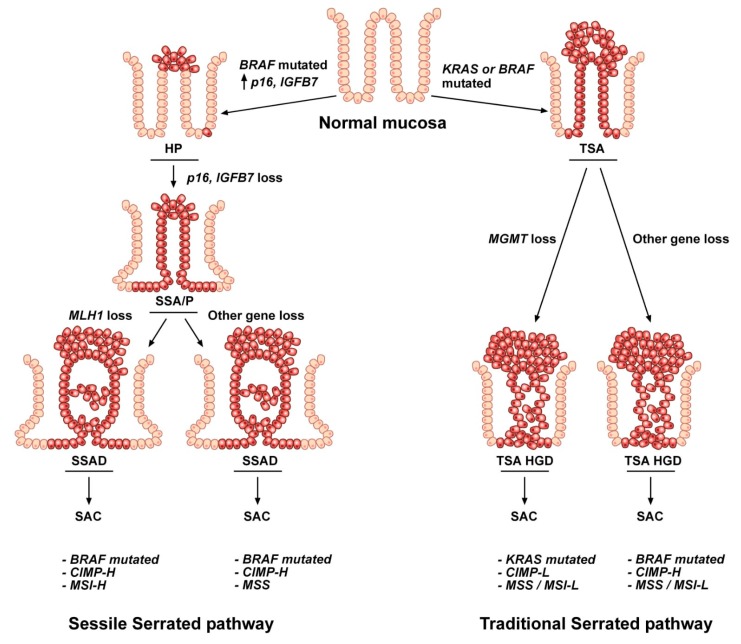
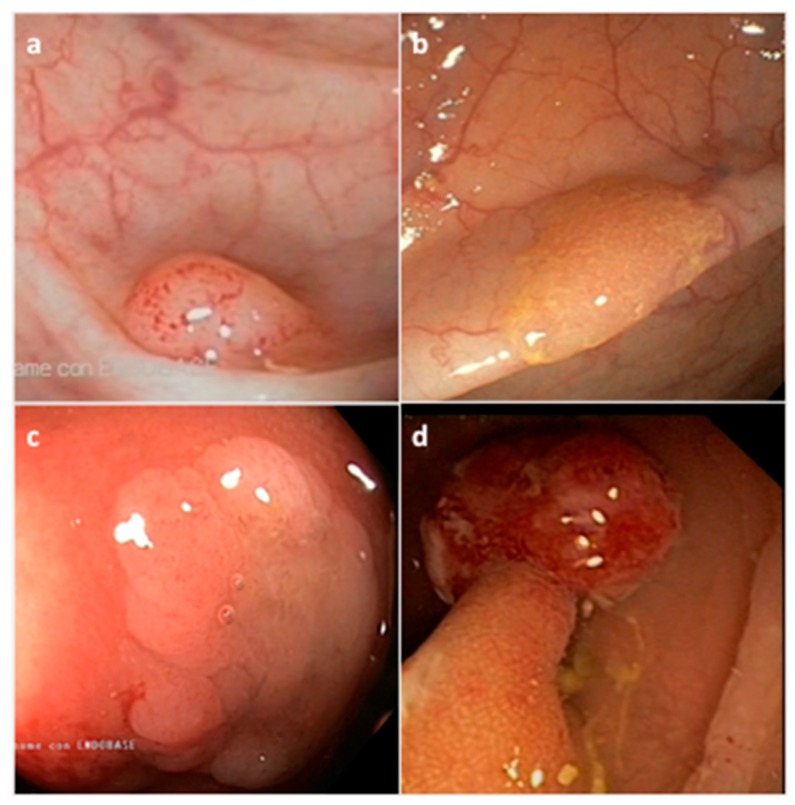
Colorectal cancer (CRC) is a leading cause of cancer death worldwide. It includes different subtypes that differ in their clinical and prognostic features. In the past decade, in addition to the conventional adenoma-carcinoma model, an alternative multistep mechanism of carcinogenesis, namely the "serrated pathway", has been described. Approximately, 15 to 30% of all CRCs arise from neoplastic serrated polyps, a heterogeneous group of lesions that are histologically classified into three morphologic categories: hyperplastic polyps, sessile serrated adenomas/polyps, and the traditional serrated adenomas/polyps. Serrated polyps are characterized by genetic ( or mutations) and epigenetic (CpG island methylator phenotype (CIMP)) alterations that cooperate to initiate and drive malignant transformation from normal colon mucosa to polyps, and then to CRC. The high heterogeneity of the serrated lesions renders their diagnostic and pathological interpretation difficult. Hence, novel genetic and epigenetic biomarkers are required for better classification and management of CRCs. To date, several molecular alterations have been associated with the serrated polyp-CRC sequence. In addition, the gut microbiota is emerging as a contributor to/modulator of the serrated pathway. This review summarizes the state of the art of the genetic, epigenetic and microbiota signatures associated with serrated CRCs, together with their clinical implications.
结直肠癌(CRC)是全球癌症死亡的主要原因之一。它包括不同的亚型,这些亚型在临床和预后特征上存在差异。在过去十年中,除了传统的腺瘤-癌模型外,还描述了一种替代的多步骤致癌机制,即“锯齿状途径”。大约15%至30%的结直肠癌起源于肿瘤性锯齿状息肉,这是一组异质性病变,在组织学上分为三种形态学类别:增生性息肉、无蒂锯齿状腺瘤/息肉和传统锯齿状腺瘤/息肉。锯齿状息肉的特征是基因(或突变)和表观遗传(CpG岛甲基化表型(CIMP))改变,这些改变共同作用,启动并推动从正常结肠黏膜到息肉,再到结直肠癌的恶性转化。锯齿状病变的高度异质性使其诊断和病理解读变得困难。因此,需要新的基因和表观遗传生物标志物来更好地对结直肠癌进行分类和管理。迄今为止,一些分子改变已与锯齿状息肉-结直肠癌序列相关联。此外,肠道微生物群正在成为锯齿状途径的一个促成因素/调节因子。本综述总结了与锯齿状结直肠癌相关的基因、表观遗传和微生物群特征的最新研究状况及其临床意义。