Department of Head and Neck Oncology, Phase I Clinical Trial Laboratory, Center for Interventional Medicine, Guangdong Provincial Key Laboratory of Biomedical Imaging, Guangdong Provincial Engineering Research Center of Molecular Imaging, The Cancer Center of the Fifth Affiliated Hospital of Sun Yat-Sen University, Zhuhai 519000, China.
Department of Radiation Oncology, The University of Texas Southwestern Medical Center, Dallas, TX 75390, USA.
Trends Pharmacol Sci. 2019 Sep;40(9):613-623. doi: 10.1016/j.tips.2019.07.001. Epub 2019 Jul 20.
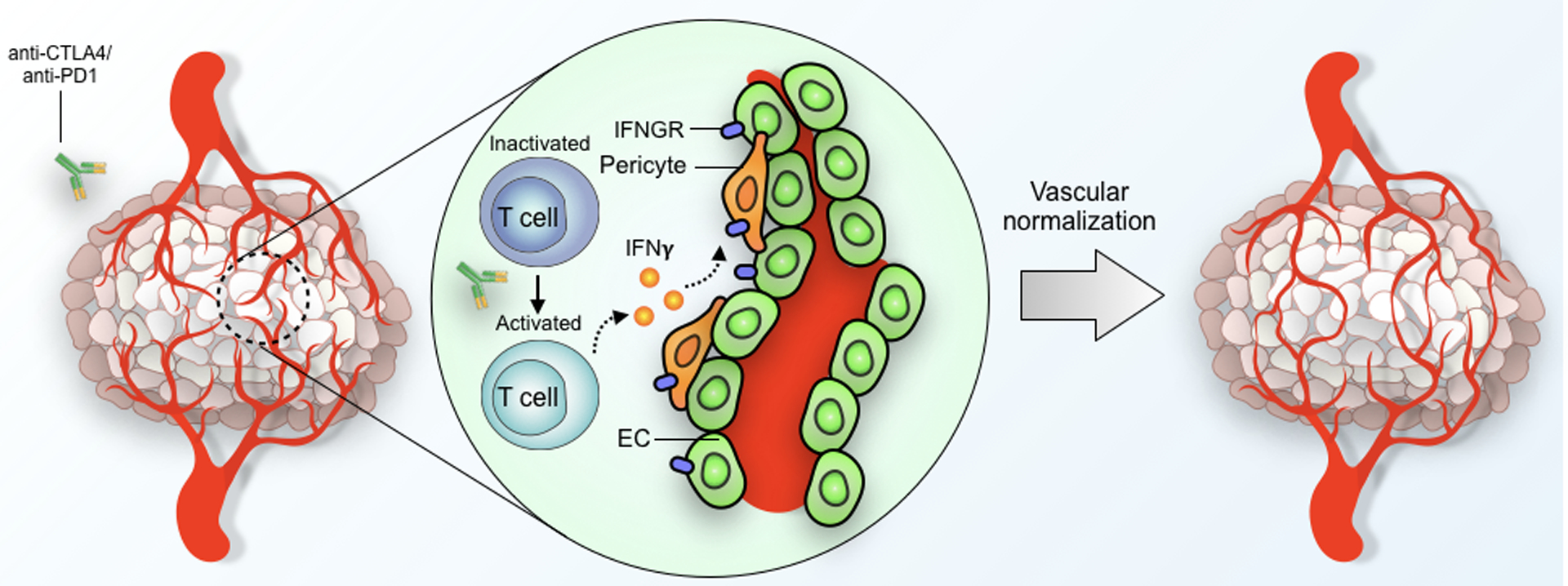
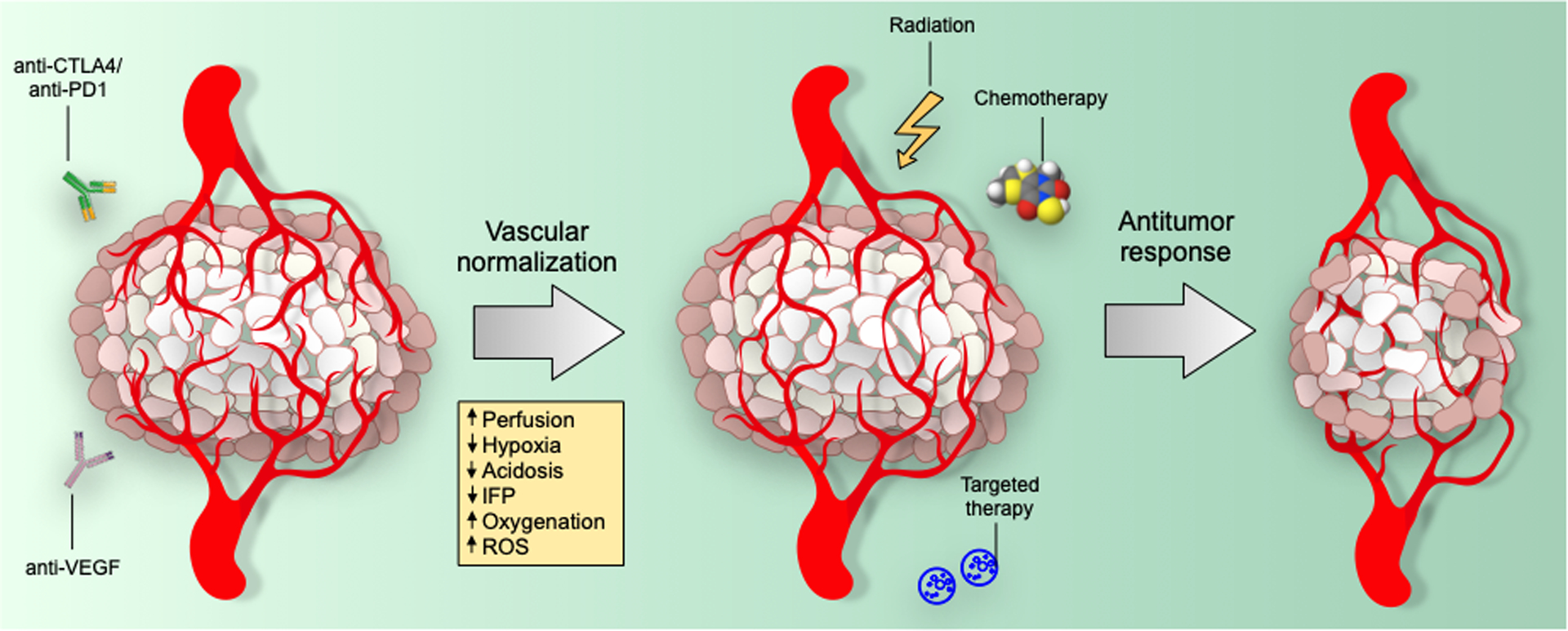
Immune cells rely on a functional vascular network to enter tissues. In solid tumors, blood vessels are abnormal and dysfunctional and, thus, immune effector cell infiltration is impaired. Although normalizing the tumor vasculature has been shown to improve the efficacy of cancer immunotherapies, recent studies suggest that enhanced immune stimulation also, in turn, improves tumor vascular normalization. Thus, this new paradigm of immune system-tumor vasculature mutual reprogramming opens the possibility of identifying new cancer treatment strategies that combine vascular targeting and immunotherapies. Here, we highlight current evidence supporting immune system-tumor vasculature crosstalk and outline how this relationship can provide new rationales for developing more effective combination immunotherapy strategies for treating human cancers.
免疫细胞依赖于功能正常的血管网络进入组织。在实体瘤中,血管异常且功能失调,因此,免疫效应细胞浸润受损。尽管已经证明使肿瘤血管正常化可以提高癌症免疫疗法的疗效,但最近的研究表明,增强免疫刺激也反过来改善了肿瘤血管的正常化。因此,这种免疫系统-肿瘤血管相互重编程的新范例为识别新的癌症治疗策略提供了可能性,这些策略将血管靶向与免疫疗法相结合。在这里,我们强调了支持免疫系统-肿瘤血管相互作用的现有证据,并概述了这种关系如何为开发更有效的联合免疫治疗策略来治疗人类癌症提供新的依据。