Department of Gynecologic Oncology and Reproductive Medicine, The University of Texas MD Anderson Cancer Center, Houston, Texas.
Department of Genomic Medicine, The University of Texas MD Anderson Cancer Center, Houston, Texas.
Clin Cancer Res. 2019 Nov 1;25(21):6417-6428. doi: 10.1158/1078-0432.CCR-19-0187. Epub 2019 Jul 22.
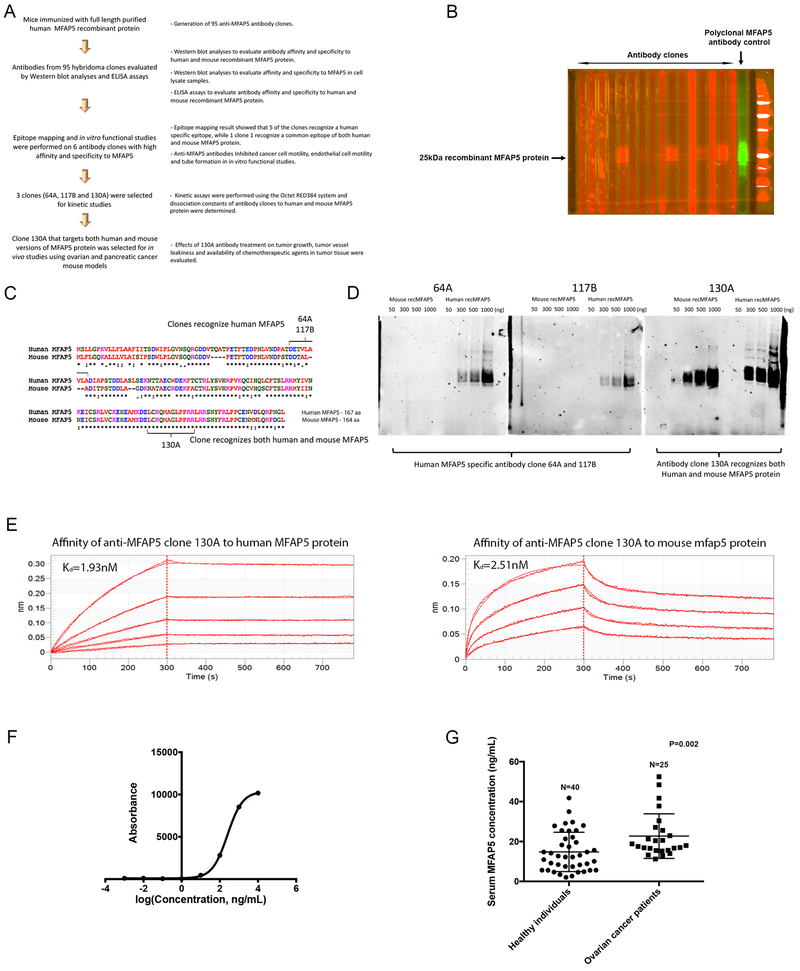
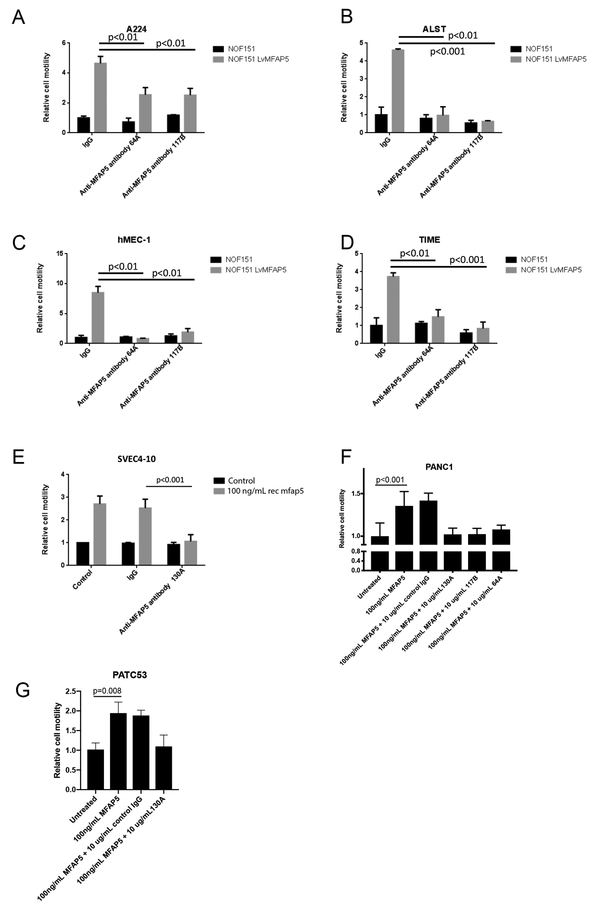
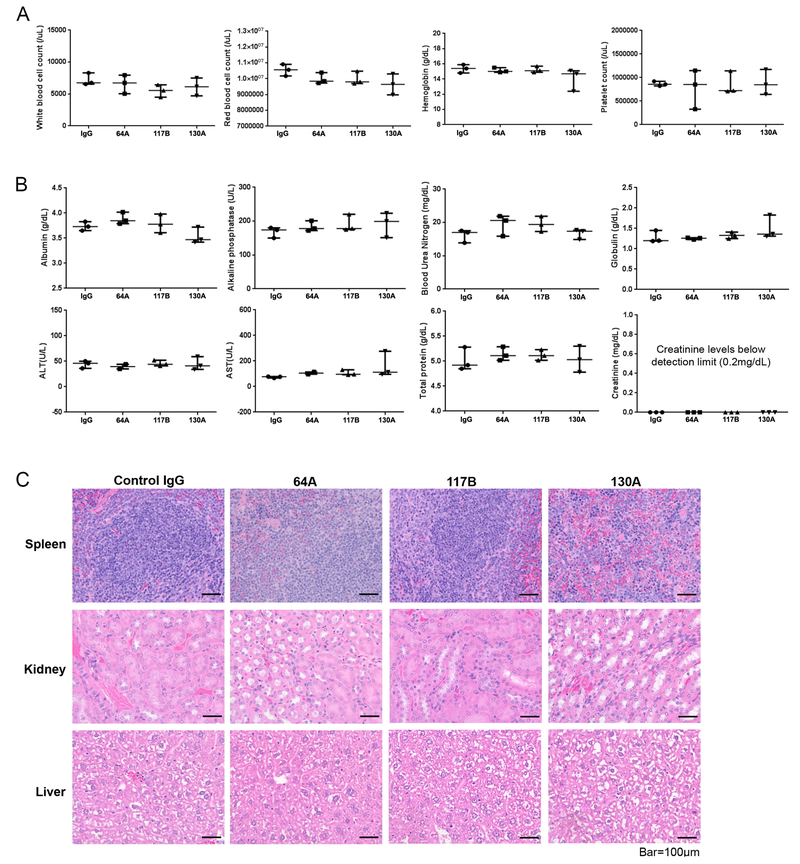
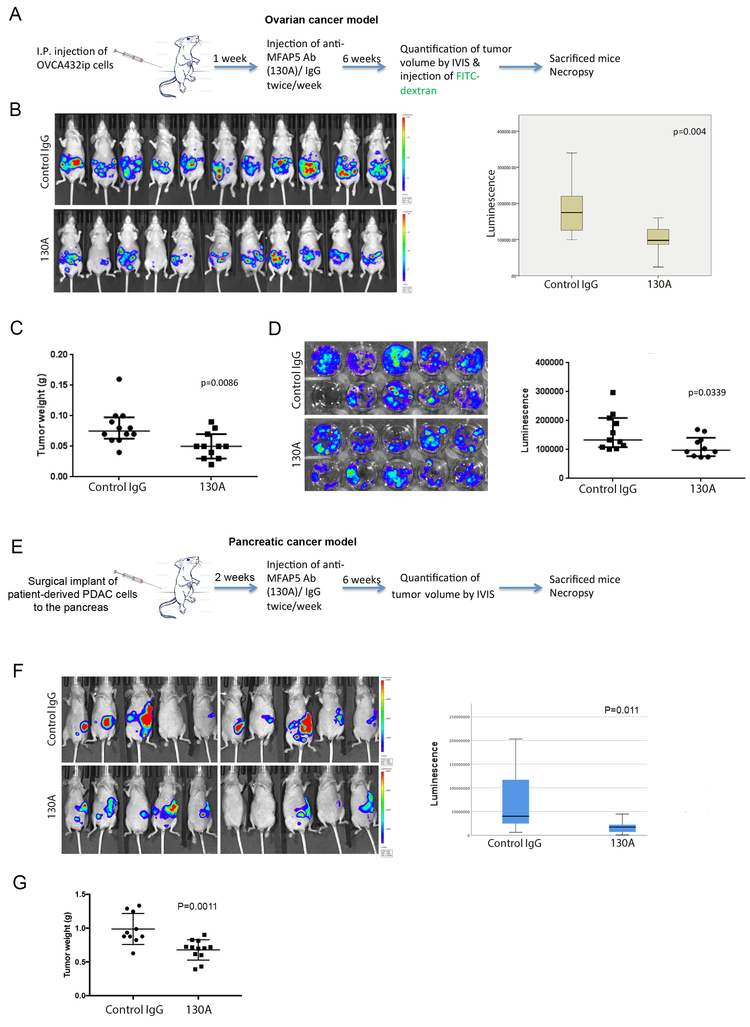
Recent studies demonstrate the role of the tumor microenvironment in tumor progression. However, strategies used to overcome the malignant phenotypes of cancer cells modulated by the microenvironment have not been thoroughly explored. In this study, we evaluated the therapeutic efficacy of a newly developed mAb targeting microfibril-associated protein 5 (MFAP5), which is secreted predominately by cancer-associated fibroblast (CAF), in ovarian and pancreatic cancer models. MAbs were developed using human MFAP5 recombinant protein as an antigen in mice, and antibodies from hybridoma clones were evaluated for their specificity to human and murine MFAP5. An Octet RED384 system was used to determine the kinetics of binding affinity and the specificity of the antibody clones, which were followed by epitope mapping and functional characterization by assays. The therapeutic efficacy of a lead anti-MFAP5 antibody clone 130A in tumor suppression was evaluated by ovarian tumor- and pancreatic tumor-bearing mouse models.
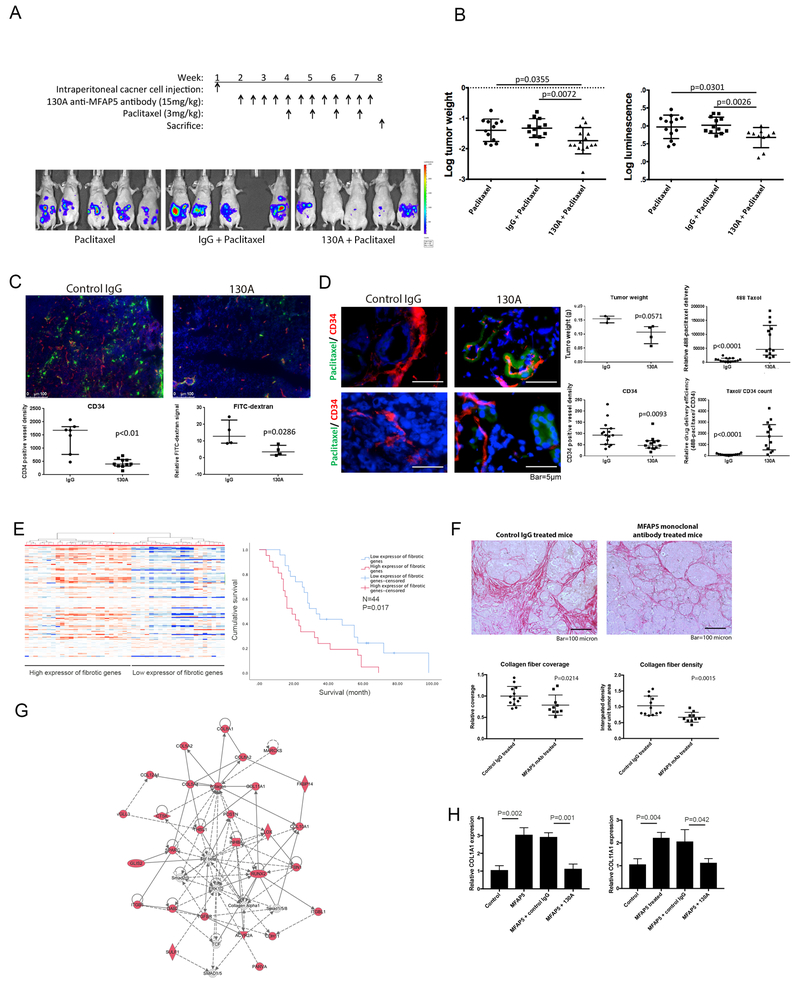
Three hybridoma clones, which produced antibodies with high affinity and specificity to MFAP5, were selected for functional studies. Antibody clone 130A, which recognizes a common epitope shared between human and murine MFAP5 protein, was further selected for studies. Results showed that clone 130A downregulated MFAP5-induced collagen production in CAFs, suppressed intratumoral microvessel leakiness, and enhanced paclitaxel bioavailability in both ovarian and pancreatic cancer mouse models.
These data suggest that MFAP5 blockade using an immunologic approach inhibits fibrosis, induces tumor vessel normalization, and enhances chemosensitivity in ovarian and pancreatic cancer, and can be used as a novel therapeutic agent.
最近的研究表明肿瘤微环境在肿瘤进展中的作用。然而,用于克服受微环境调节的癌细胞恶性表型的策略尚未得到充分探索。在这项研究中,我们评估了一种新开发的针对微纤维相关蛋白 5(MFAP5)的 mAb 的治疗效果,该蛋白主要由癌症相关成纤维细胞(CAF)分泌,在卵巢癌和胰腺癌模型中进行了评估。使用人 MFAP5 重组蛋白作为抗原在小鼠中开发了 mAbs,并用杂交瘤克隆的抗体评估了其对人 MFAP5 和鼠 MFAP5 的特异性。使用 Octet RED384 系统确定了结合亲和力的动力学和抗体克隆的特异性,随后通过测定进行了表位作图和功能表征。通过卵巢肿瘤和胰腺癌荷瘤小鼠模型评估了 lead 抗-MFAP5 抗体克隆 130A 在肿瘤抑制中的治疗效果。
选择了三个产生高亲和力和特异性 MFAP5 抗体的杂交瘤克隆进行功能研究。抗体克隆 130A 识别人 MFAP5 蛋白和鼠 MFAP5 蛋白之间共享的共同表位,进一步被选择用于进一步研究。结果表明,克隆 130A 下调 CAFs 中 MFAP5 诱导的胶原产生,抑制肿瘤内微血管渗漏,并增强卵巢癌和胰腺癌小鼠模型中紫杉醇的生物利用度。
这些数据表明,使用免疫方法阻断 MFAP5 可抑制纤维化,诱导肿瘤血管正常化,并增强卵巢癌和胰腺癌的化疗敏感性,可作为一种新型治疗剂。