State Key Laboratory for Agrobiotechnology, College of Biological Sciences, China Agricultural University, 100193, Beijing, China.
Capital University of Physical Education and Sports, 100191, Beijing, China.
Cell Death Dis. 2019 Jul 22;10(8):558. doi: 10.1038/s41419-019-1797-5.
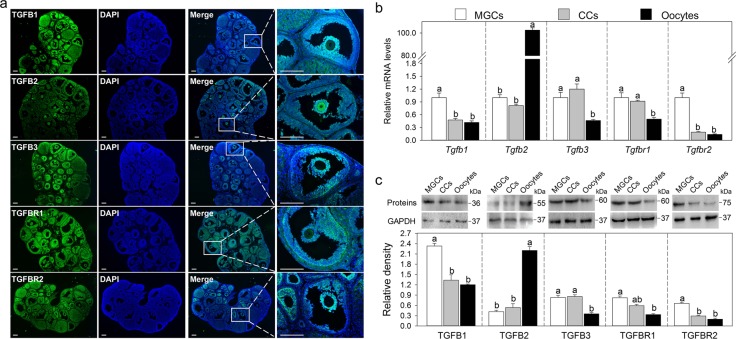
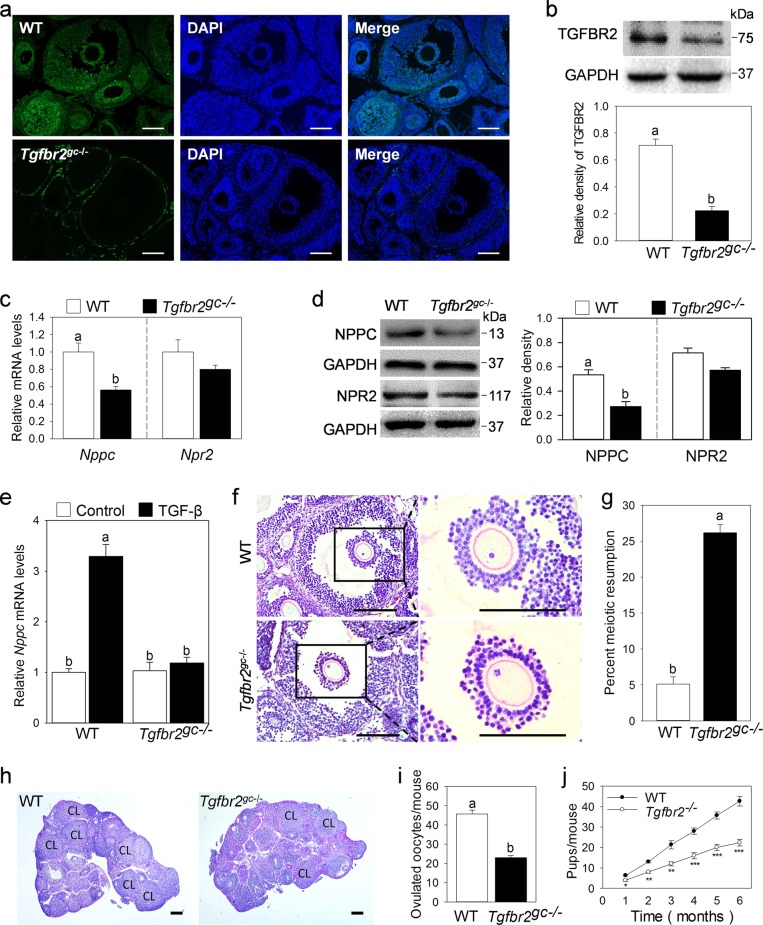
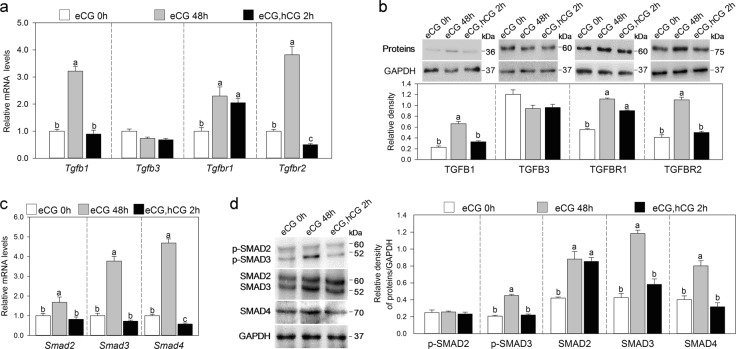
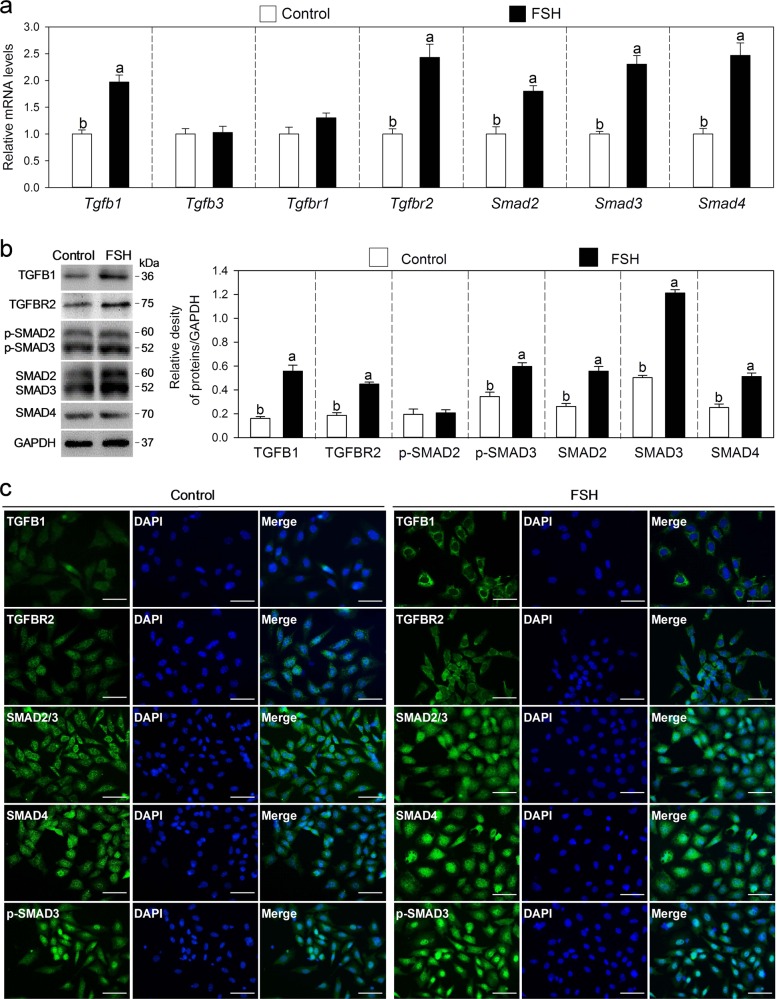
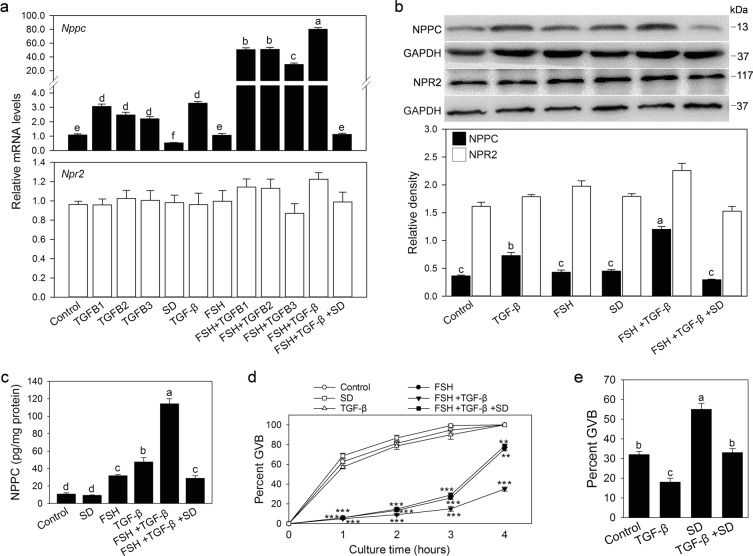
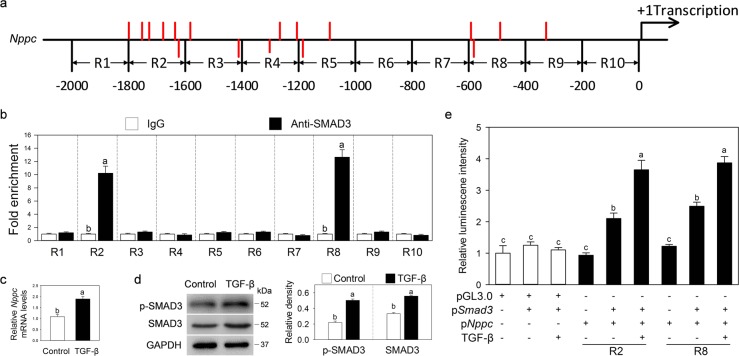
Natriuretic peptide type C (NPPC) secreted by mural granulosa cells (MGCs) maintains oocyte meiotic arrest via the activation of guanylyl cyclase-linked natriuretic peptide receptor 2 (NPR2). Here, we investigated the effect of transforming growth factor (TGF)-β on NPPC expression in MGCs and oocyte maturation. TGF-β ligands (TGFB1 and TGFB3, but not TGFB2) and receptors (TGFBR1 and TGFBR2) were predominantly expressed in MGCs. The activation of the follicle-stimulating hormone (FSH) receptor by FSH/equine chorionic gonadotropin (eCG) increased the levels of TGFB1, TGFBR2, and TGF-β downstream SMAD proteins in MGCs, which were decreased following the activation of the luteinizing hormone (LH) receptor by human chorionic gonadotropin (hCG). TGF-β significantly increased the gene and protein levels of NPPC in cultured MGCs through SMAD3 binding to Nppc promoter regions. In the presence of FSH, TGF-β further increased NPPC levels and inhibited oocyte meiotic resumption of cumulus-oocyte complexes (COCs). Moreover, Tgfbr2-specific depletion in granulosa cells using Fshr-Cre mice reduced NPPC mRNA and protein levels, resulting in the weak maintenance of oocyte meiotic arrest within large antral follicles. Tgfbr2 depletion also impaired follicle development, ovulation, and female fertility. Taken together, TGF-β-promoted NPPC in MGCs is involved in maintaining oocyte meiotic arrest. FSH and LH could regulate NPPC levels in MGCs via TGF-β and then control the process of oocyte meiosis.
心钠肽 C(NPPC)由壁层颗粒细胞(MGC)分泌,通过激活鸟苷酸环化酶偶联的利钠肽受体 2(NPR2)维持卵母细胞减数分裂阻滞。在这里,我们研究了转化生长因子(TGF)-β对 MGC 中 NPPC 表达和卵母细胞成熟的影响。TGF-β配体(TGFB1 和 TGFB3,但不是 TGFB2)和受体(TGFBR1 和 TGFBR2)主要在 MGC 中表达。FSH/马绒毛膜促性腺激素(eCG)激活卵泡刺激素(FSH)受体增加了 MGC 中 TGFB1、TGFBR2 和 TGF-β下游 SMAD 蛋白的水平,而 hCG 激活黄体生成素(LH)受体后,这些水平降低。TGF-β通过 SMAD3 与 Nppc 启动子区域结合,显著增加培养的 MGC 中 NPPC 的基因和蛋白水平。在 FSH 的存在下,TGF-β进一步增加 NPPC 水平并抑制卵丘-卵母细胞复合物(COC)的减数恢复。此外,使用 Fshr-Cre 小鼠特异性耗尽颗粒细胞中的 Tgfbr2 会降低 Nppc mRNA 和蛋白水平,导致大腔卵泡内卵母细胞减数分裂阻滞的维持减弱。Tgfbr2 耗竭也会损害卵泡发育、排卵和雌性生育能力。总之,TGF-β 促进 MGC 中的 NPPC 参与维持卵母细胞减数分裂阻滞。FSH 和 LH 可以通过 TGF-β调节 MGC 中的 NPPC 水平,从而控制卵母细胞减数分裂的过程。