Baumgaertel Charlotte, Skripuletz Thomas, Kronenberg Jessica, Stangel Martin, Schwenkenbecher Philipp, Sinke Christopher, Müller-Vahl Kirsten R, Sühs Kurt-Wolfram
Department of Psychiatry, Social Psychiatry and Psychotherapy, Hannover Medical School, Hanover, Germany.
Department of Neurology, Hannover Medical School, Hanover, Germany.
Front Neurol. 2019 Jul 4;10:732. doi: 10.3389/fneur.2019.00732. eCollection 2019.
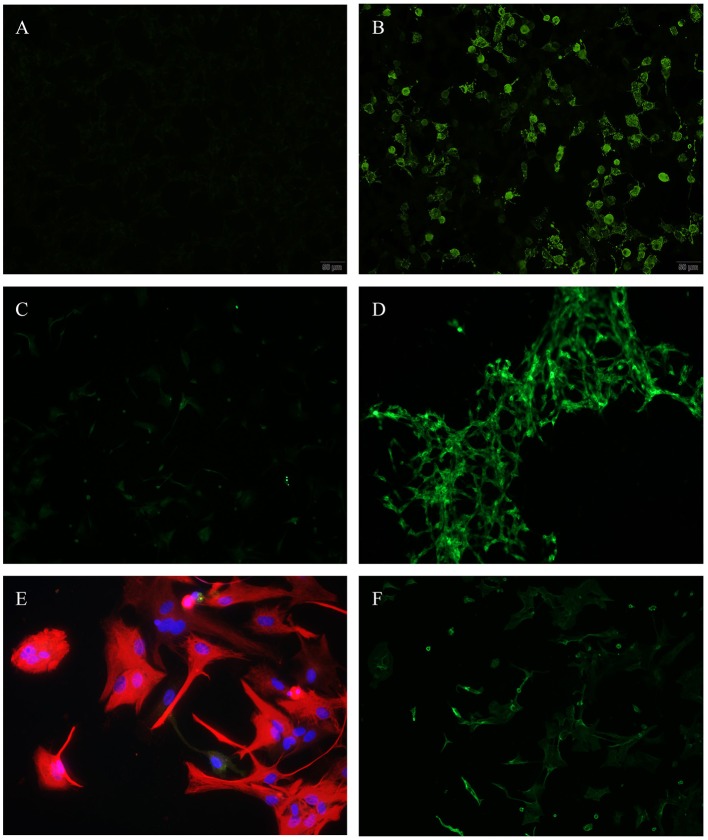
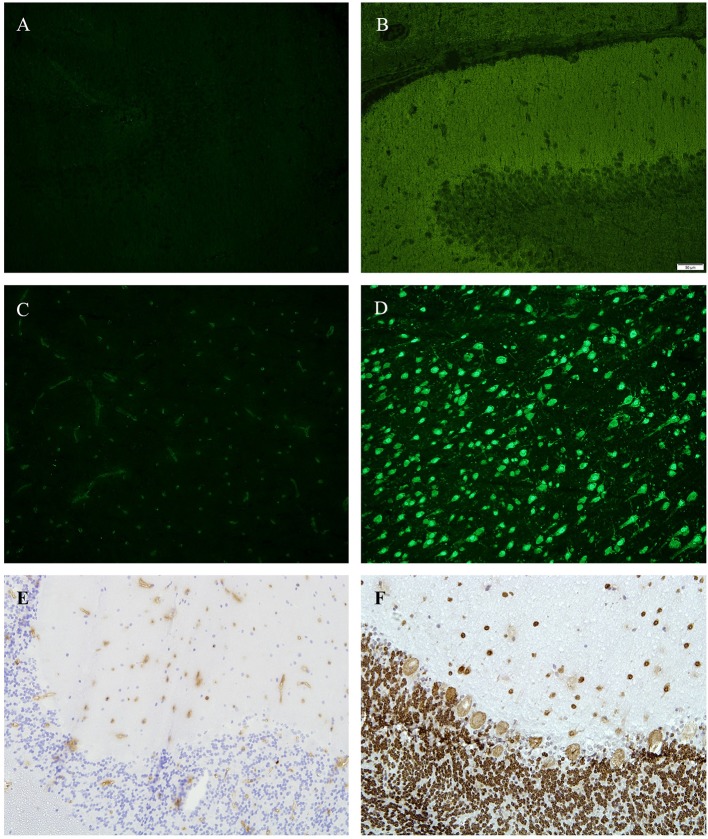
Several lines of evidence support the hypothesis of an autoimmune origin of Gilles de la Tourette-Syndrome (GTS). Accordingly, in a recent study we detected positive oligoclonal bands (OCB) in cerebrospinal fluid (CSF) in >30% of adult patients indicating an intrathecal antibody synthesis. However, until today no corresponding antibodies could be identified. The aims of this study were to replicate our findings of positive OCB in an independent sample and to detect CSF autoantibodies. In this prospective study, 20 adult patients with GTS (male: female = 18:2, median age 36.1 years ± 14.34 SD) were included. All patients were thoroughly clinically characterized. Magnetic Resonance Imaging (MRI) and CSF standard measurements were performed. Isoelectric focusing on polyacrylamide gels with silver staining was used to detect OCB. To examine specific and unspecified autoantibodies, we used transfected Human Embryonic Kidney (HEK) cells expressing different surface antigens (NMDA-, CASPR2-, LGI1-, AMPA-, or GABAB1/B), indirect immunofluorescence on different brain tissue sections, and enzyme-linked visualization. Additionally, we differentiated Glioma stem cells SY5Y (human neuroblastoma) using retinoic acid and astrocytes (rat). CSF analyses showed positive OCB (type 2) in 4/20 patients (20%). Using transfected HEK cells we did not find specific surface-autoantibodies. Immunohistochemistry on tissue-sections, SY5Y Glioma stem-cells, and astrocytes showed no specific binding patterns either. Our results corroborate previous findings and demonstrate positive OCB in a substantial number of patients with GTS (prevalence in healthy controls: 5%). Although this is the largest study investigating CSF autoantibodies in GTS using several techniques, we failed to detect any specific or unspecified autoantibodies.
多条证据支持抽动秽语综合征(GTS)起源于自身免疫的假说。因此,在最近一项研究中,我们在超过30%的成年患者的脑脊液(CSF)中检测到了阳性寡克隆带(OCB),这表明存在鞘内抗体合成。然而,直到现在仍未鉴定出相应的抗体。本研究的目的是在一个独立样本中重复我们关于阳性OCB的发现,并检测脑脊液自身抗体。在这项前瞻性研究中,纳入了20例成年GTS患者(男∶女 = 18∶2,中位年龄36.1岁±14.34标准差)。所有患者均进行了全面的临床特征描述。进行了磁共振成像(MRI)和脑脊液标准测量。使用在聚丙烯酰胺凝胶上进行等电聚焦并银染来检测OCB。为了检测特异性和非特异性自身抗体,我们使用了表达不同表面抗原(N-甲基-D-天冬氨酸受体、接触蛋白相关蛋白2、富含亮氨酸胶质瘤失活蛋白1、α-氨基-3-羟基-5-甲基-4-异恶唑丙酸受体或γ-氨基丁酸B1/B受体)的转染人胚肾(HEK)细胞、在不同脑组织切片上进行间接免疫荧光以及酶联可视化。此外,我们使用视黄酸分化了神经胶质瘤干细胞SY5Y(人神经母细胞瘤)和星形胶质细胞(大鼠)。脑脊液分析显示,4/20例患者(20%)的OCB呈阳性(2型)。使用转染的HEK细胞,我们未发现特异性表面自身抗体。在组织切片、SY5Y神经胶质瘤干细胞和星形胶质细胞上进行的免疫组织化学也未显示出特异性结合模式。我们的结果证实了先前的发现,并证明在大量GTS患者中存在阳性OCB(健康对照中的患病率为5%)。尽管这是使用多种技术研究GTS患者脑脊液自身抗体的最大规模研究,但我们未能检测到任何特异性或非特异性自身抗体。