Tian Shufei, Guo Runze, Zou Xiaoxia, Zhang Xiaojun, Yu Xiaona, Zhan Yuan, Ci Dunwei, Wang Minglun, Wang Yuefu, Si Tong
Shandong Provincial Key Laboratory of Dryland Farming Technology, College of Agronomy, Qingdao Agricultural University, Qingdao, China.
Shandong Peanut Research Institute, Qingdao, China.
Front Plant Sci. 2019 Jun 20;10:785. doi: 10.3389/fpls.2019.00785. eCollection 2019.
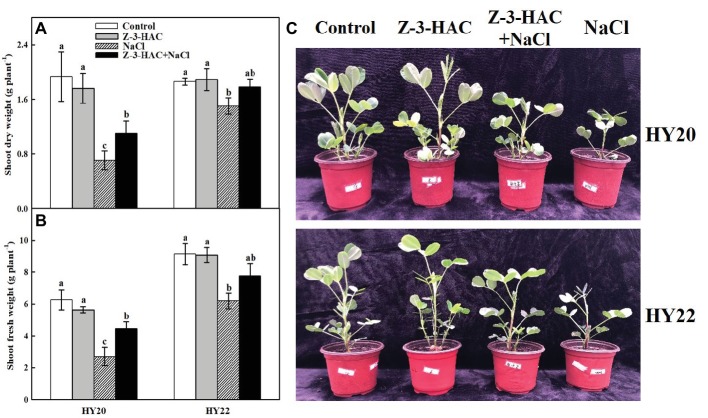
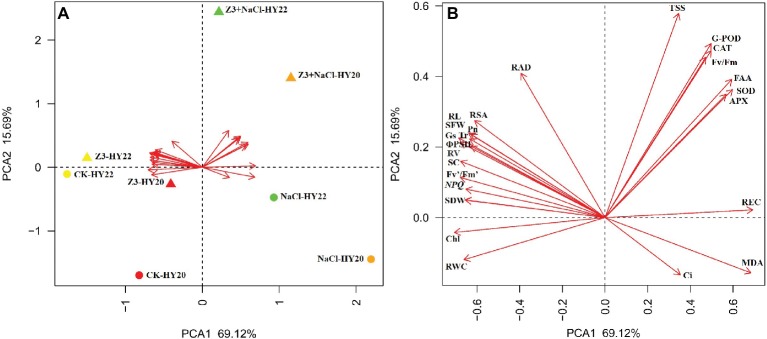
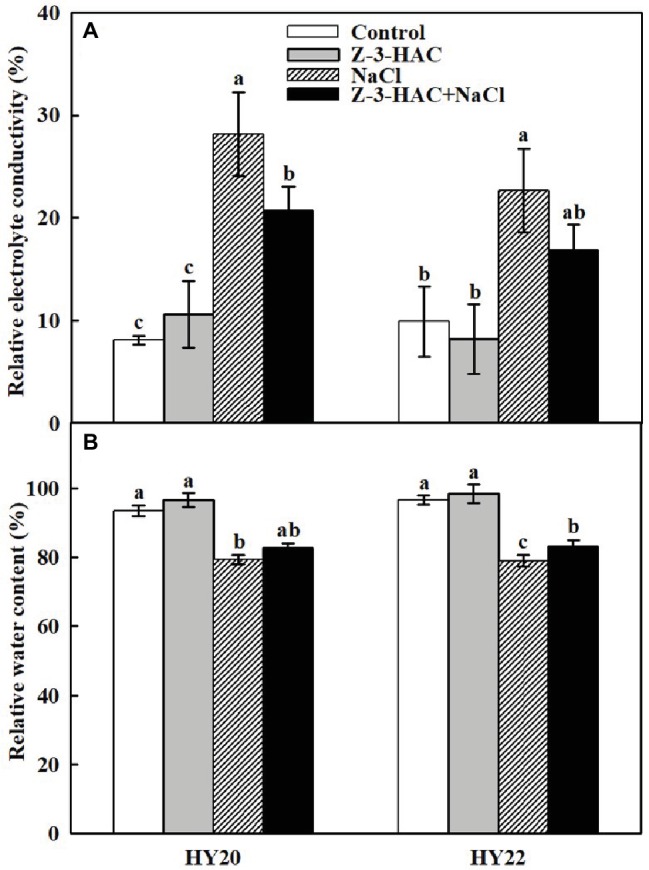
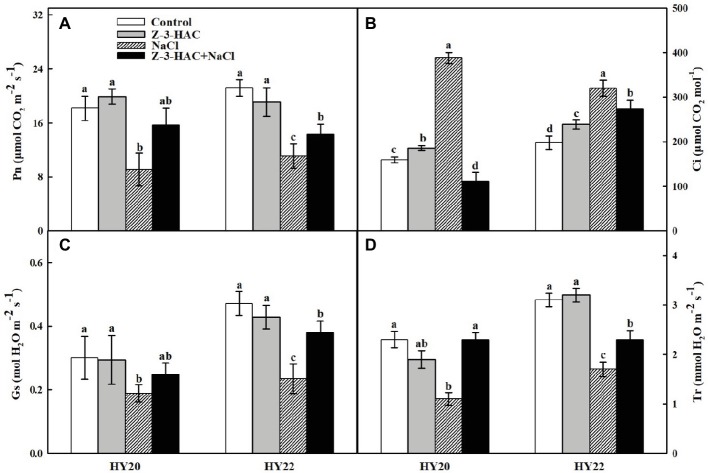
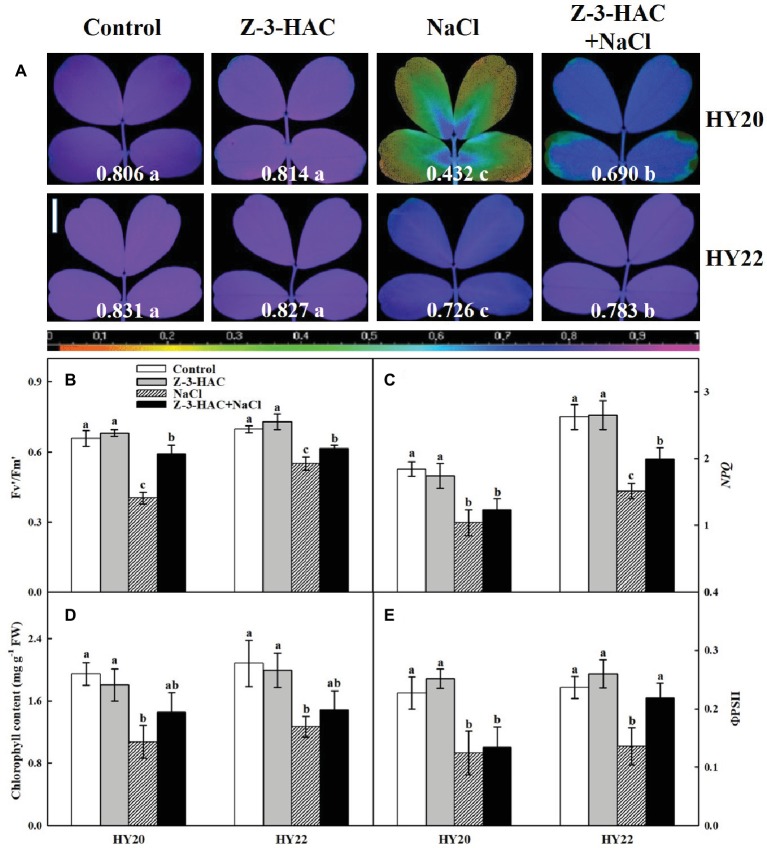
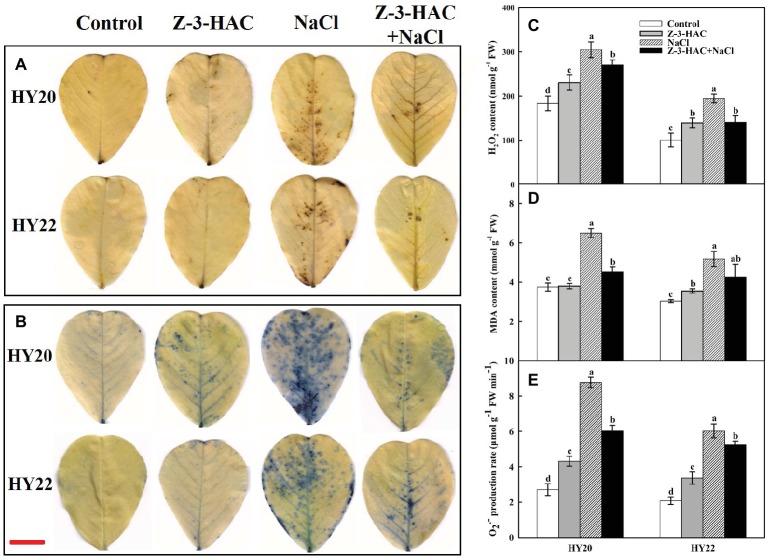
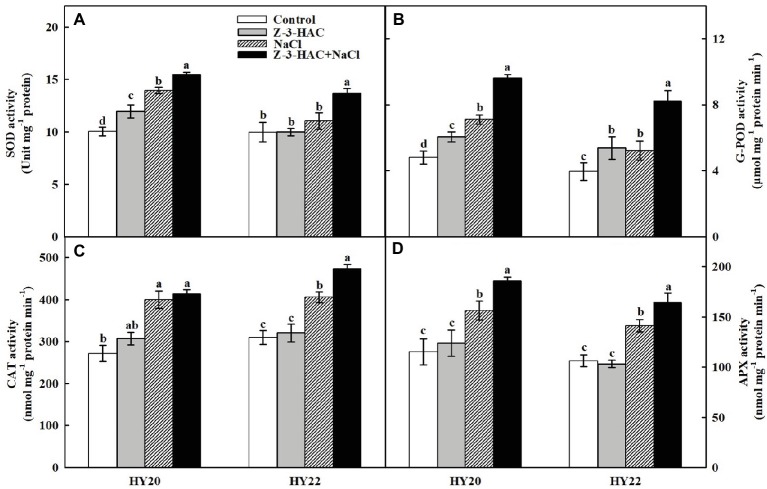
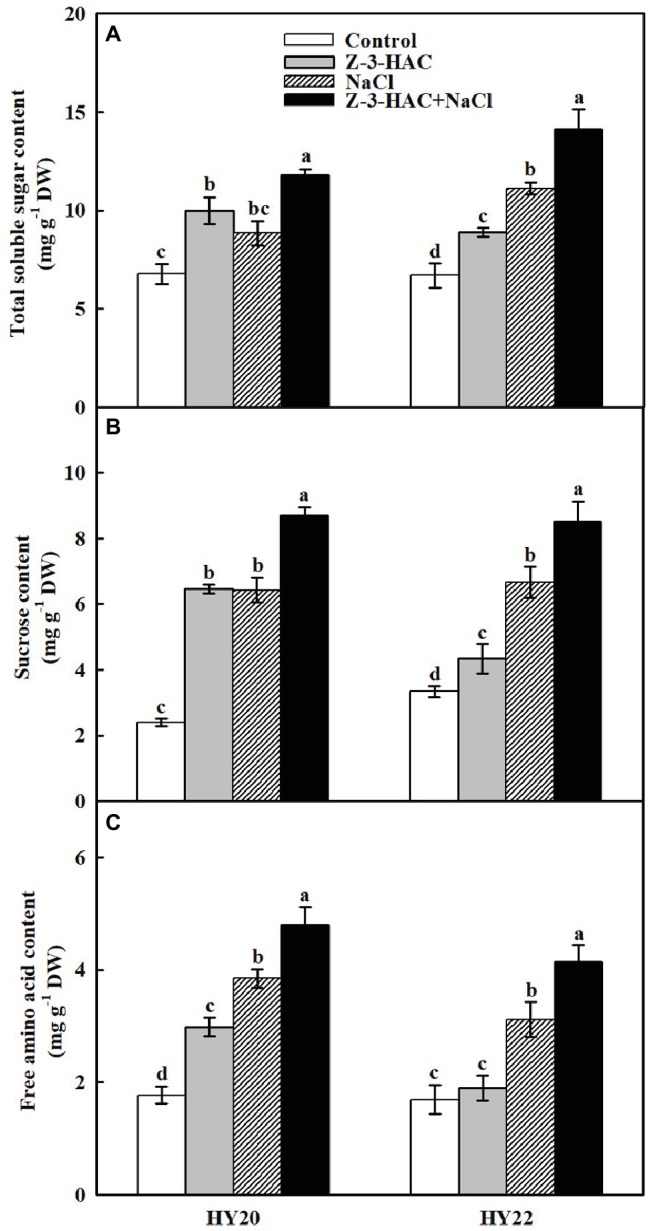
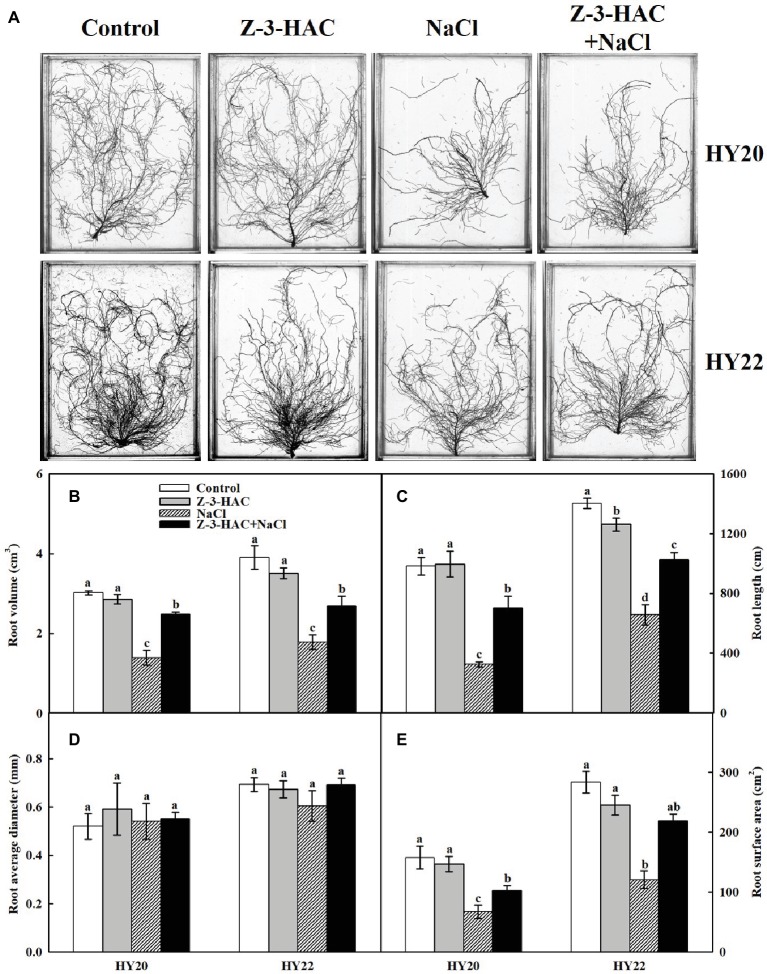
Green leaf volatiles play vital roles in plant biotic stress; however, their functions in plant responses to abiotic stress have not been determined. The aim of this study was to investigate the possible role of (Z)-3-hexeny-1-yl acetate (Z-3-HAC), a kind of green leaf volatile, in alleviating the salinity stress of peanut () seedlings and the underlying physiological mechanisms governing this effect. One salt-sensitive and one salt-tolerant peanut genotype were primed with 200 μM Z-3-HAC at the 4-week-old stage before they were exposed to salinity stress. Physiological measurements showed that the primed seedlings possessed higher relative water content, net photosynthetic rate, maximal photochemical efficiency of photosystem II, activities of the antioxidant enzymes, and osmolyte accumulation under salinity conditions. Furthermore, the reactive oxygen species, electrolyte leakage, and malondialdehyde content in the third fully expanded leaves were significantly lower than in nonprimed plants. Additionally, we found that application of Z-3-HAC increased the total length, surface area, and volume of the peanut roots under salinity stress. These results indicated that the green leaf volatile Z-3-HAC protects peanut seedlings against damage from salinity stress through priming for modifications of photosynthetic apparatus, antioxidant systems, osmoregulation, and root morphology.
绿叶挥发物在植物生物胁迫中发挥着重要作用;然而,它们在植物对非生物胁迫响应中的功能尚未确定。本研究的目的是探究绿叶挥发物之一的(Z)-3-己烯-1-基乙酸酯(Z-3-HAC)在缓解花生()幼苗盐胁迫方面的可能作用以及调控这种效应的潜在生理机制。在4周龄阶段,用200μM Z-3-HAC对一种盐敏感型和一种耐盐型花生基因型进行预处理,然后使其遭受盐胁迫。生理测量结果表明,预处理后的幼苗在盐胁迫条件下具有更高的相对含水量、净光合速率、光系统II的最大光化学效率、抗氧化酶活性以及渗透溶质积累。此外,第三片完全展开叶中的活性氧、电解质渗漏和丙二醛含量显著低于未预处理的植株。另外,我们发现施用Z-3-HAC可增加盐胁迫下花生根的总长度、表面积和体积。这些结果表明,绿叶挥发物Z-3-HAC通过预处理对光合机构、抗氧化系统、渗透调节和根系形态进行修饰,从而保护花生幼苗免受盐胁迫的伤害。