Chandra Sahu Mahesh, Swain Santosh Kumar
IMS and SUM Hospital, Siksha "O" Anusandhan University, K8, Kalinganagar, Bhubaneswar, 751003, Odisha, India.
Department of Otorhinolaryngology, IMS and SUM Hospital, Siksha "O" Anusandhan University, K8, Kalinganagar, Bhubaneswar, 751003, Odisha, India.
World J Otorhinolaryngol Head Neck Surg. 2019 Feb 16;5(2):88-94. doi: 10.1016/j.wjorl.2018.05.008. eCollection 2019 Jun.
Chronic suppurative otitis media (CSOM) is a common problem in worldwide and untreated CSOM leads to fatal complications like facial nerve paralysis, lateral sinus thrombosis, labyrinthitis, meningitis and brain abscess in developing country like India.
To isolate causative bacteria and antibiotic sensitivity pattern for CSOM and to know the prevalence of extended spectrum beta lactamases (ESBL) and Metallobetalactamases (MBL) in CSOM patients.
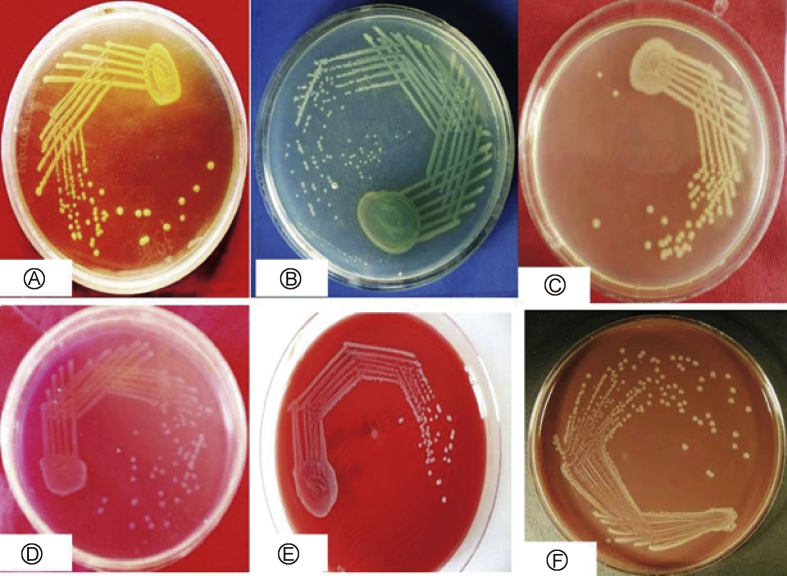
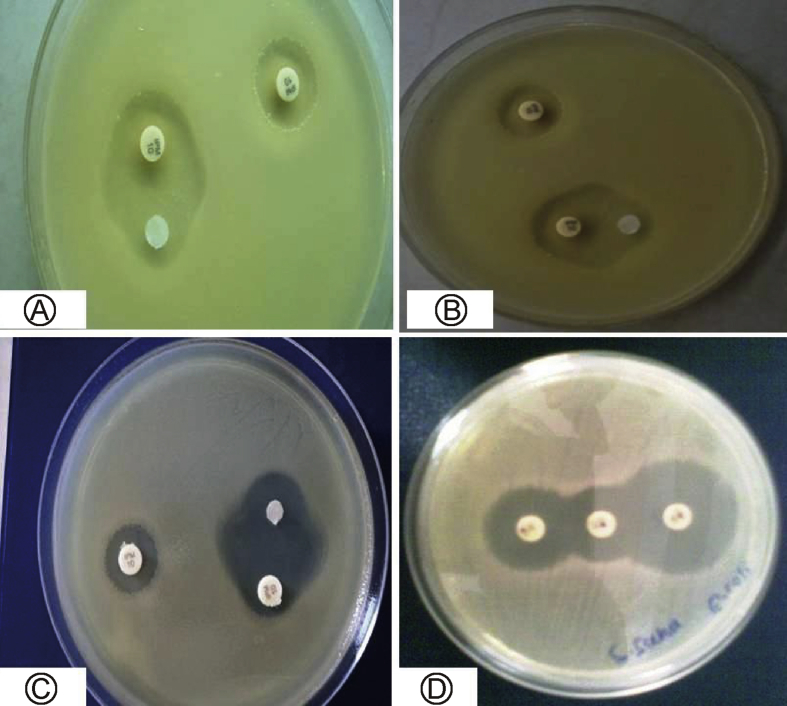
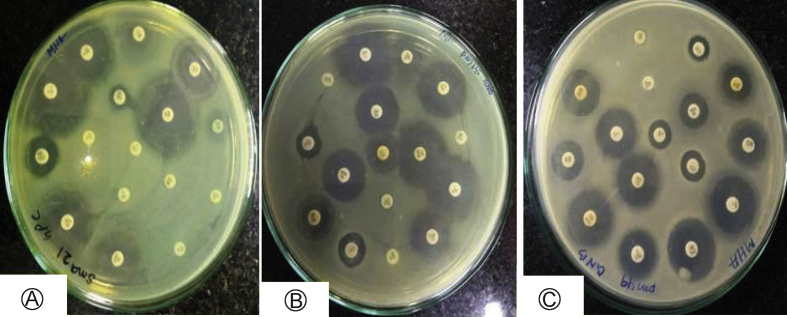
A total of 500 ear swabs of clinical suspected CSOM patients were cultured on specific cultured medium and identified the bacteria with conventional methods. Then all the identified bacteria were subjected with specific antibiotics by the Kirby-Bauer's method to know the resistance pattern of antibiotics. ESBL and MBL strains were detected by double disc diffusion test.
A total of 384 bacteria were isolated from 500 CSOM patients, among them 86 (22.40%), 112 (29.17%), 53 (13.80%), 32 (18%), 26 (6.77%), 24 (6.25%), 23 (5.99%), 18 (4.69%) and 10 (2.60%) identified with conventional methods. From antibiotic disc diffusion methods 74.22% ESBL strains and 9.90% MBL strains were documented. Multidrug resistant strains of (86/384,22.40%) were more prevalent than those of (112/384,29.17%) and other bacteria in ear discharges. Imipenem and vancomicin could control to gram negative bacteria and gram positive bacteria respectively.
Continuous and periodic evaluation of microbiological profile and antimicrobial sensitivity pattern of bacterial is essential for optimum management of CSOM patients.
慢性化脓性中耳炎(CSOM)是一个全球性的常见问题,在印度等发展中国家,未经治疗的CSOM会导致诸如面神经麻痹、外侧窦血栓形成、迷路炎、脑膜炎和脑脓肿等致命并发症。
分离CSOM的致病细菌并了解其抗生素敏感性模式,以及了解CSOM患者中广谱β-内酰胺酶(ESBL)和金属β-内酰胺酶(MBL)的流行情况。
对500例临床疑似CSOM患者的耳拭子在特定培养基上进行培养,并用传统方法鉴定细菌。然后通过 Kirby-Bauer 法对所有鉴定出的细菌进行特定抗生素检测,以了解抗生素的耐药模式。通过双纸片扩散试验检测ESBL和MBL菌株。
从500例CSOM患者中共分离出384株细菌,其中通过传统方法鉴定出86株(22.40%)、葡萄球菌112株(29.17%)、53株(13.80%)、32株(18%)、26株(6.77%)、24株(6.25%)、23株(5.99%)、18株(4.69%)和10株(2.60%)。通过抗生素纸片扩散法记录到74.22%的ESBL菌株和9.90%的MBL菌株。多重耐药菌株(86/384,22.40%)在耳分泌物中比葡萄球菌(112/384,29.17%)和其他细菌更普遍。亚胺培南和万古霉素分别可控制革兰氏阴性菌和革兰氏阳性菌。
对细菌的微生物学特征和抗菌药物敏感性模式进行持续和定期评估对于CSOM患者的最佳管理至关重要。