Xu Zhiheng, Fan Yingzheng, Wang Tianbao, Huang Yuankai, MahmoodPoor Dehkordy Farzaneh, Dai Zheqin, Xia Lingling, Dong Qiuchen, Bagtzoglou Amvrossios, McCutcheon Jeffrey, Lei Yu, Li Baikun
Department of Civil & Environmental Engineering, University of Connecticut, Storrs, Connecticut, 06269, United States.
School of Energy and Environment, Southeast University, Nanjing, Jiangsu, 210096, China.
Water Res X. 2019 Apr 10;4:100028. doi: 10.1016/j.wroa.2019.100028. eCollection 2019 Aug 1.
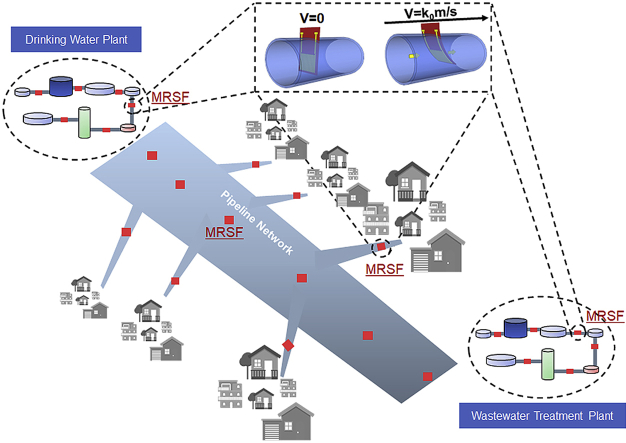
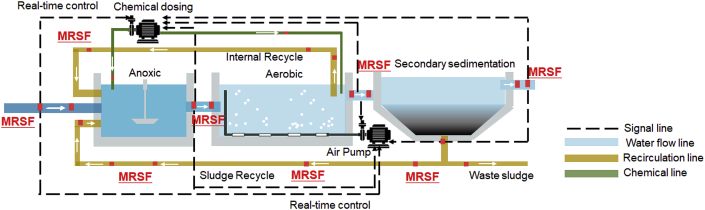
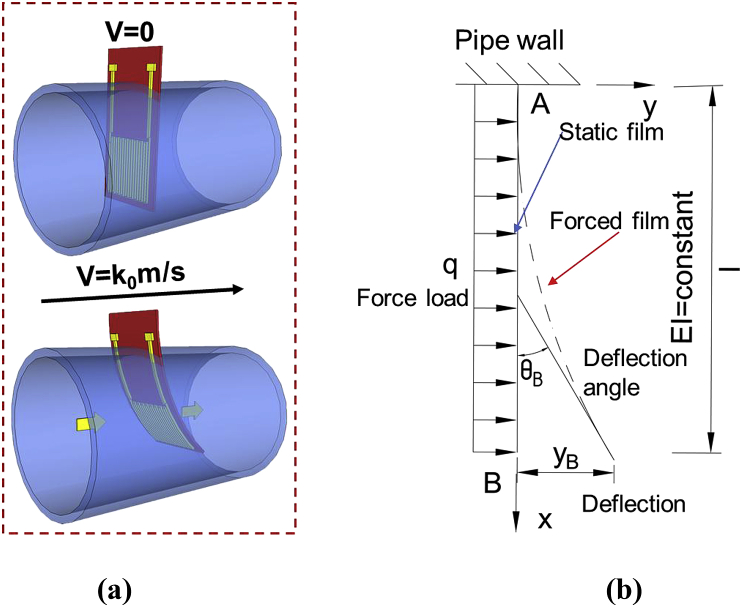
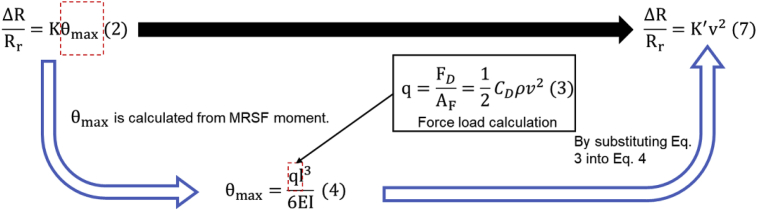
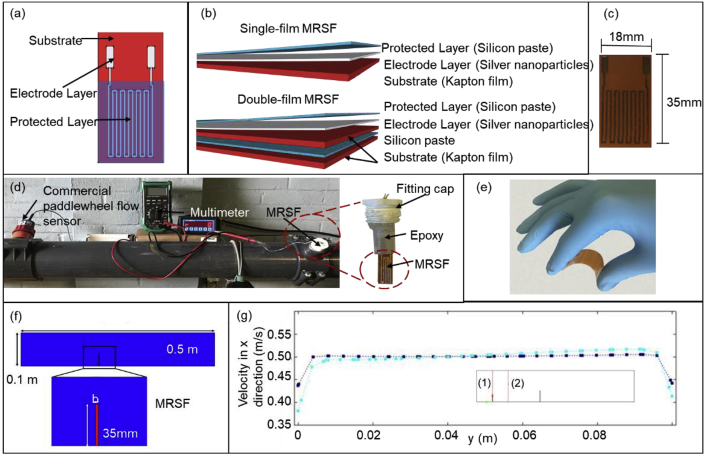
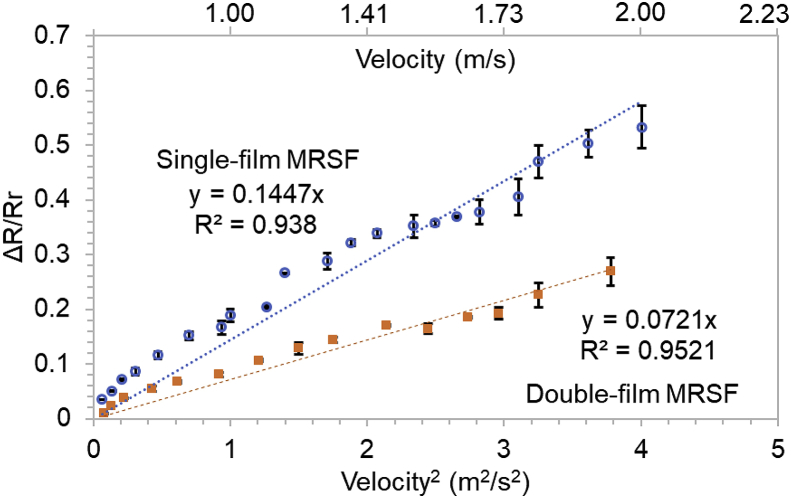
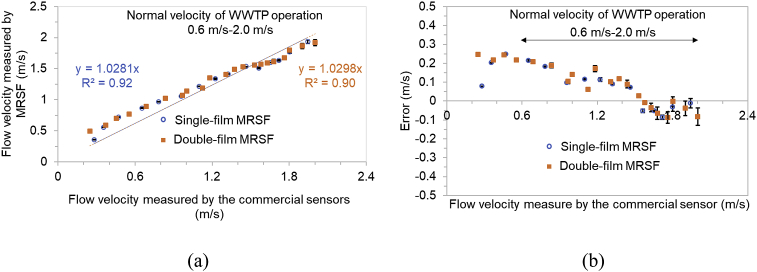
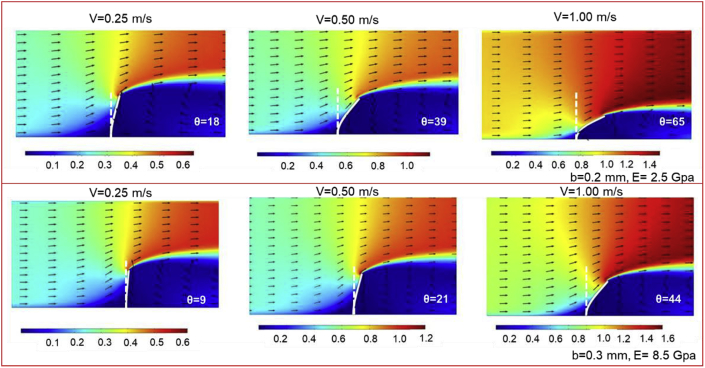
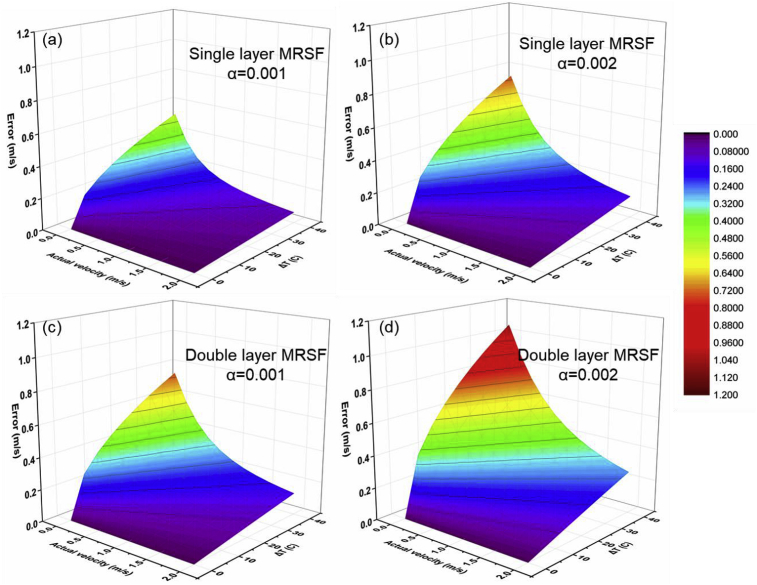
Novel flexible thin mm-sized resistance-typed sensor film (MRSF) fabricated using ink-jet printing technology (IPT) was developed in this study to monitor water flow rate in pipelines in real time mode. The mechanism of MRSF is that the mm-sized interdigitated electrodes made by printing silver nanoparticles on an elastic polyimide film bend under different flow rates, leading to variation of the resistance of the sensor at different degrees of curvature. Continuous flow tests showed that MRSF possessed a high accuracy (0.2 m/s) and excellent sensitivity (0.1447/ms). A model of sensor resistance and flow velocity was established to unfold the correlation between the fundamentals of fluid mechanics and the mechanic flexibility of sensor materials. An analytical model yielded a high coefficient of determination (R > 0.93) for the relationship between the resistance increment of the MRSF and the square of the flow velocity at the velocity range of 0.25-2 m/s. Furthermore, a temperature-correction model was developed to quantify the effect of water temperature on the sensor resistance readings. MRSF exhibited a low temperature coefficient of resistance (TCR, 0.001) at the water temperature range of 20-60 °C. Computational fluid dynamics (CFD) simulations using the finite element method were conducted and confirmed both the underlying load assumptions and the deformation characteristics of the sensor film under various flow and material conditions. High-resolution monitoring of water flow rate using MRSF technology was expected to save at least 50% energy consumption for a given unit, especially under flow fluctuation. MRSF possesses a great potential to perform real-time monitoring at high accuracy with ultralow cost, thus enabling the feedback control at high spatiotemporal resolution to reduce the overall energy consumption in water and wastewater systems.
本研究开发了一种采用喷墨印刷技术(IPT)制造的新型柔性毫米级电阻式传感器薄膜(MRSF),用于实时监测管道中的水流速度。MRSF的工作原理是,通过在弹性聚酰亚胺薄膜上印刷银纳米颗粒制成的毫米级叉指电极,在不同流速下会发生弯曲,导致传感器在不同曲率程度下电阻发生变化。连续流动测试表明,MRSF具有高精度(0.2米/秒)和出色的灵敏度(0.1447/毫秒)。建立了传感器电阻与流速的模型,以揭示流体力学基本原理与传感器材料机械柔韧性之间的相关性。在0.25 - 2米/秒的流速范围内,解析模型得出MRSF电阻增量与流速平方之间的关系具有较高的决定系数(R > 0.93)。此外,还开发了温度校正模型,以量化水温对传感器电阻读数的影响。在20 - 60°C的水温范围内,MRSF表现出较低的电阻温度系数(TCR,0.001)。使用有限元方法进行了计算流体动力学(CFD)模拟,证实了在各种流动和材料条件下传感器薄膜的潜在载荷假设和变形特性。预计使用MRSF技术对水流速度进行高分辨率监测,对于给定单元至少可节省50%的能源消耗,尤其是在流量波动情况下。MRSF具有以超低的成本进行高精度实时监测的巨大潜力,从而能够以高时空分辨率进行反馈控制,以降低水和废水系统中的总体能源消耗。