Department of Preventive Medicine, Institute of Health Sciences, College of Medicine Gyeongsang National University, Jinju-si, Jinju 52727, Korea.
Center for Farmer's Safety and Health, Gyeongsang National University Hospital, 79 Gangnam-ro, Jinju-si, Jinju 52727, Korea.
Int J Environ Res Public Health. 2019 Jul 11;16(14):2481. doi: 10.3390/ijerph16142481.
The rapid increase in the elderly population in Korea is associated with an expanded burden of health problems. The purpose of this study was to investigate the association between frailty and physical disability among Koreans using the frailty index, which was developed to assess health conditions in elderly people.
We included 503 elderly people from the Namgaram-II cohort. We used the Korean version of the Kaigo-Yobo checklist as our frailty assessment tool. For the disability assessment tool, we used the Korean version of the 12-item World Health Organization Disability Assessment Schedule (WHODAS-12). We fit multiple linear regression models for men and women for each section. Our models also included variables for musculoskeletal diseases that are known to be associated with frailty, such as sarcopenia, osteoporosis, and radiologic knee osteoarthritis.
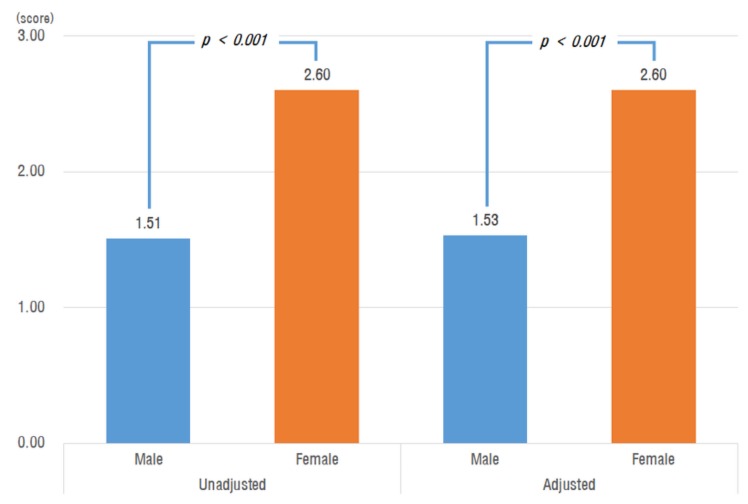
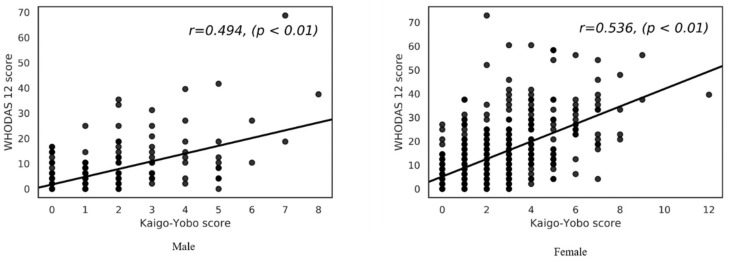
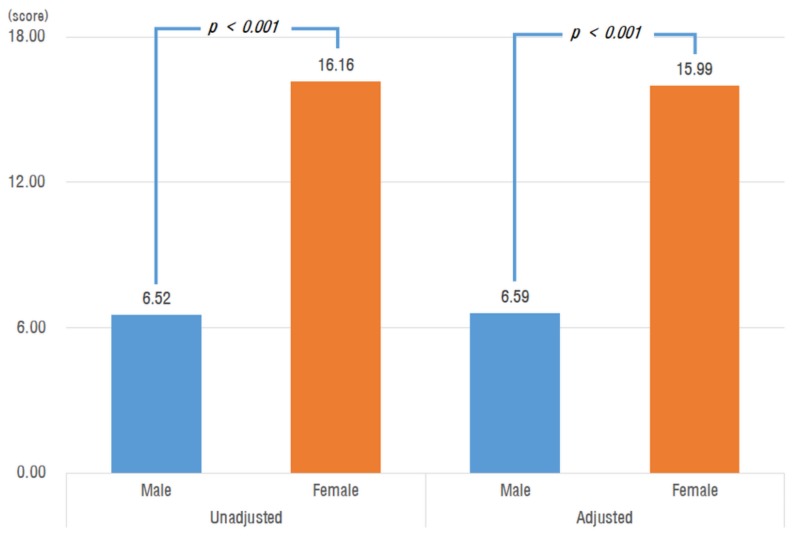
After correcting for social demographic characteristics, blood profiles, high blood pressure, and diabetes, the Kaigo-Yobo results showed a significant difference in frailty between men (1.53 ± 0.74) and women (2.60 ± 0.77), and WHODAS-12 also showed a significant difference between men (6.59 ± 5.08) and women (15.99 ± 5.70). After correcting for social demographic characteristics, blood profiles, high blood pressure, and diabetes, Kaigo-Yobo and WHODAS-12 were significantly associated with each other among both men (β = 2.667) and women (β = 3.200) ( < 0.001).
The study results show an association between frailty and disability among elderly people in rural areas. Therefore, prevention should occur at the pre-frailty stage of a person's life to prevent further disability. Also, disability welfare programs should be provided to elderly people who present with frailty.
韩国老年人口的迅速增加与健康问题负担的扩大有关。本研究旨在使用虚弱指数来研究韩国老年人虚弱与身体残疾之间的关系,虚弱指数是为评估老年人健康状况而开发的。
我们纳入了 Namgaram-II 队列中的 503 名老年人。我们使用韩国版的 Kaigo-Yobo 检查表作为我们的虚弱评估工具。对于残疾评估工具,我们使用了韩国版的 12 项世界卫生组织残疾评估时间表(WHODAS-12)。我们为男性和女性分别为每个部分拟合了多元线性回归模型。我们的模型还包括与虚弱相关的肌肉骨骼疾病的变量,如肌少症、骨质疏松症和放射学膝骨关节炎。
在纠正了社会人口特征、血液特征、高血压和糖尿病后,Kaigo-Yobo 的结果显示男性(1.53 ± 0.74)和女性(2.60 ± 0.77)之间存在显著的虚弱差异,WHODAS-12 也显示男性(6.59 ± 5.08)和女性(15.99 ± 5.70)之间存在显著差异。在纠正了社会人口特征、血液特征、高血压和糖尿病后,Kaigo-Yobo 和 WHODAS-12 在男性(β=2.667)和女性(β=3.200)中都与彼此显著相关(<0.001)。
研究结果表明,农村老年人的虚弱与残疾之间存在关联。因此,应在一个人的生命的虚弱前期进行预防,以防止进一步的残疾。此外,应向有虚弱表现的老年人提供残疾福利计划。