Department of Microbiology, Immunology and Pathology, College of Veterinary Medicine and Biomedical Sciences, Colorado State University, Fort Collins, CO 80523, USA.
Viruses. 2019 Jul 12;11(7):643. doi: 10.3390/v11070643.
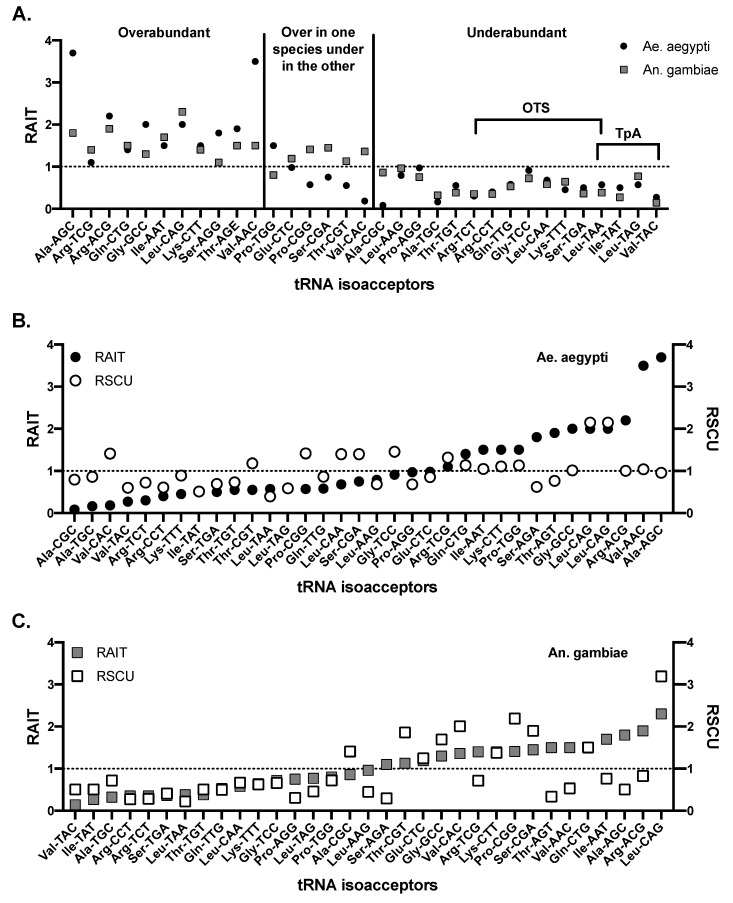
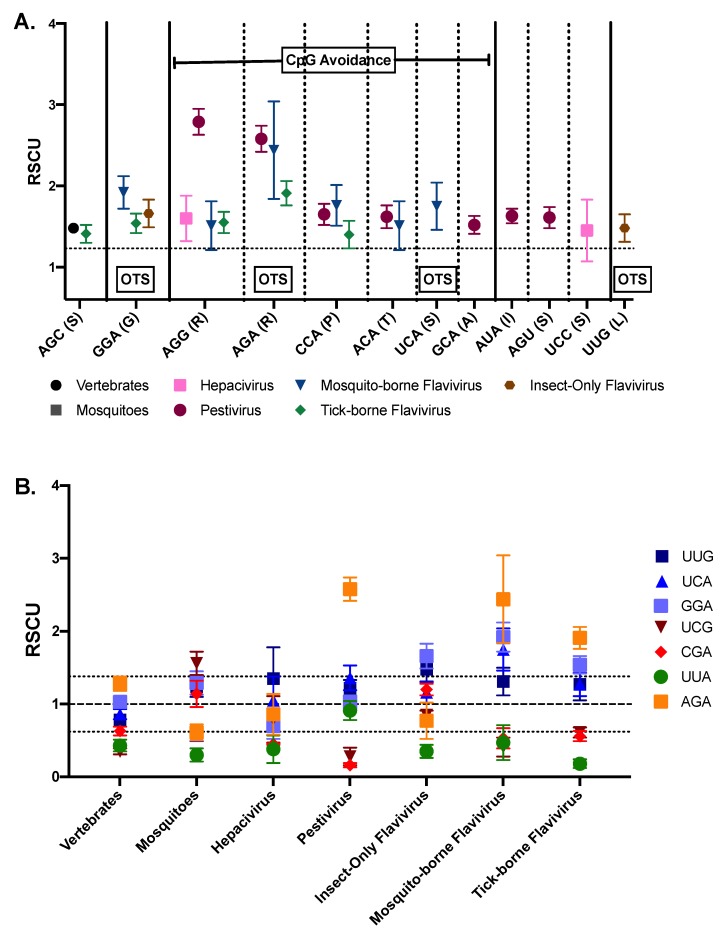
Arthropod-borne viruses (arboviruses) of vertebrates including dengue, zika, chikungunya, Rift Valley fever, and blue tongue viruses cause extensive morbidity and mortality in humans, agricultural animals, and wildlife across the globe. As obligate intercellular pathogens, arboviruses must be well adapted to the cellular and molecular environment of both their arthropod (invertebrate) and vertebrate hosts, which are vastly different due to hundreds of millions of years of separate evolution. Here we discuss the comparative pressures on arbovirus RNA genomes as a result of a dual host life cycle, focusing on pressures that do not alter amino acids. We summarize what is currently known about arboviral genetic composition, such as dinucleotide and codon usage, and how cyclical infection of vertebrate and invertebrate hosts results in different genetic profiles compared with single-host viruses. To serve as a comparison, we compile what is known about arthropod tRNA, dinucleotide, and codon usages and compare this with vertebrates. Additionally, we discuss the potential roles of genetic robustness in arboviral evolution and how it may vary from other viruses. Overall, both arthropod and vertebrate hosts influence the resulting genetic composition of arboviruses, but a great deal remains to be investigated.
节肢动物传播的病毒(arboviruses)包括登革热、寨卡、基孔肯雅热、裂谷热和蓝舌病毒等,这些病毒会在全球范围内给人类、农业动物和野生动物造成广泛的发病率和死亡率。作为专性细胞内病原体,arboviruses 必须很好地适应其节肢动物(无脊椎动物)和脊椎动物宿主的细胞和分子环境,由于数亿年的独立进化,这两种环境有很大的不同。在这里,我们讨论了 arbovirus RNA 基因组由于双重宿主生命周期而面临的比较压力,重点讨论了不会改变氨基酸的压力。我们总结了目前已知的 arboviral 遗传组成,例如二核苷酸和密码子使用,以及脊椎动物和无脊椎动物宿主的周期性感染如何导致与单宿主病毒相比不同的遗传特征。为了进行比较,我们汇编了有关节肢动物 tRNA、二核苷酸和密码子使用的知识,并将其与脊椎动物进行了比较。此外,我们还讨论了遗传稳健性在 arboviral 进化中的潜在作用,以及它可能与其他病毒有何不同。总的来说,节肢动物和脊椎动物宿主都会影响 arboviruses 的遗传组成,但仍有许多问题需要研究。