World Reference Center for Emerging Viruses and Arboviruses, University of Texas Medical Branch, Galveston, TX, USA.
Institute for Human Infections and Immunity, University of Texas Medical Branch, Galveston, TX, USA.
Nat Rev Microbiol. 2021 Mar;19(3):184-195. doi: 10.1038/s41579-020-00482-8. Epub 2021 Jan 11.
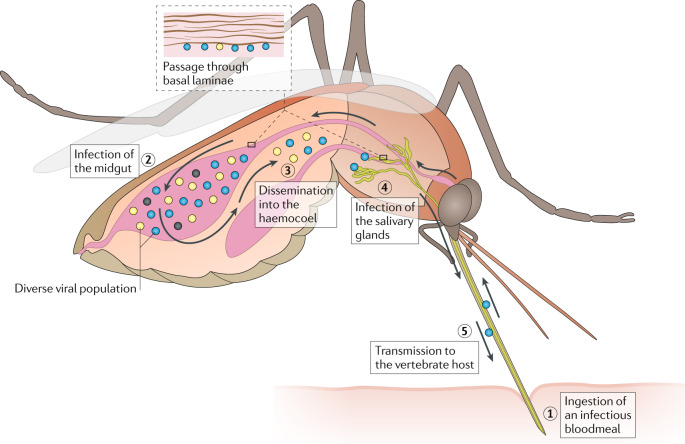
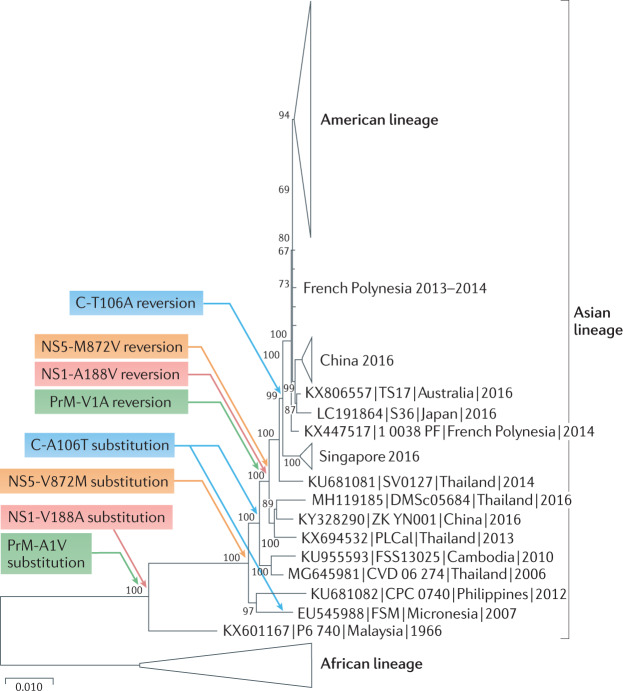
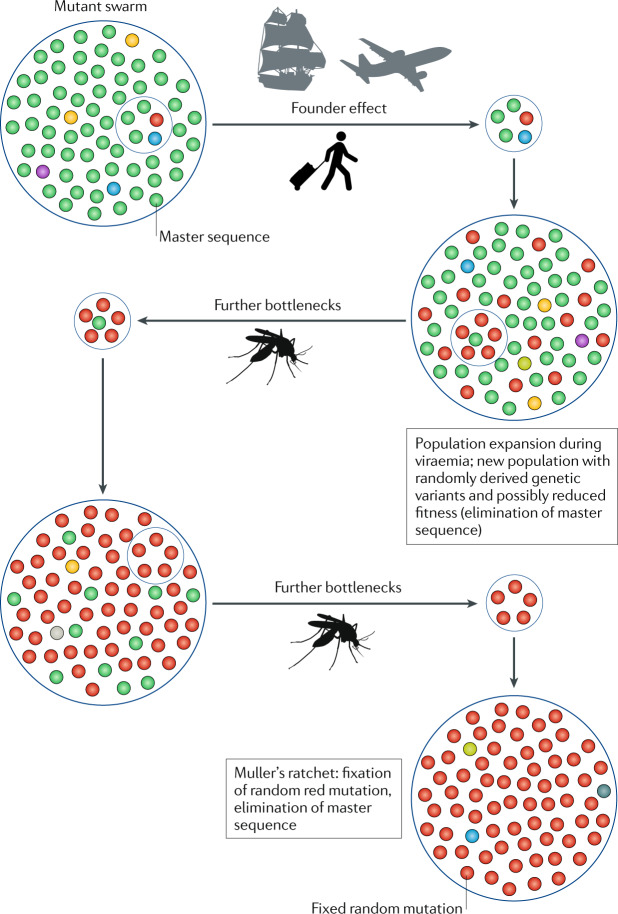
Transmission of arthropod-borne viruses (arboviruses) involves infection and replication in both arthropod vectors and vertebrate hosts. Nearly all arboviruses are RNA viruses with high mutation frequencies, which leaves them vulnerable to genetic drift and fitness losses owing to population bottlenecks during vector infection, dissemination from the midgut to the salivary glands and transmission to the vertebrate host. However, despite these bottlenecks, they seem to avoid fitness declines that can result from Muller's ratchet. In addition, founder effects that occur during the geographic introductions of human-amplified arboviruses, including chikungunya virus and Zika virus, can affect epidemic and endemic circulation, as well as virulence. In this Review, we discuss the role of genetic drift following population bottlenecks and founder effects in arboviral evolution and spread, and the emergence of human disease.
虫媒病毒(arboviruses)的传播涉及节肢动物媒介和脊椎动物宿主中的感染和复制。几乎所有的arboviruses 都是 RNA 病毒,具有很高的突变频率,这使得它们容易受到遗传漂变和适应度损失的影响,因为在媒介感染、从中肠传播到唾液腺以及传播到脊椎动物宿主的过程中会出现种群瓶颈。然而,尽管存在这些瓶颈,它们似乎避免了由 Muller's ratchet 导致的适应度下降。此外,在包括基孔肯雅病毒和寨卡病毒在内的人类扩增 arboviruses 的地理引入过程中发生的奠基者效应会影响流行病和地方性循环以及毒力。在这篇综述中,我们讨论了种群瓶颈和奠基者效应对 arboviral 进化和传播以及人类疾病出现的遗传漂变的作用。