Mass Spectrometry Centre, Department of Chemistry & QOPNA & LAQV-REQUIMTE, University of Aveiro, Campus Universitário de Santiago, 3810-193 Aveiro, Portugal.
Department of Chemistry & CESAM & ECOMARE, University of Aveiro, Campus Universitário de Santiago, 3810-193 Aveiro, Portugal.
Molecules. 2019 Jul 13;24(14):2555. doi: 10.3390/molecules24142555.
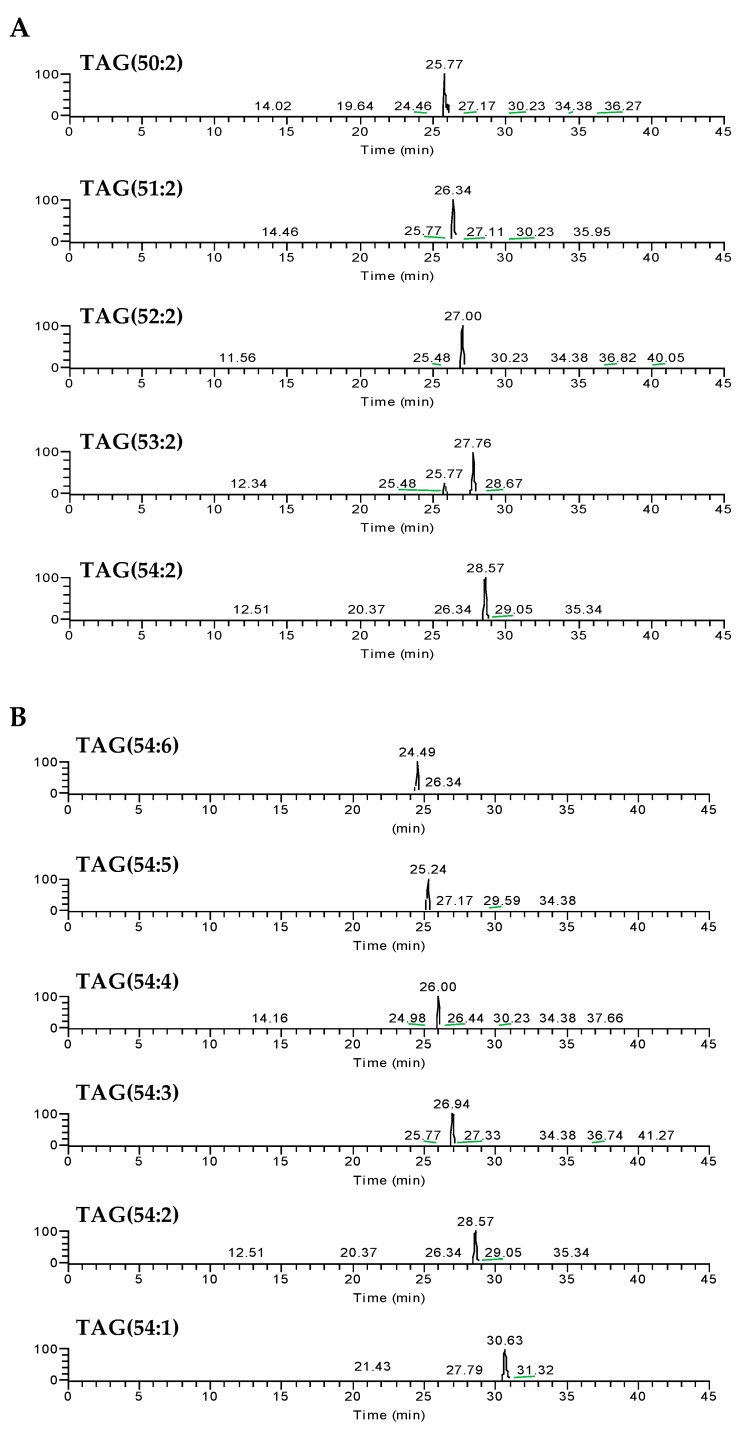
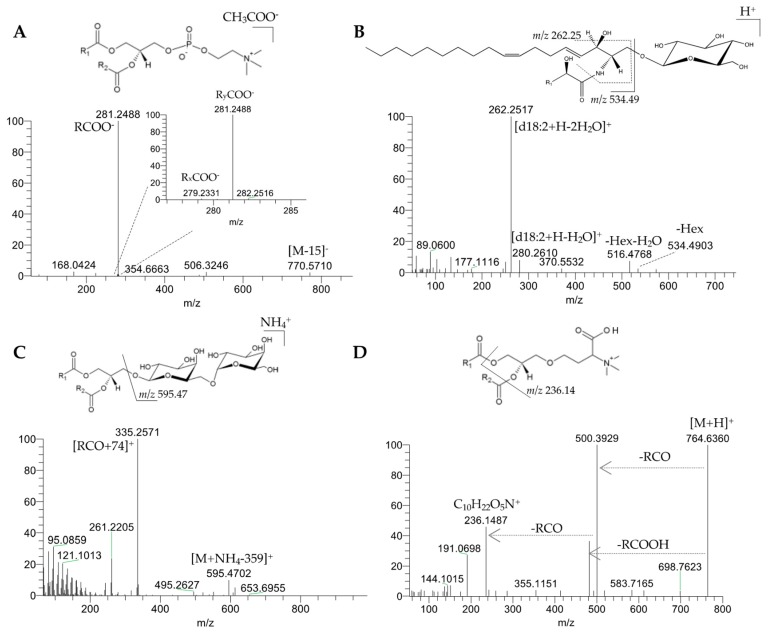
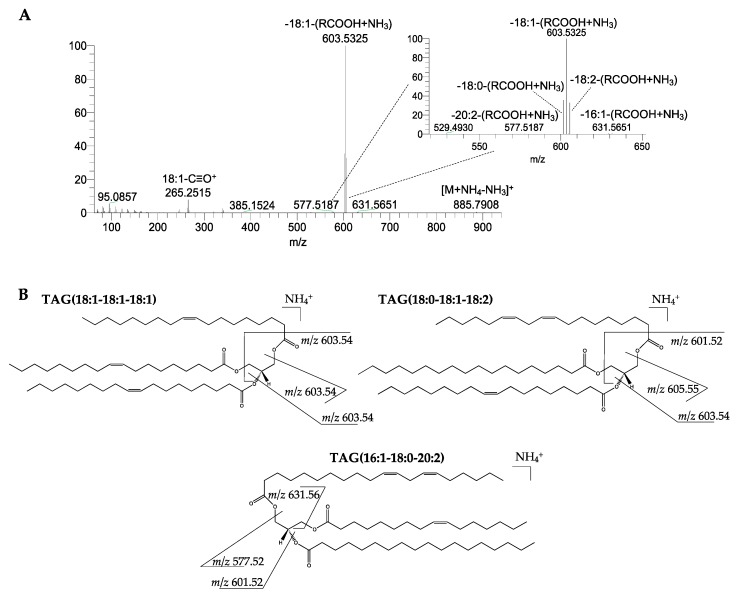
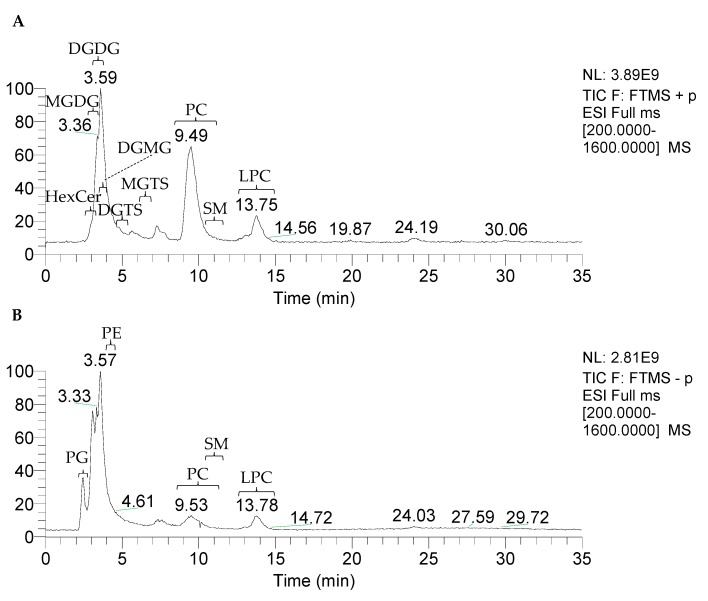
Olives ( L.) are classic ingredients in the Mediterranean diet with well-known health benefits, but their lipid composition has not been fully addressed. In this work, we characterised triacylglycerol (TAG) and polar lipid profiles of the olive pulp while using a complementary methodological approach that was based on solid-phase extraction to recover the neutral lipid (NL) and the polar lipid-rich fractions. The TAG profile was analysed in the NL-fraction by C reversed-phase liquid chromatography (LC) and the polar lipid profile by normal-phase hydrophilic interaction liquid chromatography (HILIC), with both being coupled to electrospray ionization-mass spectrometry (ESI-MS) and ESI-MS/MS. This approach identified 71 TAG ions that were attributed to more than 350 molecular species, with fatty acyl chain lengths from C11:0 to C26:0, including different polyunsaturated acyl chains. The polar lipids included 107 molecular species that belonged to 11 lipid classes that comprised phospholipids, glyceroglycolipids, glycosphingolipids, and betaine lipids. In addition to polyunsaturated fatty acids, some of the phospholipids, glycolipids, and glycosphingolipids that were identified in the olive pulp have been described as biologically active molecules. Lipidomic phenotyping of the olive pulp has led to the discovery of compounds that will allow for a better assessment of its nutritional value and new applications of bioactive lipid components in this functional food.
橄榄(L.)是地中海饮食中的经典成分,具有众所周知的健康益处,但它们的脂质组成尚未得到充分研究。在这项工作中,我们使用基于固相萃取(SPE)以回收中性脂质(NL)和富含极性脂质的部分的互补方法,对橄榄果肉中的三酰基甘油(TAG)和极性脂质谱进行了表征。NL 部分中的 TAG 谱通过反相 C 液相色谱(LC)进行分析,极性脂质谱通过正相亲水相互作用液相色谱(HILIC)进行分析,两者均与电喷雾电离-质谱(ESI-MS)和 ESI-MS/MS 联用。这种方法鉴定了 71 个 TAG 离子,它们归因于 350 多种以上的分子物种,脂肪酸链长从 C11:0 到 C26:0,包括不同的多不饱和脂肪酸链。极性脂质包括 107 种分子物种,属于 11 种脂质类,包括磷脂、甘油糖脂、糖脂和甜菜碱脂质。除了多不饱和脂肪酸外,在橄榄果肉中鉴定出的一些磷脂、糖脂和糖脂被描述为具有生物活性的分子。橄榄果肉的脂质组学表型分析发现了一些化合物,这将有助于更好地评估其营养价值,并为这种功能性食品中的生物活性脂质成分的新应用提供依据。