Wang Junmei, Zuzzio Kirstin, Walker Chandler L
Department of Biomedical Sciences and Comprehensive Care, Indiana University School of Dentistry, Indianapolis, IN 46202, USA.
Neuromuscular Research Group, Richard L. Roudebush Veterans Affairs Medical Center, Indianapolis, IN 46202, USA.
Brain Sci. 2019 Jul 14;9(7):165. doi: 10.3390/brainsci9070165.
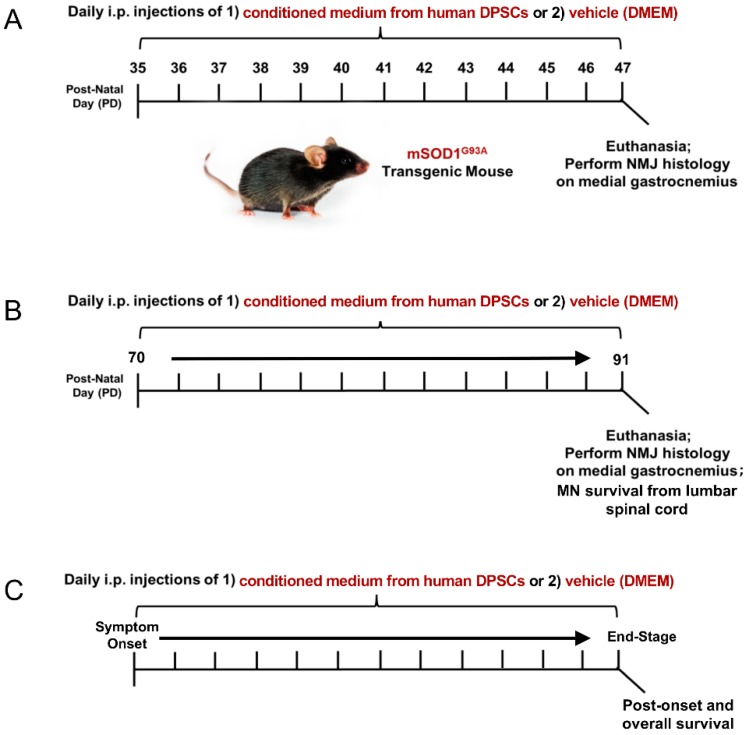
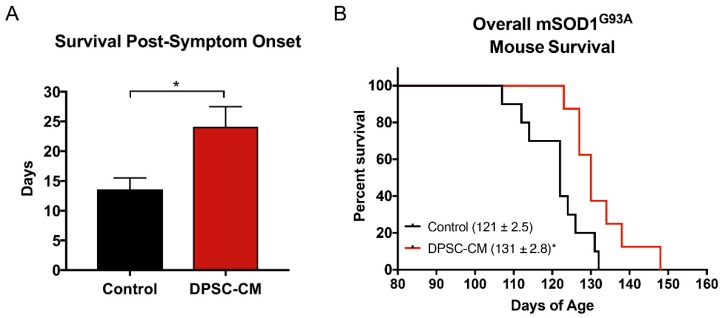
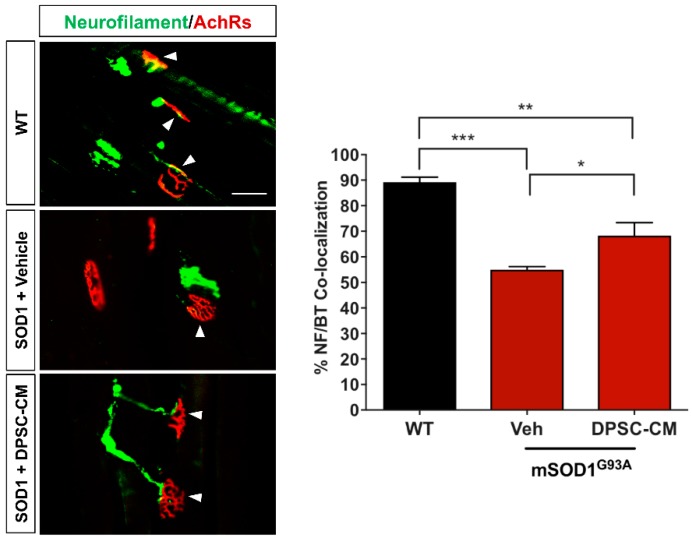
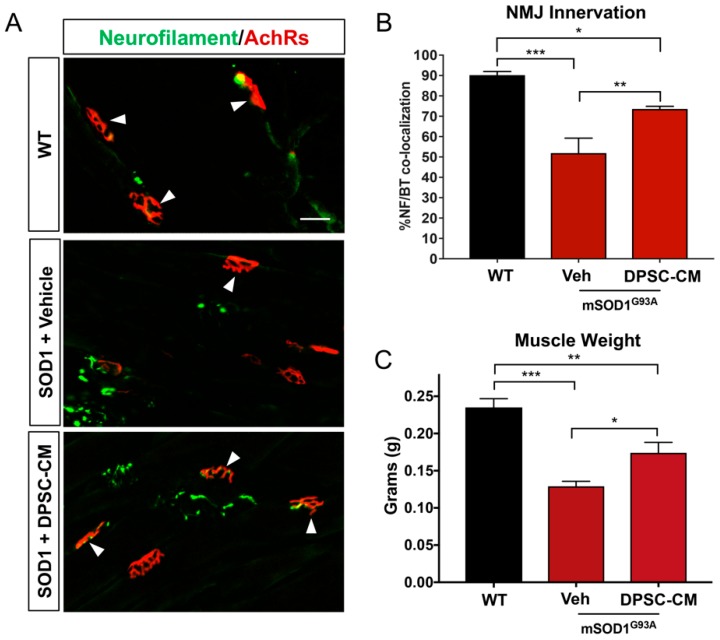
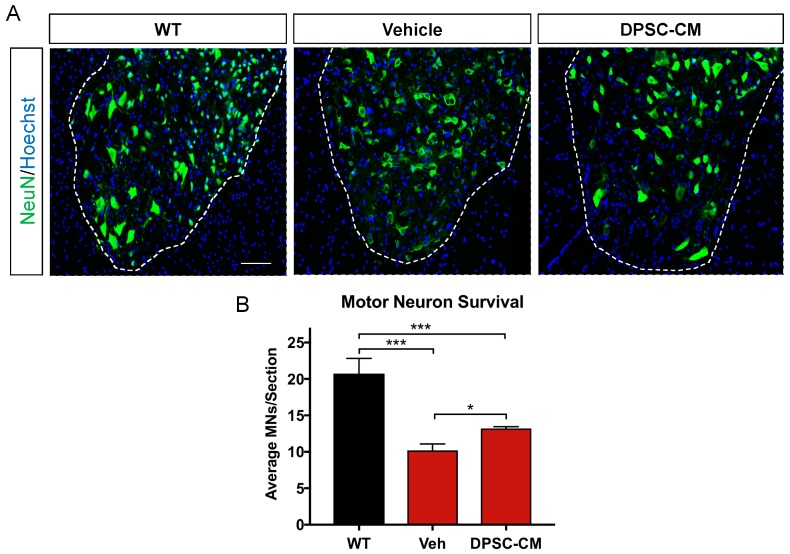
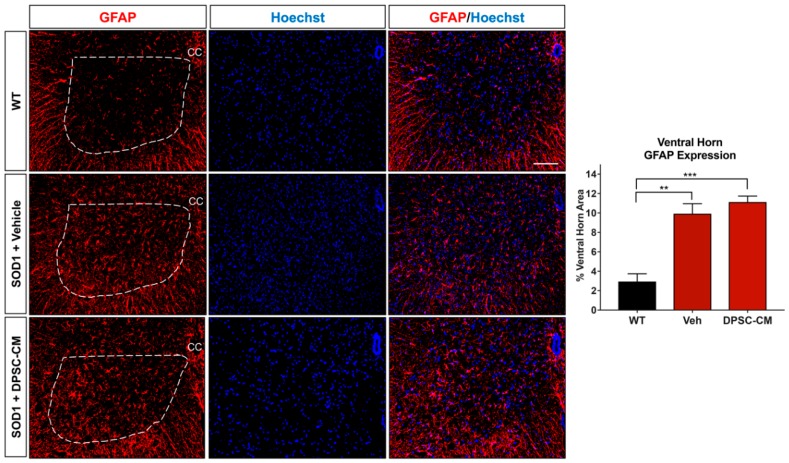
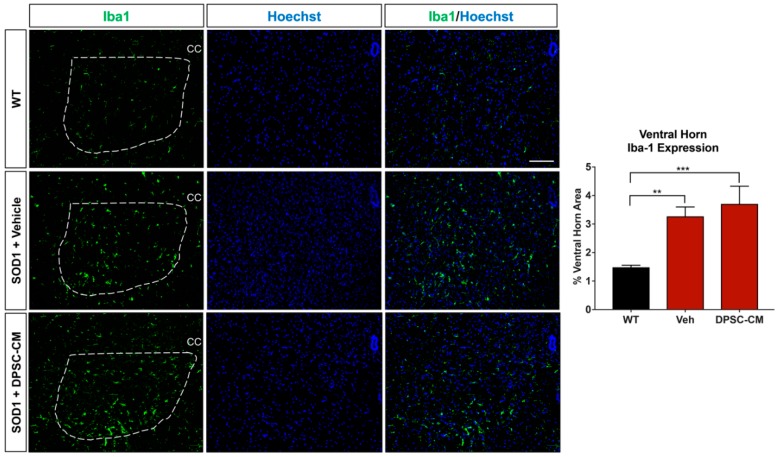
Amyotrophic lateral sclerosis (ALS) is a devastating motor neuron (MN) disease with no cure. Accumulating evidence indicates ALS involves a complex interaction between central glia and the peripheral immune response and neuromuscular interface. Stem cell secretomes contain various beneficial trophic factors and cytokines, and we recently demonstrated that administration of the secretome of adipose-derived stem cells (ASCs) during early neuromuscular junction (NMJ) denervation in the mutant superoxide dismutase (mSOD1) ALS mouse ameliorated NMJ disruption. In the present study, we hypothesized that administration of dental pulp stem cell secretome in the form of conditioned medium (DPSC-CM) at different stages of disease would promote NMJ innervation, prevent MN loss and extend lifespan. Our findings show that DPSC-CM significantly improved NMJ innervation at postnatal day (PD) 47 compared to vehicle treated mSOD1 mice ( < 0.05). During late pre-symptomatic stages (PD70-P91), DPSC-CM significantly increased MN survival ( < 0.01) and NMJ preservation ( < 0.05), while reactive gliosis in the ventral horn remained unaffected. For DPSC-CM treated mSOD1 mice beginning at symptom onset, post-onset days of survival as well as overall lifespan was significantly increased compared to vehicle treated mice ( < 0.05). This is the first study to show therapeutic benefits of systemic DPSC secretome in experimental ALS, and establishes a foundation for future research into the treatment effects and mechanistic analyses of DPSC and other stem cell secretome therapies in ALS.
肌萎缩侧索硬化症(ALS)是一种毁灭性的运动神经元疾病,目前无法治愈。越来越多的证据表明,ALS涉及中枢神经胶质细胞与外周免疫反应及神经肌肉接头之间的复杂相互作用。干细胞分泌组包含各种有益的营养因子和细胞因子,我们最近证明,在突变型超氧化物歧化酶(mSOD1)ALS小鼠的神经肌肉接头(NMJ)早期去神经支配期间给予脂肪来源干细胞(ASC)的分泌组,可改善NMJ破坏。在本研究中,我们假设在疾病的不同阶段以条件培养基(DPSC-CM)的形式给予牙髓干细胞分泌组,将促进NMJ神经支配,防止运动神经元丢失并延长寿命。我们的研究结果表明,与用载体处理的mSOD1小鼠相比,DPSC-CM在出生后第47天显著改善了NMJ神经支配(<0.05)。在症状前期晚期(PD70-P91),DPSC-CM显著提高了运动神经元存活率(<0.01)和NMJ保存率(<0.05),而腹角的反应性胶质增生未受影响。对于从症状发作开始接受DPSC-CM治疗的mSOD1小鼠,与用载体处理的小鼠相比,发病后的存活天数以及总体寿命均显著增加(<0.05)。这是第一项显示系统性DPSC分泌组在实验性ALS中具有治疗益处的研究,并为未来研究DPSC和其他干细胞分泌组疗法在ALS中的治疗效果和机制分析奠定了基础。