Department of Biology, University of Padova, 32121, Padova, Italy.
Helmholtz Centre for Polar and Marine Research, Alfred Wegener Institute (AWI), Wadden Sea Station, 25992, List auf Sylt, Germany.
BMC Evol Biol. 2019 Jul 23;19(1):149. doi: 10.1186/s12862-019-1472-6.
Adenosine deaminase enzymes of the ADAR family are conserved in metazoans. They convert adenine into inosine in dsRNAs and thus alter both structural properties and the coding potential of their substrates. Acting on exogenous dsRNAs, ADAR1 exerts a pro- or anti-viral role in vertebrates and Drosophila.
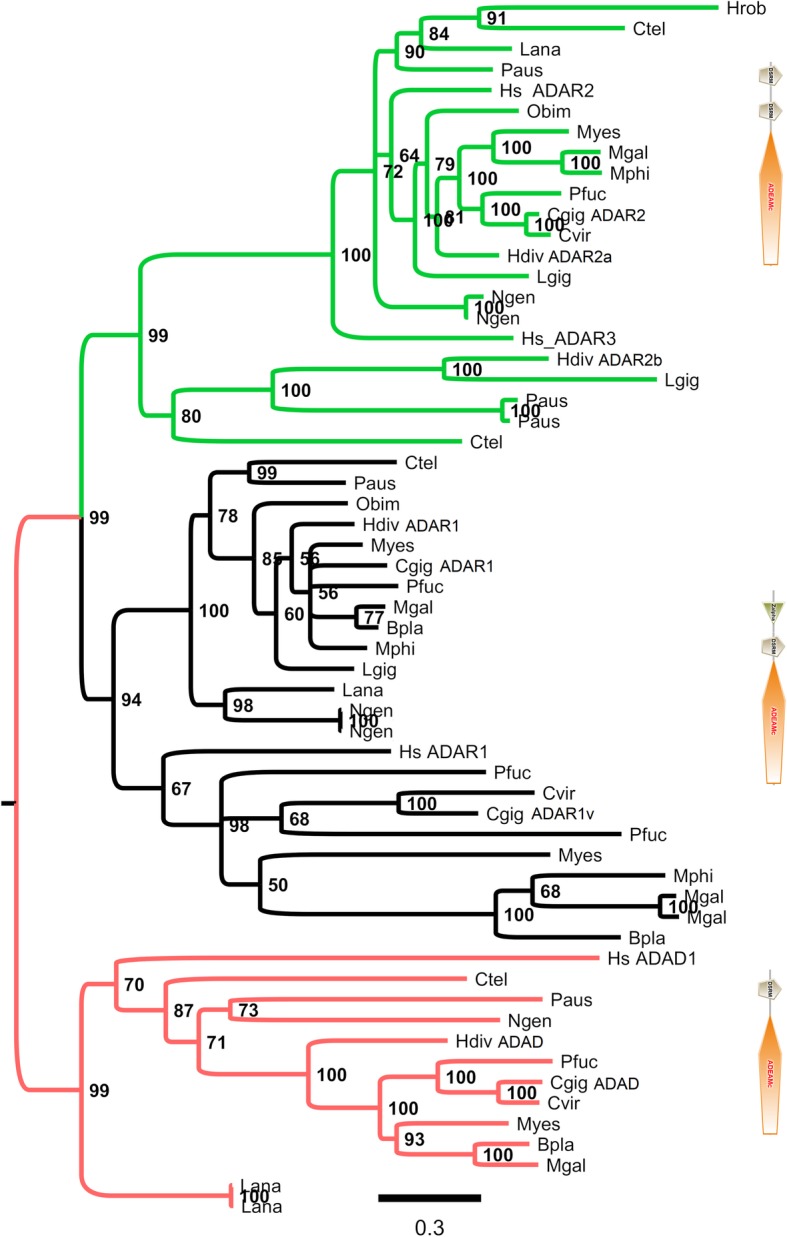
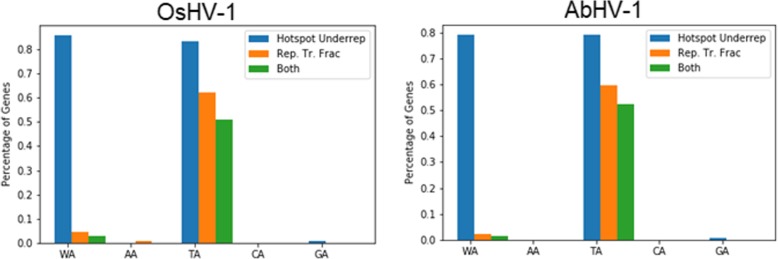
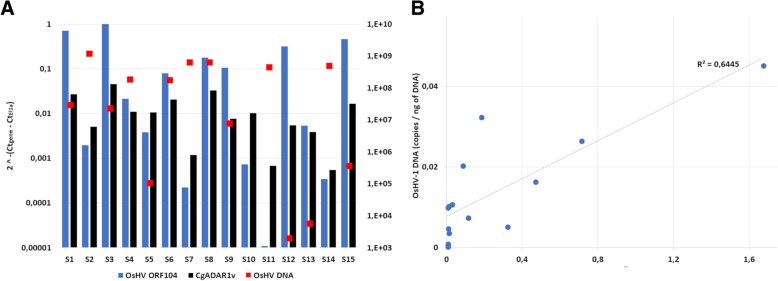
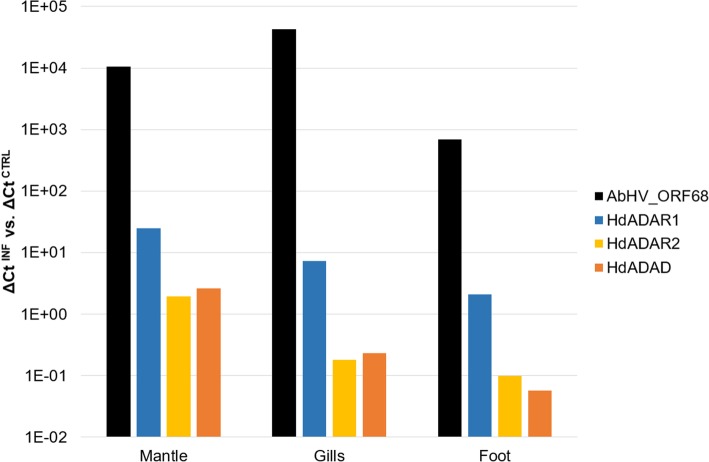
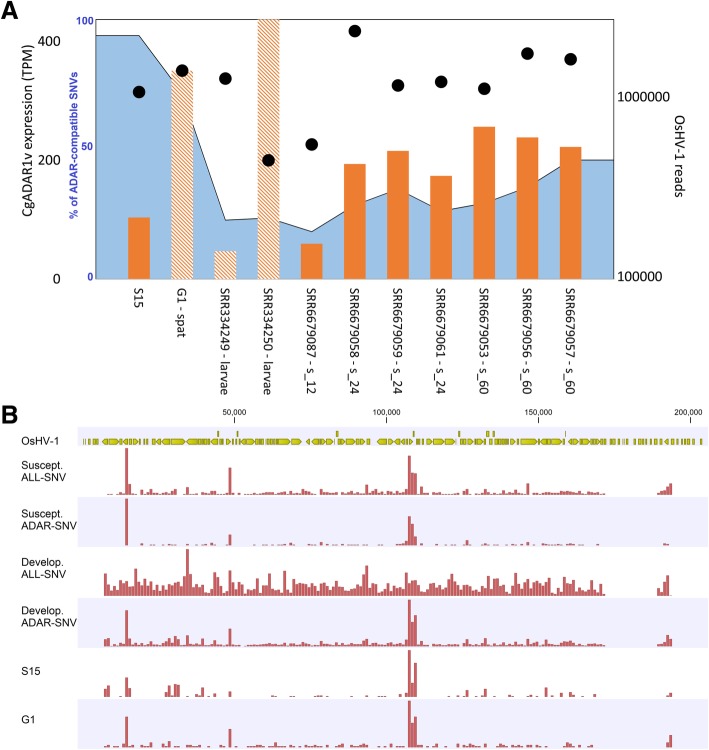
We traced 4 ADAR homologs in 14 lophotrochozoan genomes and we classified them into ADAD, ADAR1 or ADAR2, based on phylogenetic and structural analyses of the enzymatic domain. Using RNA-seq and quantitative real time PCR we demonstrated the upregulation of one ADAR1 homolog in the bivalve Crassostrea gigas and in the gastropod Haliotis diversicolor supertexta during Ostreid herpesvirus-1 or Haliotid herpesvirus-1 infection. Accordingly, we demonstrated an extensive ADAR-mediated editing of viral RNAs. Single nucleotide variation (SNV) profiles obtained by pairing RNA- and DNA-seq data from the viral infected individuals resulted to be mostly compatible with ADAR-mediated A-to-I editing (up to 97%). SNVs occurred at low frequency in genomic hotspots, denoted by the overlapping of viral genes encoded on opposite DNA strands. The SNV sites and their upstream neighbor nucleotide indicated the targeting of selected adenosines. The analysis of viral sequences suggested that, under the pressure of the ADAR editing, the two Malacoherpesviridae genomes have evolved to reduce the number of deamination targets.
We report, for the first time, evidence of an extensive editing of Malacoherpesviridae RNAs attributable to host ADAR1 enzymes. The analysis of base neighbor preferences, structural features and expression profiles of molluscan ADAR1 supports the conservation of the enzyme function among metazoans and further suggested that ADAR1 exerts an antiviral role in mollusks.
ADAR 家族的腺苷脱氨酶酶在后生动物中是保守的。它们将腺嘌呤转化为双链 RNA 中的肌苷,从而改变其底物的结构特性和编码潜力。在外源双链 RNA 的作用下,ADAR1 在脊椎动物和果蝇中发挥抗病毒或促病毒作用。
我们在 14 种担轮动物基因组中追踪到 4 种 ADAR 同源物,并根据酶结构域的系统发育和结构分析将它们分类为 ADAD、ADAR1 或 ADAR2。通过 RNA-seq 和定量实时 PCR,我们证明了双壳贝类巨蛎和腹足纲动物 Haliotis diversicolor supertexta 中一种 ADAR1 同源物在感染牡蛎疱疹病毒-1 或鲍鱼疱疹病毒-1 时的上调。相应地,我们证明了广泛的 ADAR 介导的病毒 RNA 编辑。从受病毒感染个体的 RNA 和 DNA-seq 数据配对获得的单核苷酸变异 (SNV) 谱与 ADAR 介导的 A-to-I 编辑(高达 97%)大多兼容。在基因组热点处,SNV 以低频率发生,这些热点由相反 DNA 链上编码的病毒基因重叠表示。SNV 位点及其上游相邻核苷酸表明了对选定腺苷的靶向。病毒序列分析表明,在 ADAR 编辑的压力下,两种 Malacoherpesviridae 基因组已经进化为减少脱氨酶靶标的数量。
我们首次报告了宿主 ADAR1 酶归因于广泛编辑 Malacoherpesviridae RNA 的证据。对软体动物 ADAR1 的碱基邻居偏好、结构特征和表达谱的分析支持了酶功能在后生动物中的保守性,并进一步表明 ADAR1 在软体动物中发挥抗病毒作用。