Chen Wei, He Bin, Tong Wusong, Zeng Jinsong, Zheng Ping
Department of Neurosurgery, Shanghai University of Medicine and Health Sciences, Shanghai, China.
Department of Neurosurgery, Shanghai Pudong New Area People's Hospital, Pudong, China.
Front Cell Neurosci. 2019 Jul 9;13:298. doi: 10.3389/fncel.2019.00298. eCollection 2019.
Exogenous insulin like growth factor-1 (IGF-1) is known to be neuroprotective in animal models with brain insults, while it can also cause hyperexcitability in rodents. In this regard, the role of endogenous IGF-1 in brain responses to brain insults like excitotoxicity, a common pathology in brain injuries, remains to be elucidated. Here, we investigated the potential role of cell-specific endogenous IGF-1 in the kainic acid (KA) -induced degeneration of the neurons.
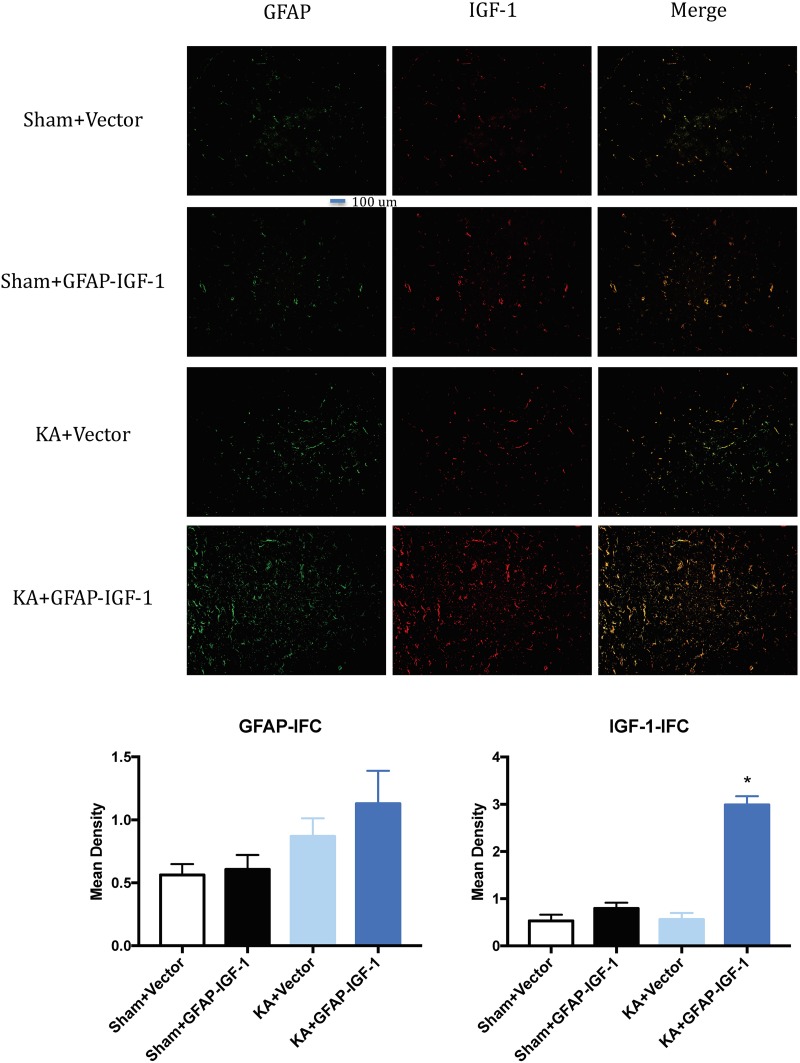
Kainic acid was given to primary cultured cortical neurons and co-cultured astrocytes were added as a supportive system. We evaluated the cell proliferation rate, IGF-1 level in different groups and applied the PCR-Chip assay to explore the downstream of IGF-1. In addition, we applied the viral transfer of astrocytic IGF-1 to rodents treated with KA and assessed the associated molecular marker and behavioral outcomes in these rodents.
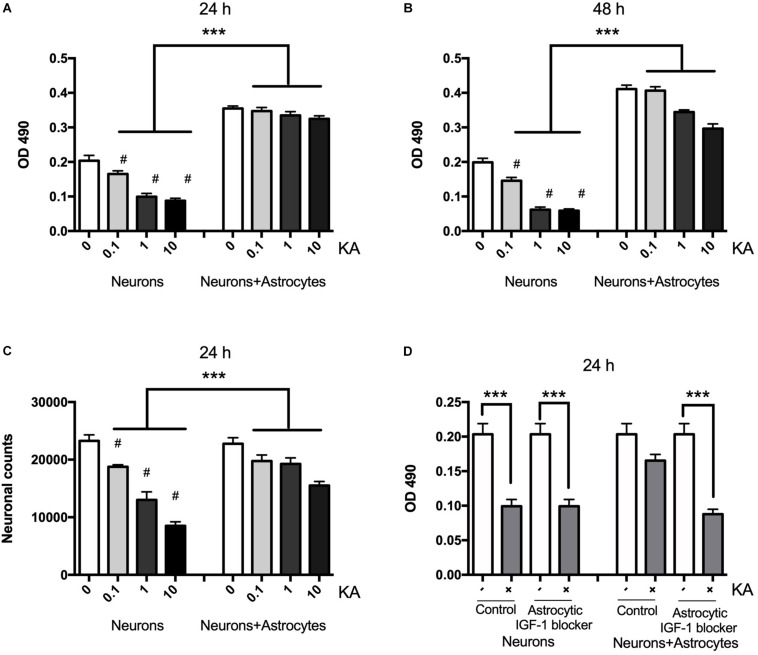
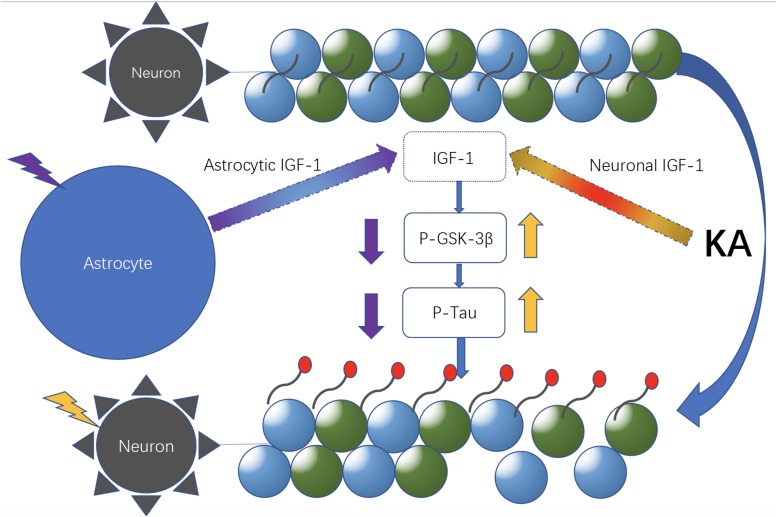
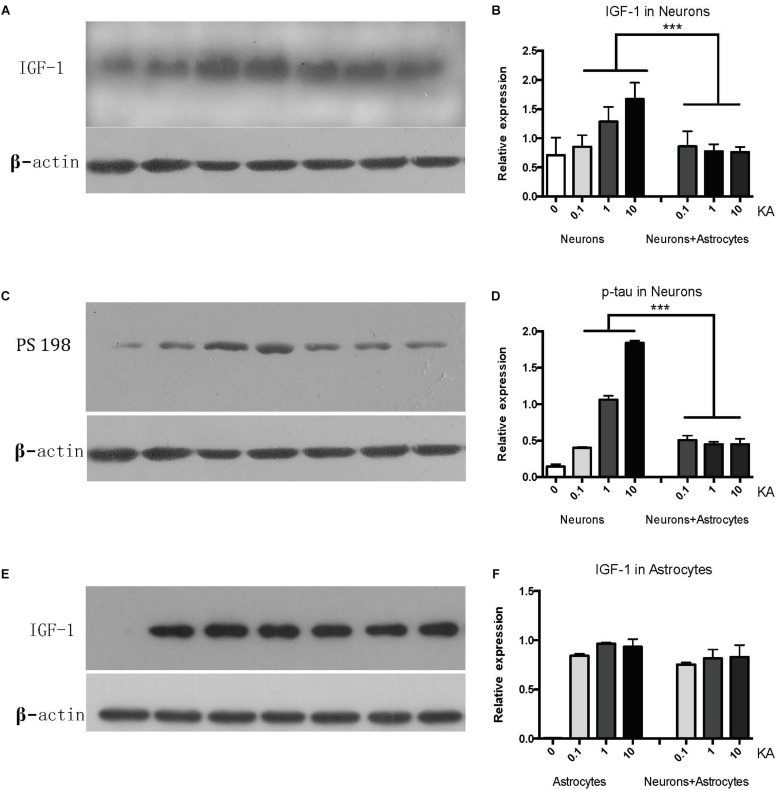
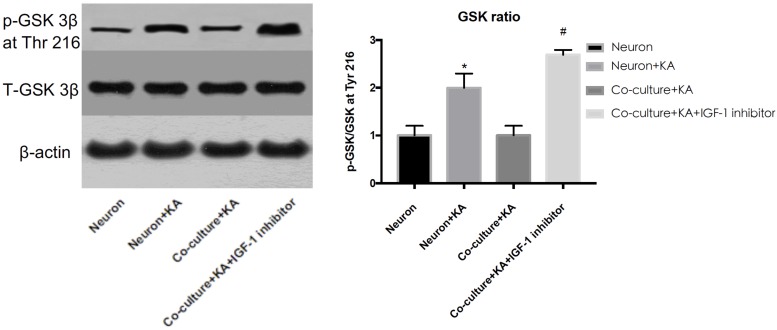
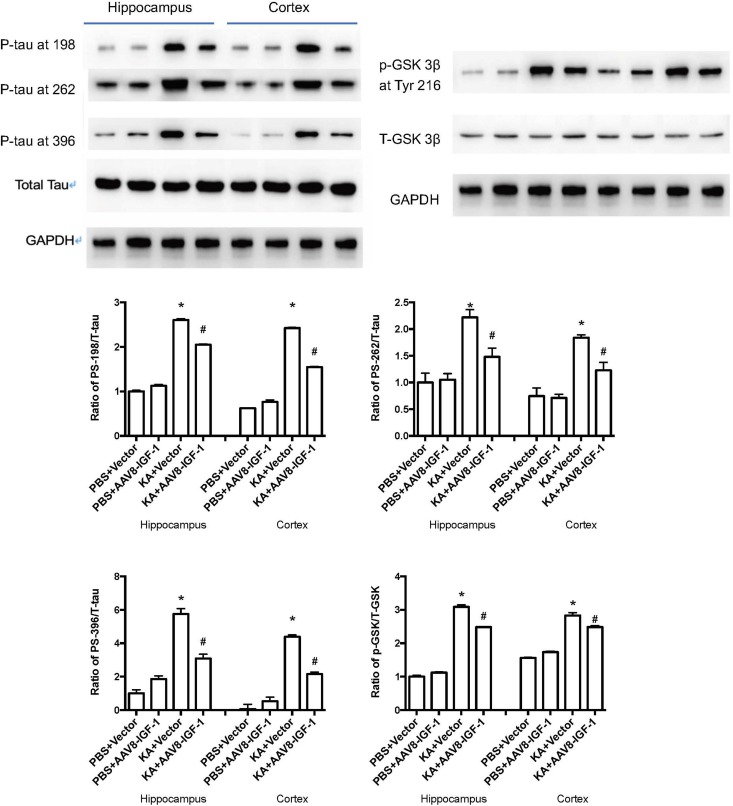
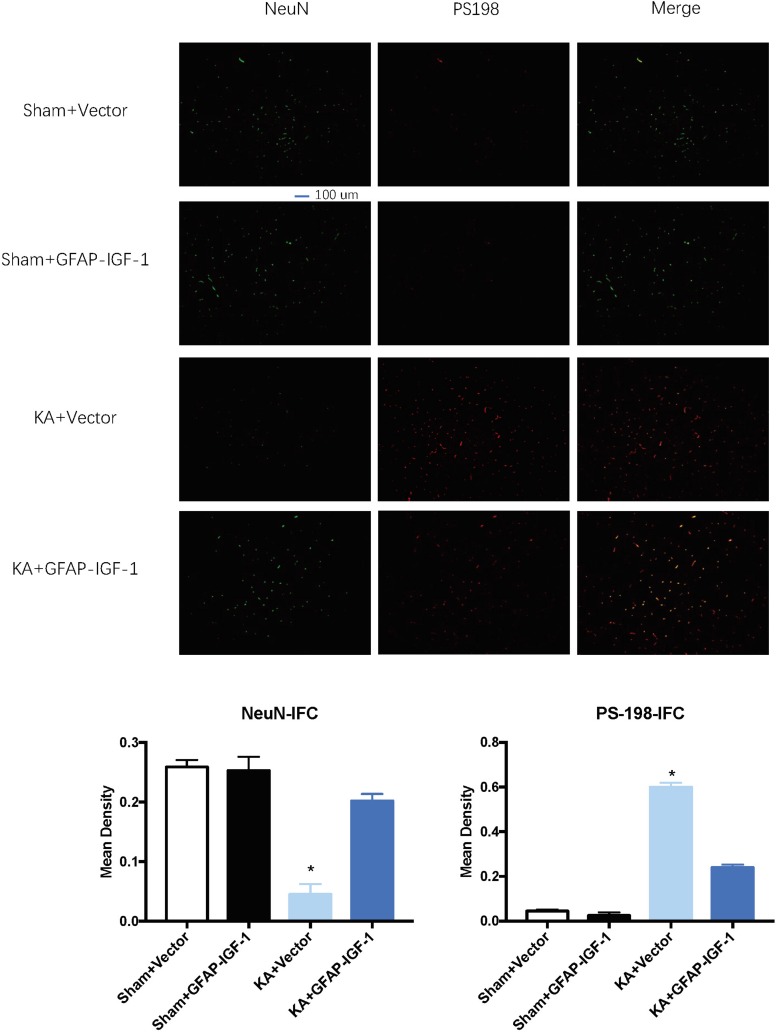
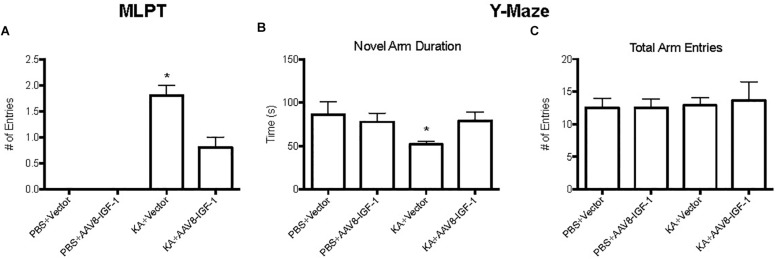
We found KA induced increased cell death and hyperphosphorylated tau in neurons; co-cultured astrocytes could prevent these pathologies, and this rescuing effect was abrogated with blockade of the astrocytic IGF-1 with AG1024 (IGF-1R inhibitor). PCR-Chip assay identified that astrocytic IGF-1 could decrease the p-GSK-3 at Tyr 216 in neurons treated with KA and this effect was abrogated with AG1024 as well. In addition, study showed that gene transfer of astrocytic IGF-1 decreased p-tau and cognitive dysfunction in KA mice.
Our results show astrocytic IGF-1 exhibits neuroprotective properties in neurodegenerative processes in the CNS.
已知外源性胰岛素样生长因子-1(IGF-1)在脑损伤动物模型中具有神经保护作用,而它在啮齿动物中也可引起兴奋性过高。在这方面,内源性IGF-1在脑对诸如兴奋毒性(脑损伤中一种常见的病理状态)等脑损伤的反应中的作用仍有待阐明。在此,我们研究了细胞特异性内源性IGF-1在 kainic 酸(KA)诱导的神经元变性中的潜在作用。
将 kainic 酸给予原代培养的皮质神经元,并添加共培养的星形胶质细胞作为支持系统。我们评估了不同组的细胞增殖率、IGF-1水平,并应用PCR芯片分析来探索IGF-1的下游信号。此外,我们将星形胶质细胞IGF-1通过病毒转导至用KA处理的啮齿动物,并评估这些啮齿动物中的相关分子标志物和行为结果。
我们发现KA诱导神经元中细胞死亡增加和tau蛋白过度磷酸化;共培养的星形胶质细胞可以预防这些病理变化,而用AG1024(IGF-1R抑制剂)阻断星形胶质细胞的IGF-1可消除这种挽救作用。PCR芯片分析确定,星形胶质细胞IGF-1可降低KA处理的神经元中Tyr 216位点的p-GSK-3水平,并且这种作用也被AG1024消除。此外,研究表明,星形胶质细胞IGF-1的基因转移可降低KA小鼠的p-tau水平并改善认知功能障碍。
我们的结果表明,星形胶质细胞IGF-1在中枢神经系统的神经退行性过程中具有神经保护特性。