Division of Gynecological Endocrinology and Reproductive Medicine, Bern University Hospital, University of Bern, Inselspital, Bern, Switzerland.
Department of Feto-maternal Medicine and Obstetrics, University Women's Hospital, University Hospital, University of Bern, Inselspital, Bern, Switzerland.
Acta Obstet Gynecol Scand. 2019 Dec;98(12):1575-1584. doi: 10.1111/aogs.13691. Epub 2019 Aug 11.
Reproductive scientists have postulated various risk factors for lower birthweight following conventional gonadotropin-stimulated in vitro fertilization compared with spontaneously conceived children: parental factors (age, health, duration of subfertility and smoking habits); ovarian stimulation; laboratory procedures; the number of oocytes retrieved and the number of embryos transferred. Our aim was to investigate the impact of gonadotropin stimulation and serum estradiol level on the risk of a newborn being small-for-gestational-age.
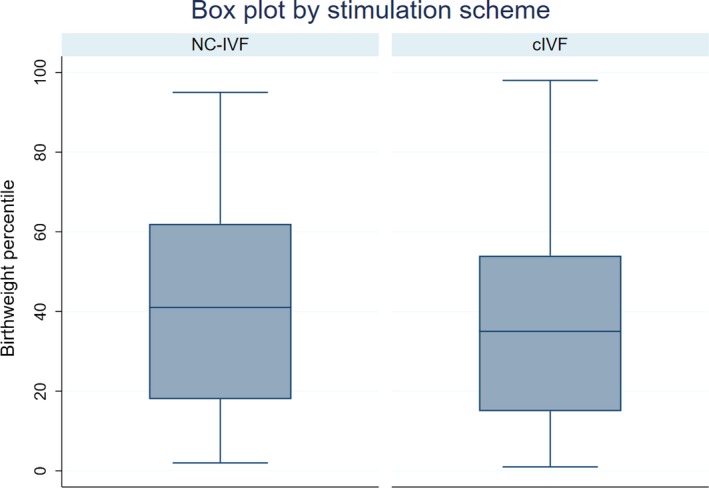
We conducted a cohort study (2010-2016) of singletons (n = 155) born either after conventional gonadotropin-stimulated in vitro fertilization (using ≥150 IU/d human gonadotropin for stimulation) or after natural cycle in vitro fertilization without any stimulation. We analyzed perinatal outcomes using birthweight percentiles, adjusted for gestational age and sex.
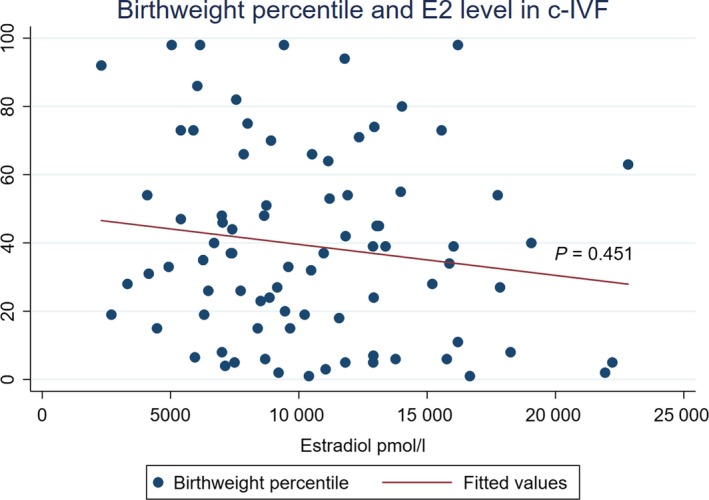
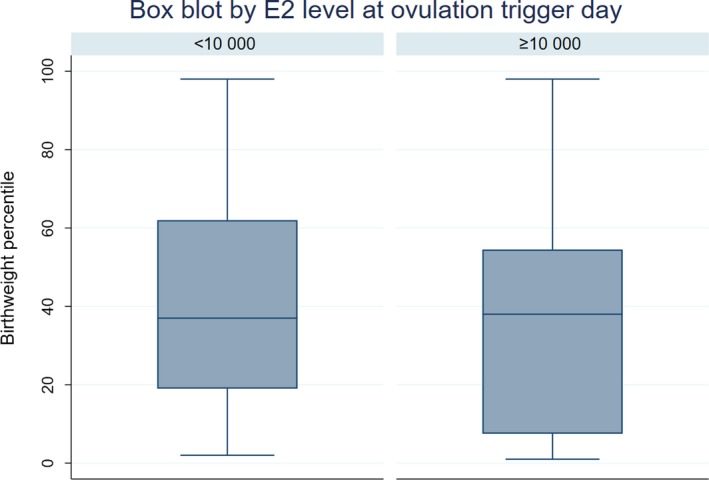
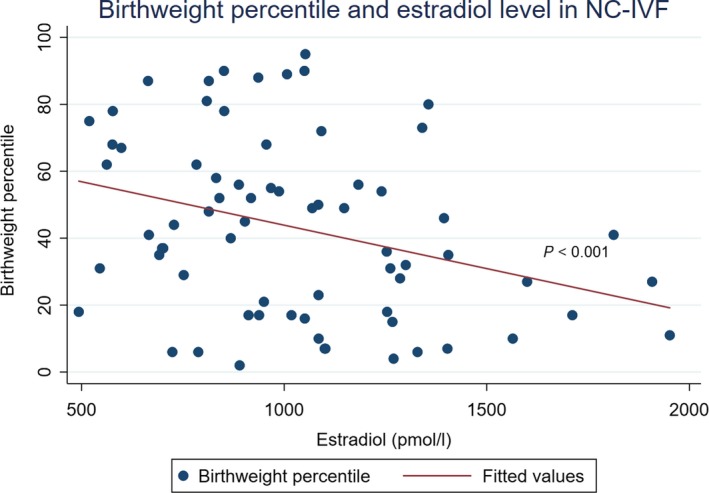
The proportion of small-for-gestational-age was 11.8% following conventional gonadotropin-stimulated in vitro fertilization and 2.9% after natural cycle in vitro fertilization (P = 0.058). The odds of small-for-gestational-age were significantly higher with supraphysiological estradiol levels in maternal serum on ovulation trigger day (unadjusted odds ratio 4.58; 95% confidence interval 1.35-15.55; P = 0.015). It remained significant after adjusting for maternal height, age and body mass index (adjusted odds ratio 3.83; 95% confidence interval 1.06-13.82; P = 0.041).
We found an associated risk of children being born small-for-gestational-age after conventional gonadotropin-stimulated in vitro fertilization compared with natural cycle in vitro fertilization. This higher risk is significantly associated with supraphysiological estradiol levels. We propose a reduction in the dosage of gonadotropin to minimize the risk of small-for-gestational-age and future health consequences.
与自然受孕相比,传统的促性腺激素刺激体外受精后出生体重较低,生殖科学家提出了各种风险因素:父母因素(年龄、健康、不孕持续时间和吸烟习惯);卵巢刺激;实验室程序;取回的卵母细胞数量和转移的胚胎数量。我们的目的是研究促性腺激素刺激和血清雌二醇水平对新生儿成为小于胎龄儿风险的影响。
我们进行了一项队列研究(2010-2016 年),纳入了 155 名单胎出生的婴儿,他们要么是通过传统的促性腺激素刺激体外受精(使用≥150IU/d 的人促性腺激素进行刺激),要么是通过未经任何刺激的自然周期体外受精。我们通过调整胎龄和性别,使用出生体重百分位数分析围产期结局。
传统促性腺激素刺激体外受精后小于胎龄儿的比例为 11.8%,自然周期体外受精后为 2.9%(P=0.058)。在排卵触发日,母体血清中超生理雌二醇水平与小于胎龄儿的几率显著相关(未经调整的优势比 4.58;95%置信区间 1.35-15.55;P=0.015)。在调整了母亲身高、年龄和体重指数后,这一结果仍然显著(调整后的优势比 3.83;95%置信区间 1.06-13.82;P=0.041)。
我们发现与自然周期体外受精相比,传统促性腺激素刺激体外受精后儿童出生时小于胎龄儿的风险增加。这种更高的风险与超生理雌二醇水平显著相关。我们建议减少促性腺激素的剂量,以尽量降低小于胎龄儿和未来健康后果的风险。