College of Agronomy and Biotechnology, Southwest University, Chongqing 400716, China.
Academy of Agricultural Sciences, Southwest University, Chongqing 400716, China.
Int J Mol Sci. 2019 Jul 23;20(14):3591. doi: 10.3390/ijms20143591.
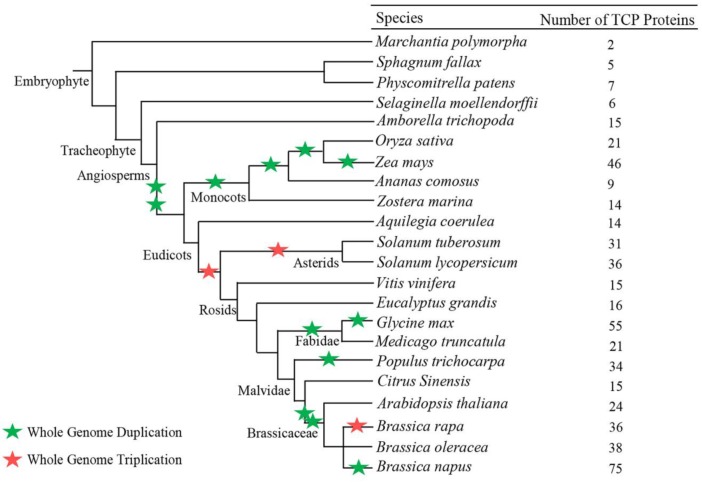
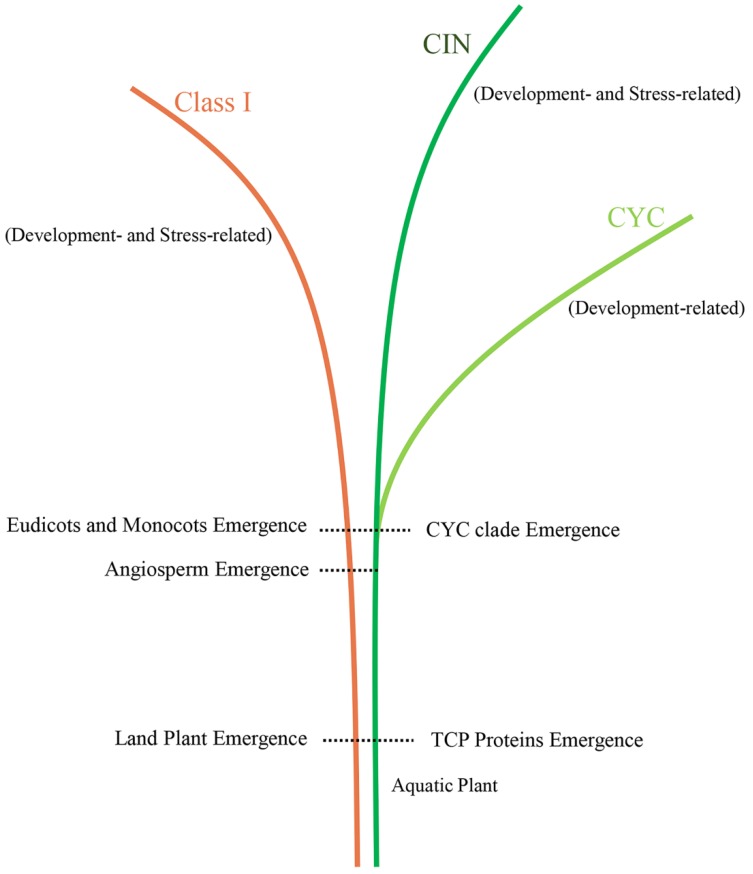
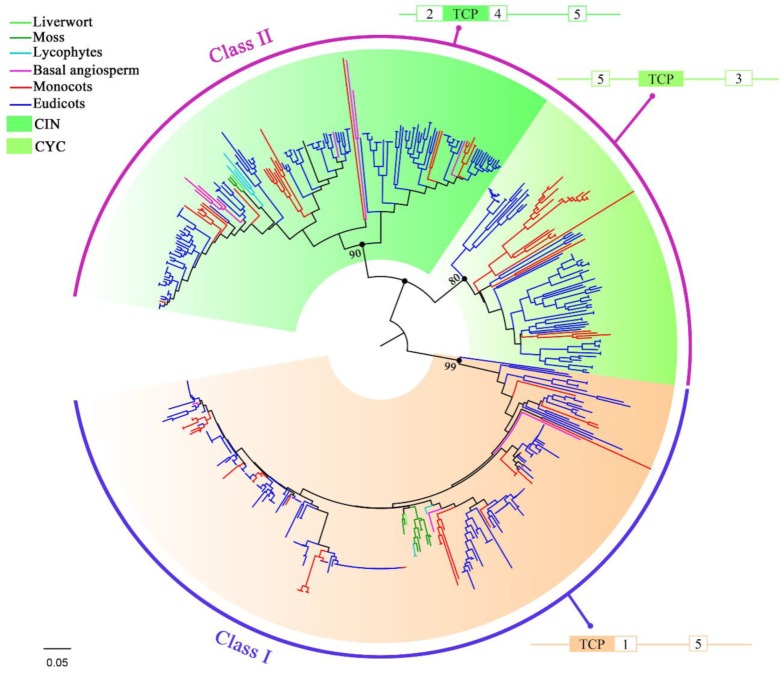
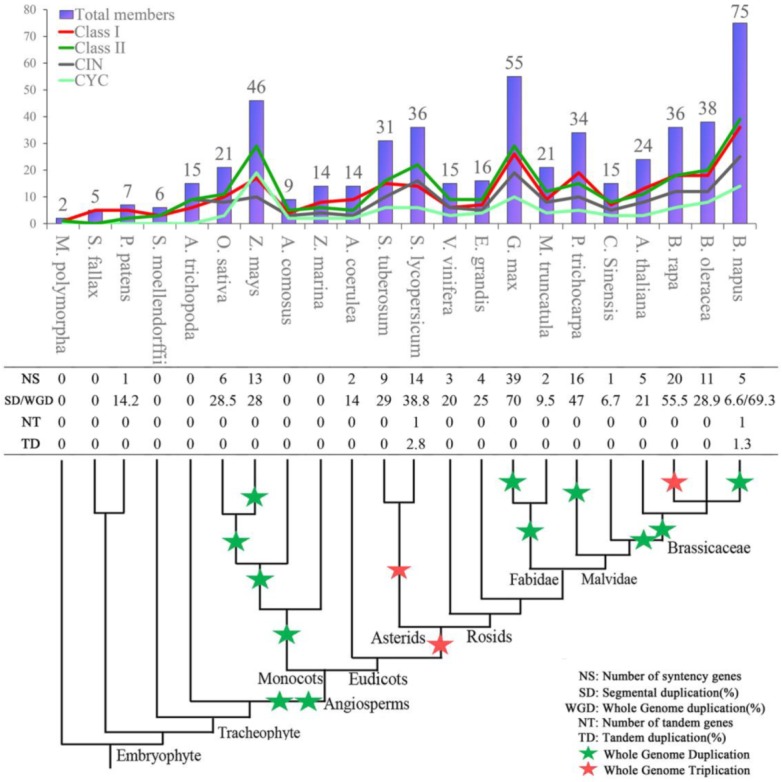
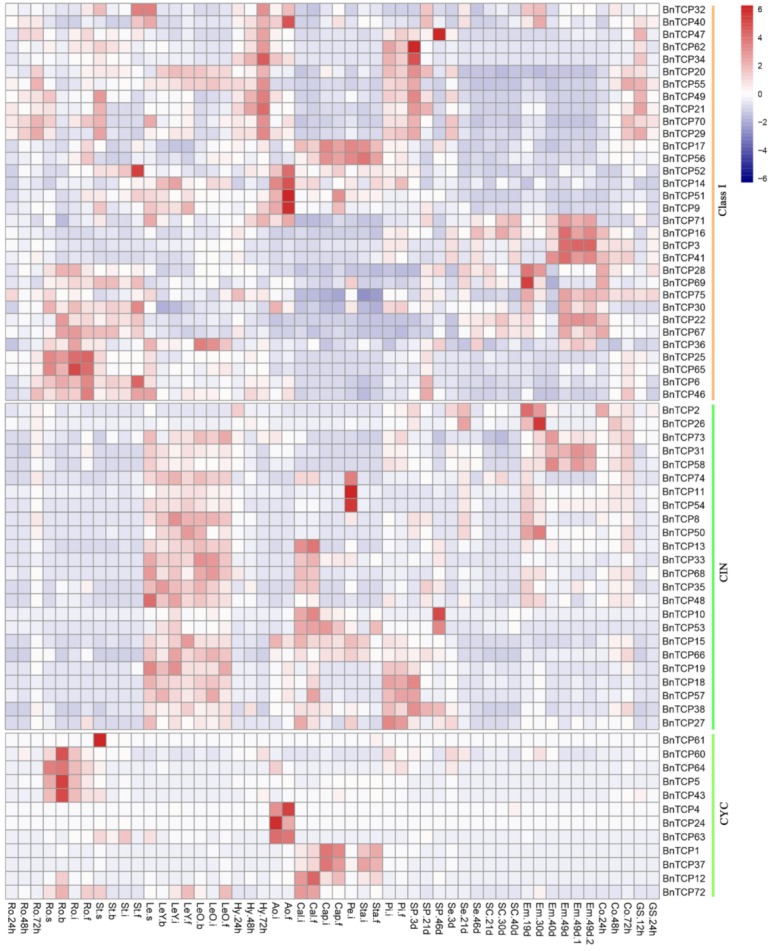
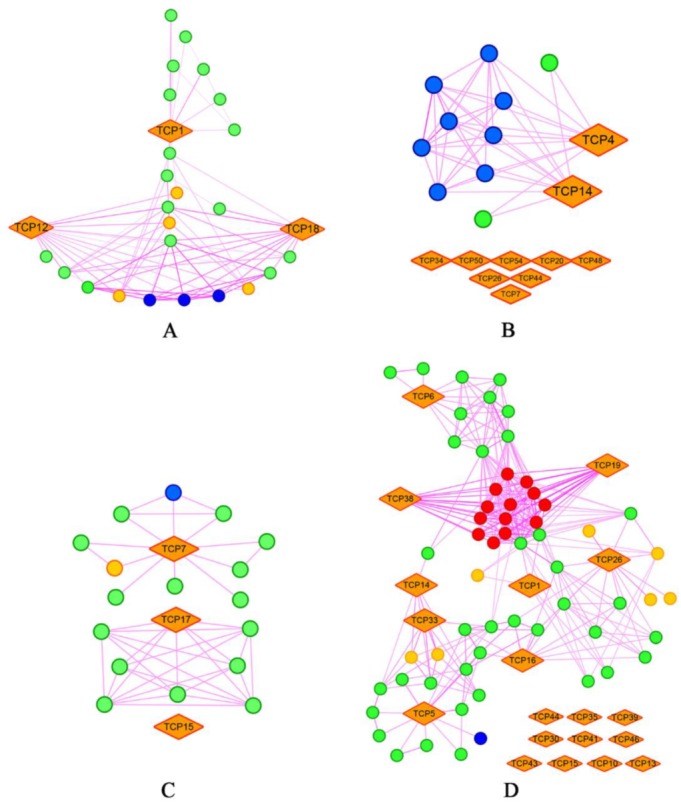
The plant-specific Teosinte-branched 1/Cycloidea/Proliferating (TCP) transcription factor genes are involved in plants' development, hormonal pathways, and stress response but their evolutionary history is uncertain. The genome-wide analysis performed here for 47 plant species revealed 535 TCP candidates in terrestrial plants and none in aquatic plants, and that TCP family genes originated early in the history of land plants. Phylogenetic analysis divided the candidate genes into Classes I and II, and Class II was further divided into CYCLOIDEA (CYC) and CINCINNATA (CIN) clades; CYC is more recent and originated from CIN in angiosperms. Protein architecture, intron pattern, and sequence characteristics were conserved in each class or clade supporting this classification. The two classes significantly expanded through whole-genome duplication during evolution. Expression analysis revealed the conserved expression of TCP genes from lower to higher plants. The expression patterns of Class I and CIN genes in different stages of the same tissue revealed their function in plant development and their opposite effects in the same biological process. Interaction network analysis showed that TCP proteins tend to form protein complexes, and their interaction networks were conserved during evolution. These results contribute to further functional studies on TCP family genes.
植物特有的分支 1/环化蛋白/增殖 (TCP) 转录因子基因参与植物的发育、激素途径和应激反应,但它们的进化历史尚不确定。这里对 47 种植物进行的全基因组分析显示,陆地植物中有 535 个 TCP 候选基因,而水生植物中没有,并且 TCP 家族基因起源于陆地植物的早期。系统发育分析将候选基因分为 I 类和 II 类,II 类进一步分为环化蛋白 (CYC) 和 CINNATA (CIN) 分支;在被子植物中,CYC 是较新的,起源于 CIN。每个类或分支中的蛋白质结构、内含子模式和序列特征都保守,支持这种分类。这两个类在进化过程中通过全基因组复制显著扩张。表达分析显示 TCP 基因从低等植物到高等植物的保守表达。同一组织不同阶段 I 类和 CIN 基因的表达模式揭示了它们在植物发育中的功能及其在同一生物过程中的相反作用。互作网络分析表明,TCP 蛋白倾向于形成蛋白质复合物,并且它们在进化过程中的互作网络是保守的。这些结果有助于进一步研究 TCP 家族基因的功能。