Department of Linguistics, Queen Mary University of London, London, England.
School of Electronic Engineering and Computer Science, Queen Mary University of London, London, England.
PLoS One. 2019 Jul 25;14(7):e0219955. doi: 10.1371/journal.pone.0219955. eCollection 2019.
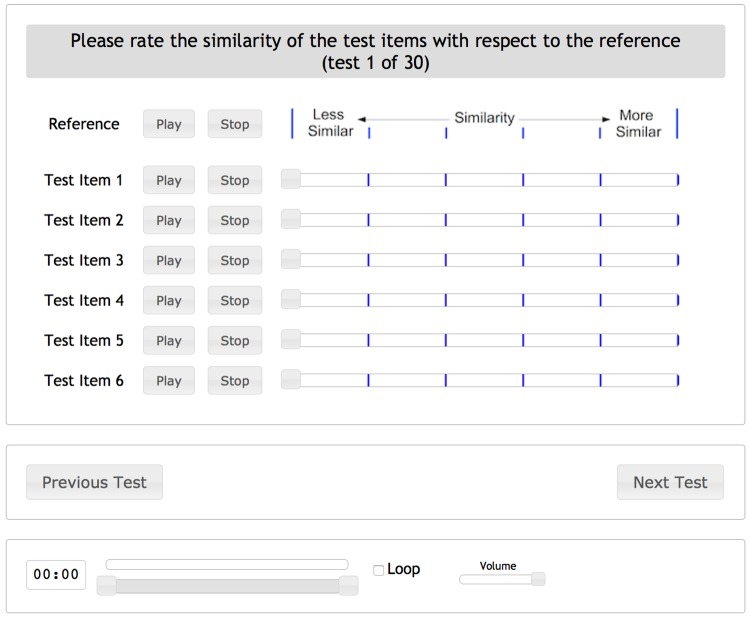
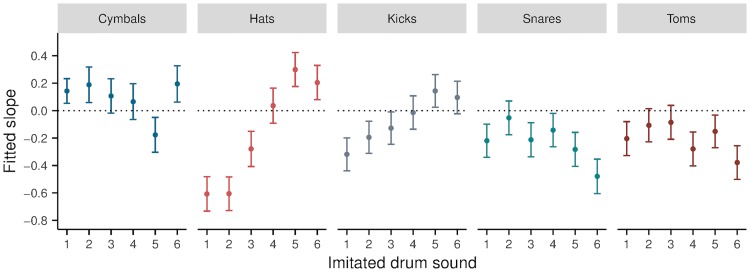
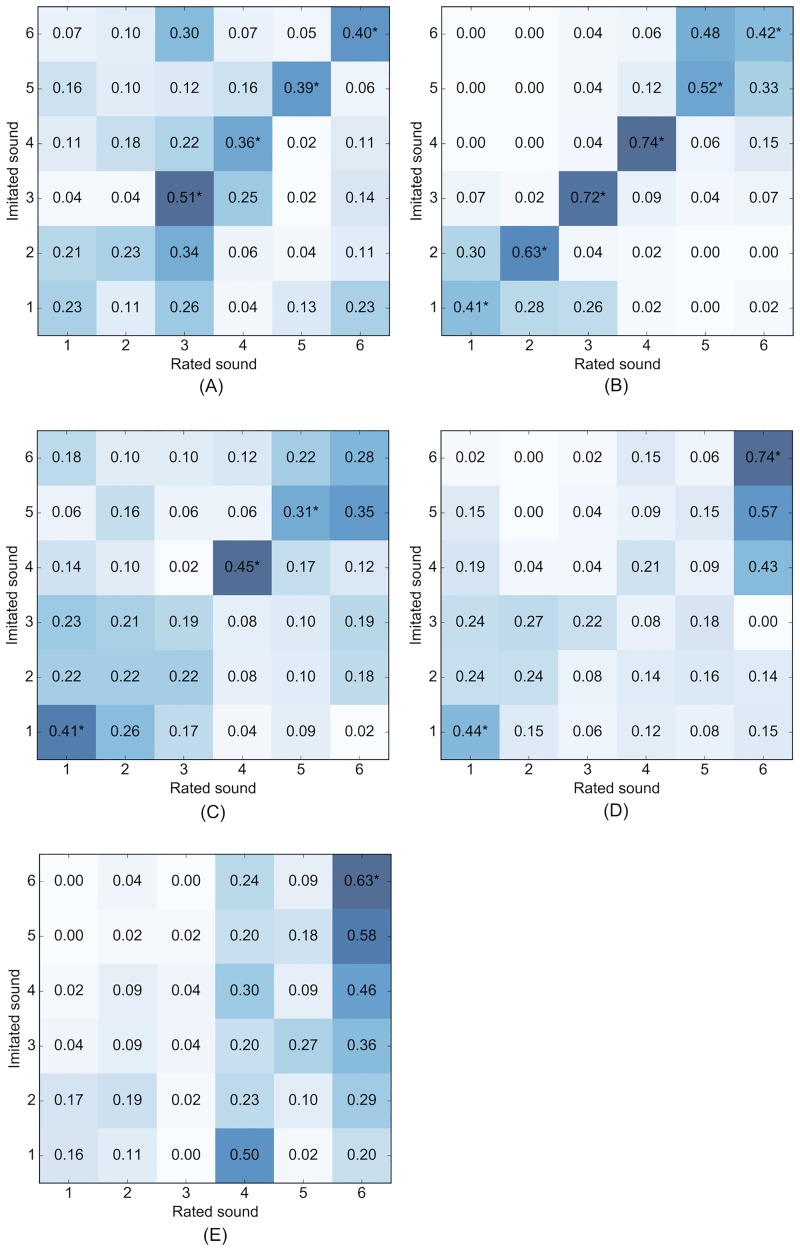
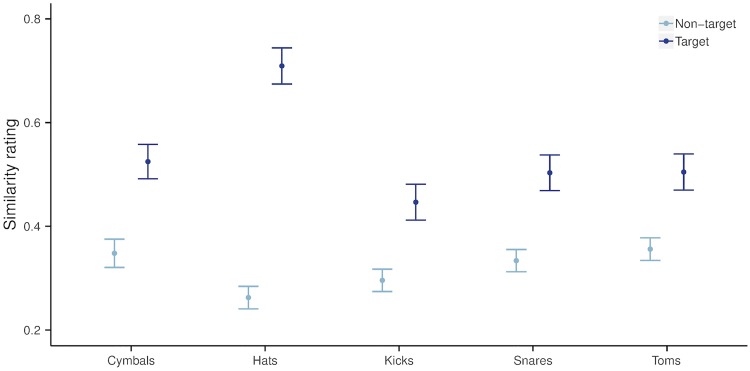
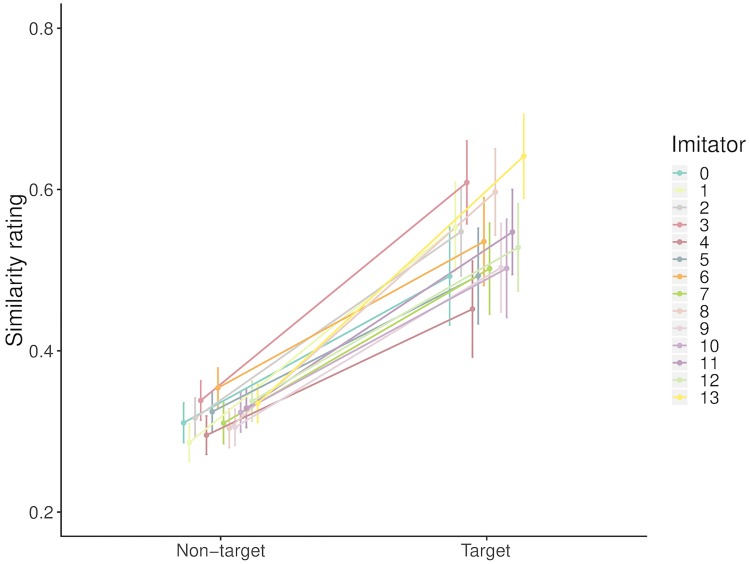
Recent studies have demonstrated the effectiveness of the voice for communicating sonic ideas, and the accuracy with which it can be used to imitate acoustic instruments, synthesised sounds and environmental sounds. However, there has been little research on vocal imitation of percussion sounds, particularly concerning the perceptual similarity between imitations and the sounds being imitated. In the present study we address this by investigating how accurately musicians can vocally imitate percussion sounds, in terms of whether listeners consider the imitations 'more similar' to the imitated sounds than to other same-category sounds. In a vocal production task, 14 musicians imitated 30 drum sounds from five categories (cymbals, hats, kicks, snares, toms). Listeners were then asked to rate the similarity between the imitations and same-category drum sounds via web based listening test. We found that imitated sounds received the highest similarity ratings for 16 of the 30 sounds. The similarity between a given drum sound and its imitation was generally rated higher than for imitations of another same-category sound, however for some drum categories (snares and toms) certain sounds were consistently considered most similar to the imitations, irrespective of the sound being imitated. Finally, we apply an existing auditory image based measure for perceptual similarity between same-category drum sounds, to model the similarity ratings using linear mixed effect regression. The results indicate that this measure is a good predictor of perceptual similarity between imitations and imitated sounds, when compared to acoustic features containing only temporal or spectral features.
最近的研究表明,声音在传达声学概念方面非常有效,并且可以非常准确地模仿声学乐器、合成声音和环境声音。然而,对于人声模仿打击乐器声音的研究却很少,特别是对于模仿和被模仿声音之间的感知相似性。在本研究中,我们通过调查音乐家在模仿打击乐器声音方面的准确性来解决这个问题,具体来说,就是听众是否认为模仿声音比被模仿声音更相似。在一项声乐制作任务中,14 名音乐家模仿了五个类别(钹、帽子、踢、响弦鼓、军鼓)的 30 个鼓声音。然后,听众通过基于网络的听力测试来评价模仿声音与同类别鼓声音之间的相似性。我们发现,在 30 个声音中,有 16 个声音的模仿声音获得了最高的相似性评分。给定鼓声音与其模仿声音之间的相似性通常比模仿另一个同类别声音的相似性高,但对于某些鼓类别(响弦鼓和军鼓),某些声音始终被认为与模仿声音最相似,而与被模仿的声音无关。最后,我们应用了一种现有的基于听觉图像的同类别鼓声音感知相似性度量方法,使用线性混合效应回归模型来模拟模仿声音和被模仿声音之间的相似性评分。结果表明,与仅包含时间或频谱特征的声学特征相比,该度量方法是模仿声音和被模仿声音之间感知相似性的良好预测指标。