Scientific Computing & Imaging (SCI) Institute, University of Utah, Salt Lake City, UT, United States of America. Institute of Electrical and Biomedical Engineering, UMIT-Private University for Health Sciences, Medical Informatics and Technology, Hall in Tirol, Austria.
J Neural Eng. 2019 Nov 6;16(6):064002. doi: 10.1088/1741-2552/ab35b1.
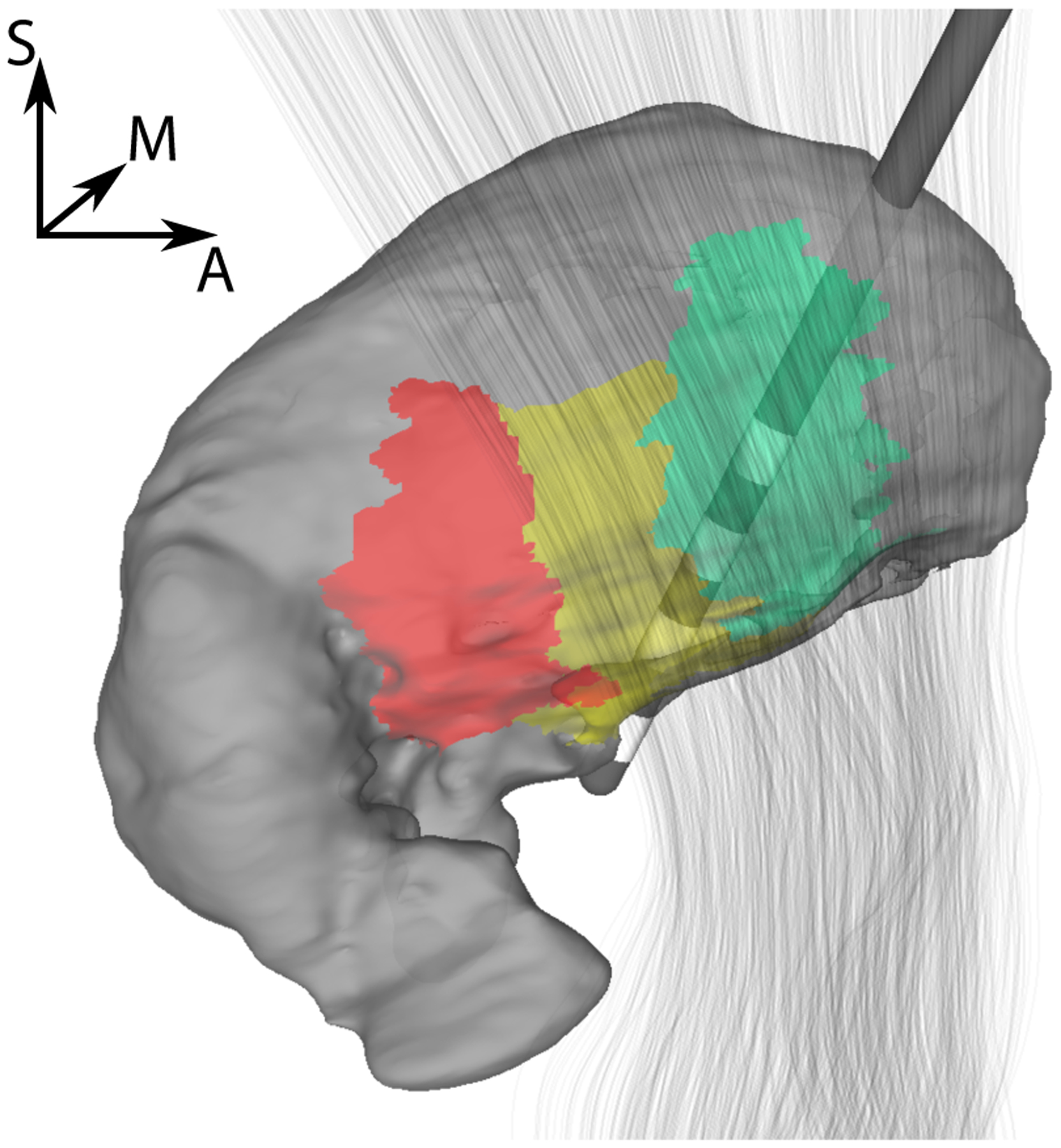
We performed a retrospective analysis of an optimization algorithm for the computation of patient-specific multipolar stimulation configurations employing multiple independent current/voltage sources. We evaluated whether the obtained stimulation configurations align with clinical data and whether the optimized stimulation configurations have the potential to lead to an equal or better stimulation of the target region as manual programming, while reducing the time required for programming sessions.
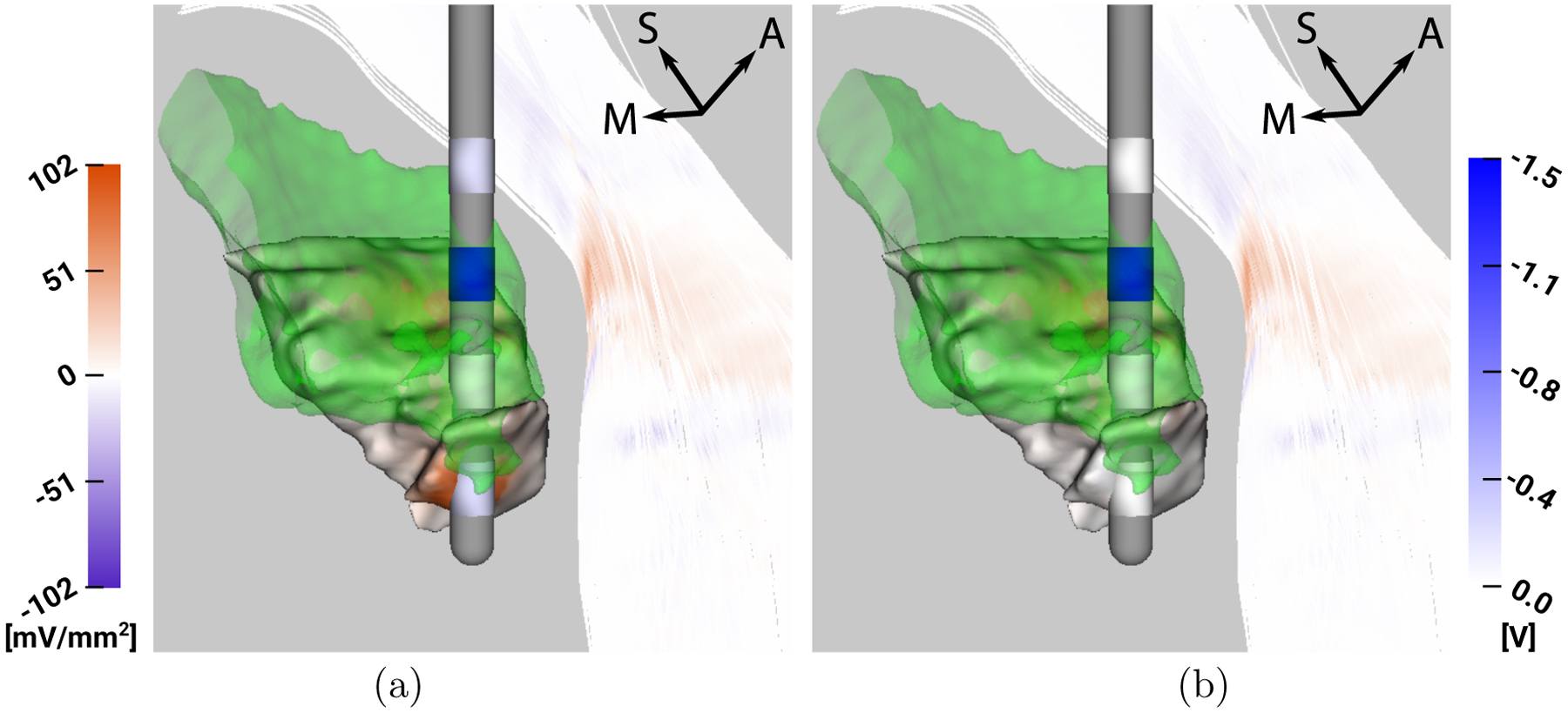
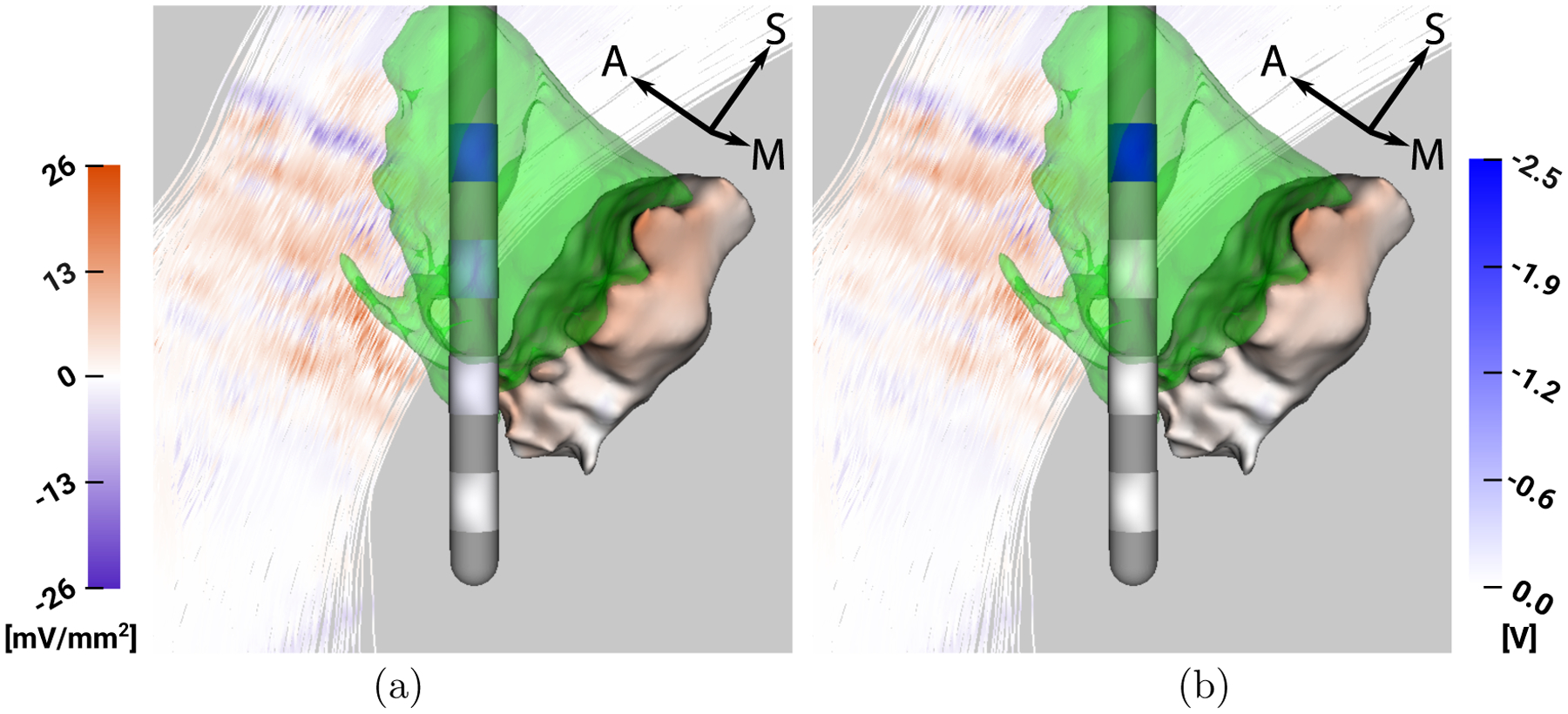
For three patients (five electrodes) diagnosed with essential tremor, we derived optimized multipolar stimulation configurations using an approach that is suitable for the application in clinical practice. To evaluate the automatically derived stimulation settings, we compared them to the results of the monopolar review.
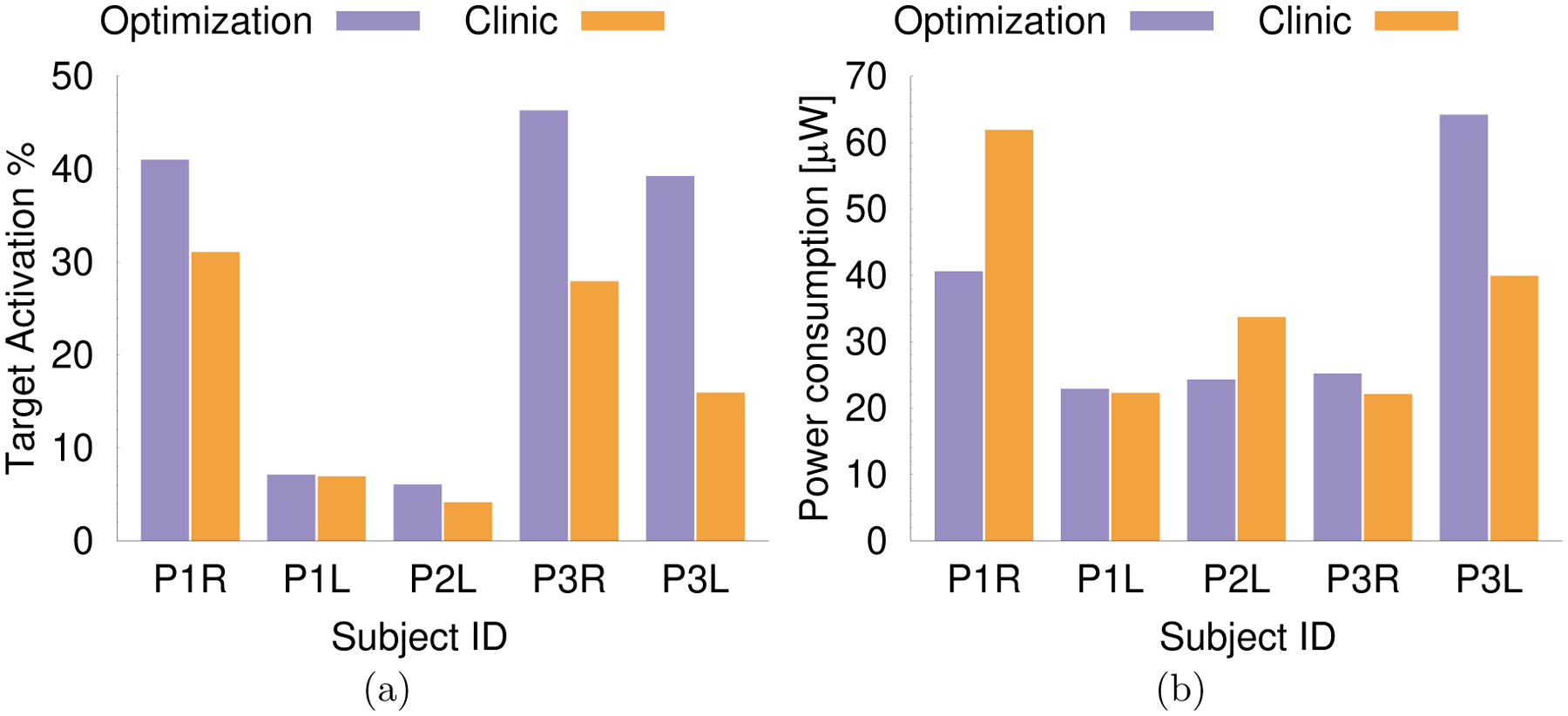
We observe a good agreement between the findings of the monopolar review and the optimized stimulation configurations, with the algorithm assigning the maximal voltage in the optimized multipolar pattern to the contact that was found to lead to the best therapeutic effect in the clinical monopolar review in all cases. Additionally, our simulation results predict that the optimized stimulation settings lead to the activation of an equal or larger volume fraction of the target compared to the manually determined settings in all cases.
Our results demonstrate the feasibility of an automatic determination of optimal DBS configurations and motivate a further evaluation of the applied optimization algorithm.
我们对一种用于计算采用多个独立电流/电压源的患者特定多极刺激配置的优化算法进行了回顾性分析。我们评估了所获得的刺激配置是否与临床数据一致,以及优化的刺激配置是否有可能在减少编程会话所需时间的同时,实现与手动编程相同或更好的目标区域刺激。
我们针对三位(五电极)被诊断为原发性震颤的患者,使用适合临床实践应用的方法得出了优化的多极刺激配置。为了评估自动导出的刺激设置,我们将其与单极审查的结果进行了比较。
我们观察到单极审查的结果与优化的刺激配置之间具有良好的一致性,在所有情况下,算法都将优化的多极模式中的最大电压分配到在临床单极审查中发现对治疗效果最佳的接触点。此外,我们的模拟结果预测,在所有情况下,与手动确定的设置相比,优化的刺激设置都会导致目标区域的激活体积分数相等或更大。
我们的结果证明了自动确定最佳 DBS 配置的可行性,并为进一步评估所应用的优化算法提供了动力。