Medicinal Chemistry Research Group, Research Centre for Natural Sciences, Hungarian Academy of Sciences, Magyar tudósok krt. 2, H-1117 Budapest, Hungary.
Plasma Chemistry Research Group, Research Centre for Natural Sciences, Hungarian Academy of Sciences, Magyar tudósok krt. 2, H-1117 Budapest, Hungary.
Molecules. 2019 Jul 24;24(15):2690. doi: 10.3390/molecules24152690.
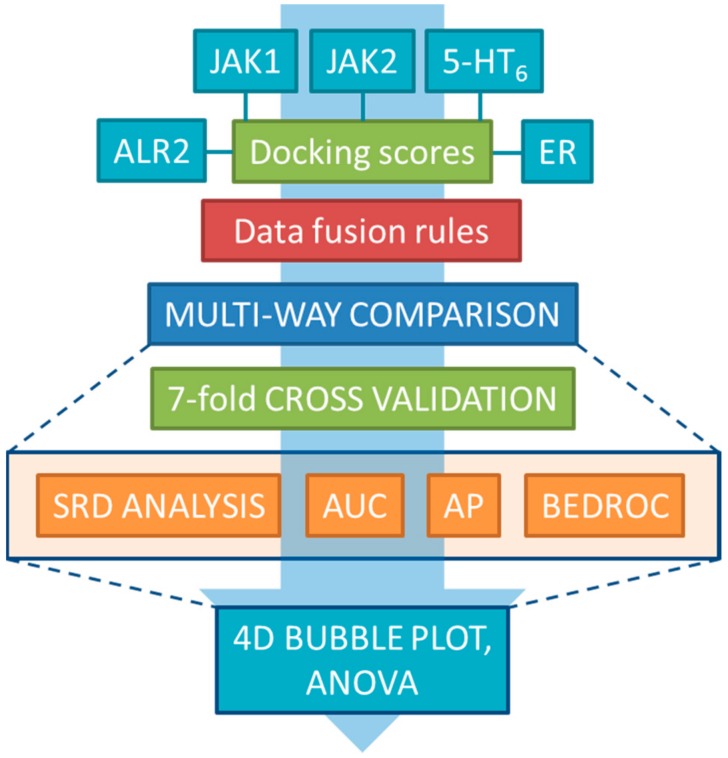
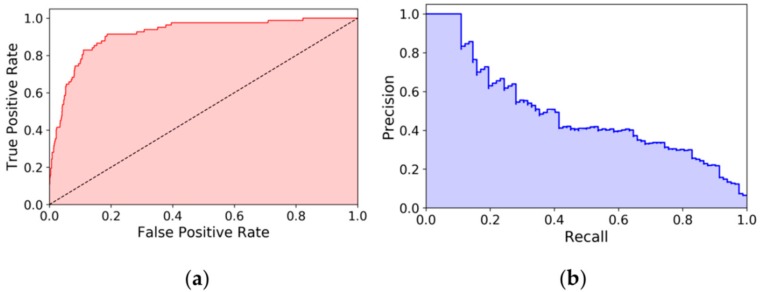
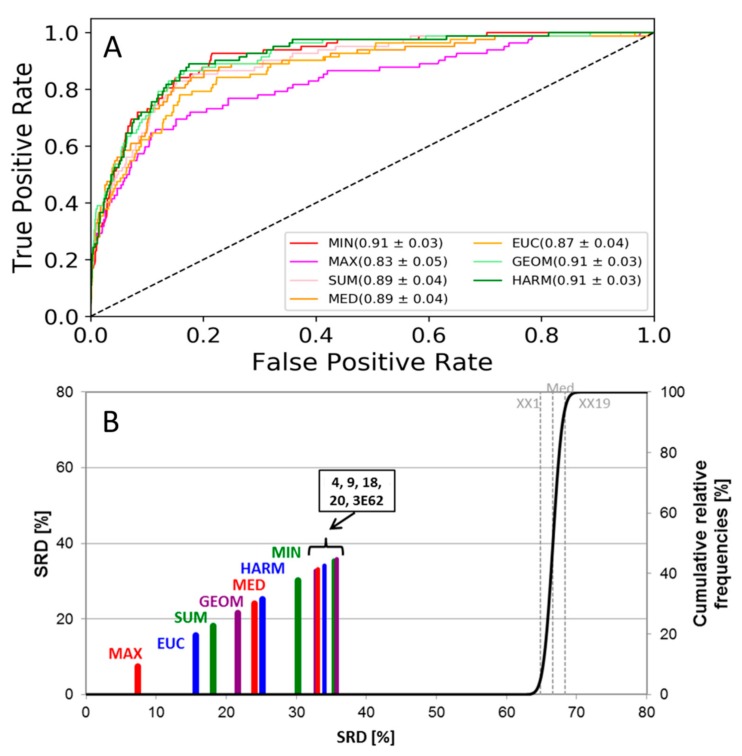
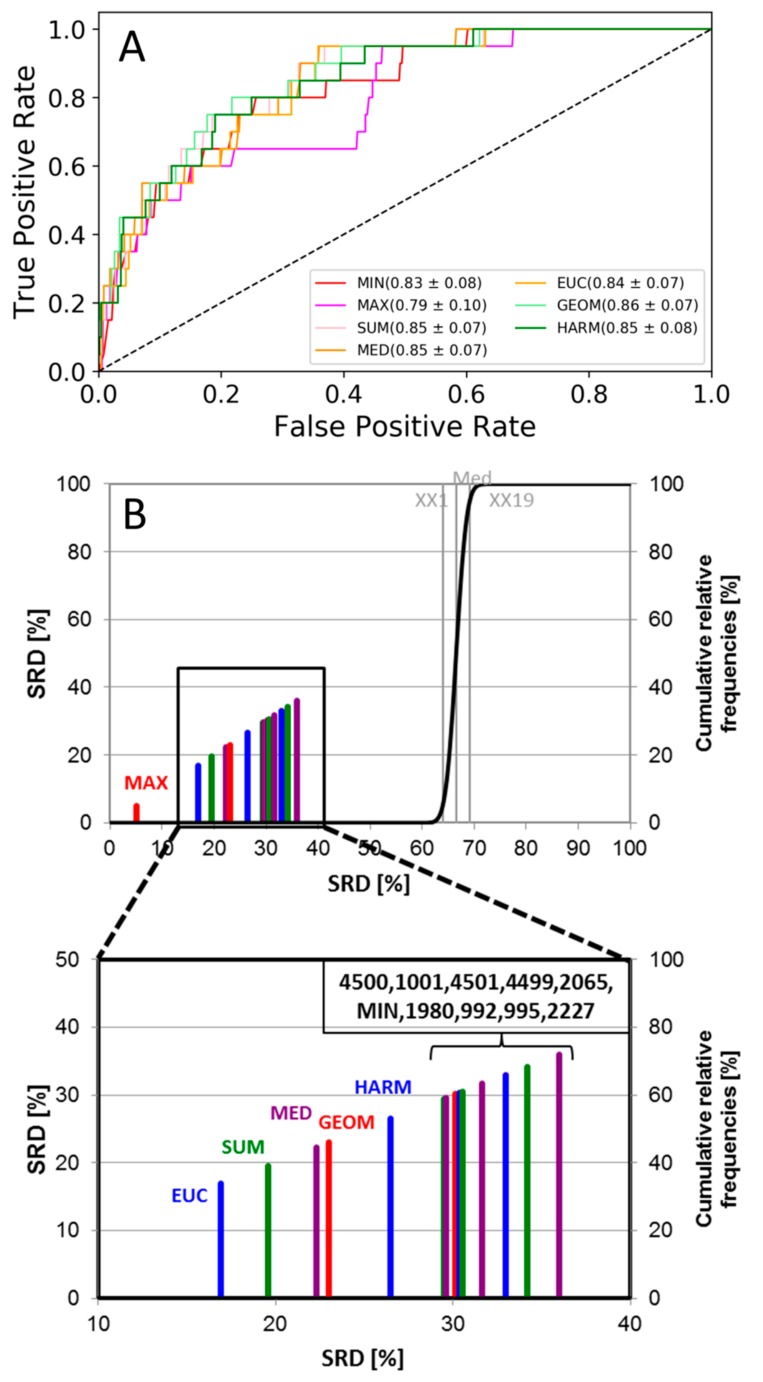
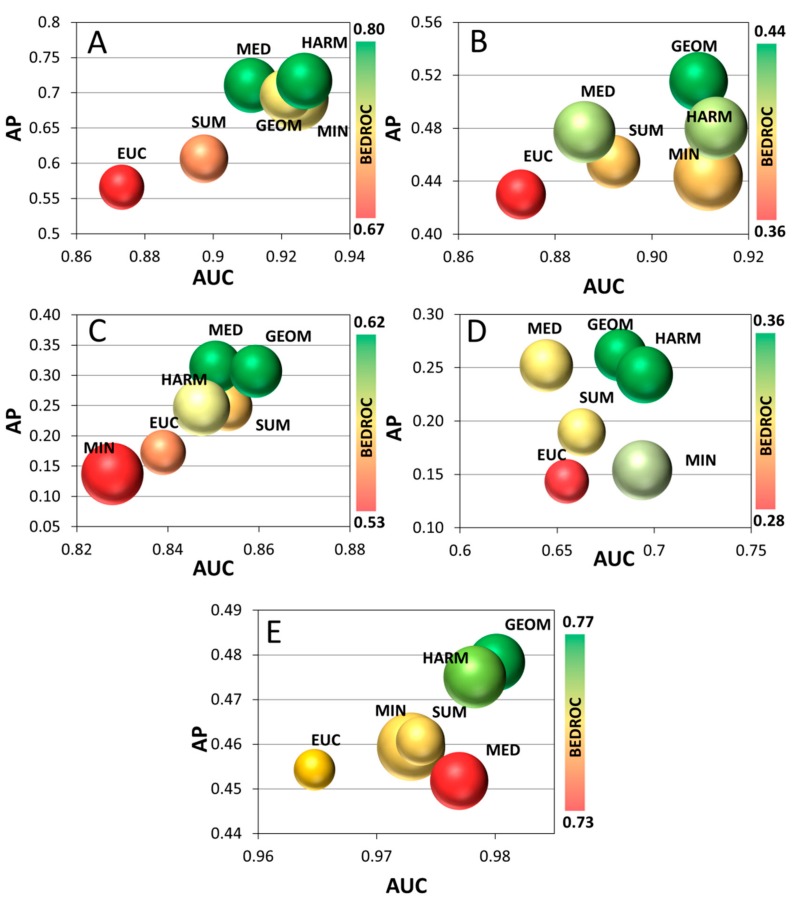
Ensemble docking is a widely applied concept in structure-based virtual screening-to at least partly account for protein flexibility-usually granting a significant performance gain at a modest cost of speed. From the individual, single-structure docking scores, a consensus score needs to be produced by data fusion: this is usually done by taking the best docking score from the available pool (in most cases- and in this study as well-this is the minimum score). Nonetheless, there are a number of other fusion rules that can be applied. We report here the results of a detailed statistical comparison of seven fusion rules for ensemble docking, on five case studies of current drug targets, based on four performance metrics. Sevenfold cross-validation and variance analysis (ANOVA) allowed us to highlight the best fusion rules. The results are presented in bubble plots, to unite the four performance metrics into a single, comprehensive image. Notably, we suggest the use of the geometric and harmonic means as better alternatives to the generally applied minimum fusion rule.
基于结构的虚拟筛选中广泛应用了对接整体(Ensemble Docking)这一概念,以在一定程度上解释蛋白质的柔性——通常以适度的速度损失为代价,换取显著的性能提升。需要从各个单结构对接评分中,通过数据融合产生共识评分:这通常是通过从可用的对接结果中选择最佳的评分(在大多数情况下,也是在本研究中,即选择最低评分)来实现。尽管如此,还有许多其他的融合规则可以应用。我们在此报告了在五个当前药物靶点的案例研究中,基于四个性能指标,对七种对接整体融合规则的详细统计比较结果。通过七重交叉验证和方差分析(ANOVA),我们能够突出最佳的融合规则。结果以气泡图呈现,将四个性能指标结合到一个单一的综合图像中。值得注意的是,我们建议使用几何平均值和调和平均值作为比一般应用的最小融合规则更好的替代方案。