Bax Bridget E, Levene Michelle, Bain Murray D, Fairbanks Lynette D, Filosto Massimiliano, Kalkan Uçar Sema, Klopstock Thomas, Kornblum Cornelia, Mandel Hanna, Rahman Shamima, Roubertie Agathe, Scarpelli Mauro, Sedgwick Philip M, Baru Moshe, Sellos-Moura Marcia, Price Jeanie, Horn Patrick, Nirmalananthan Niranjanan
Molecular and Clinical Sciences, St. George's, University of London, London SW17 0RE, UK.
The Purine Research Laboratory, St Thomas' Hospital, London SE1 7EH, UK.
J Clin Med. 2019 Jul 24;8(8):1096. doi: 10.3390/jcm8081096.
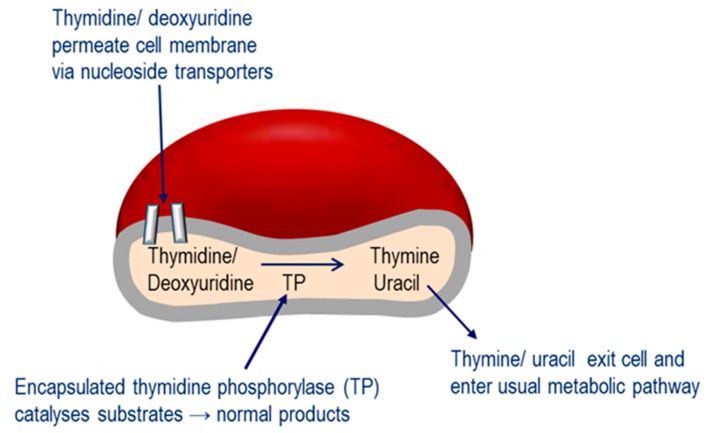
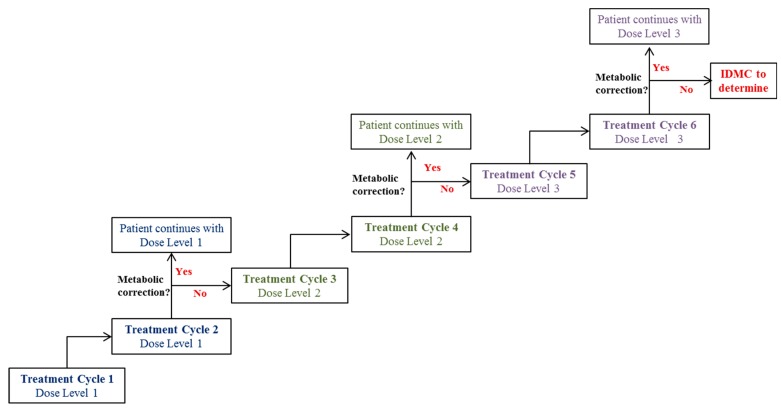
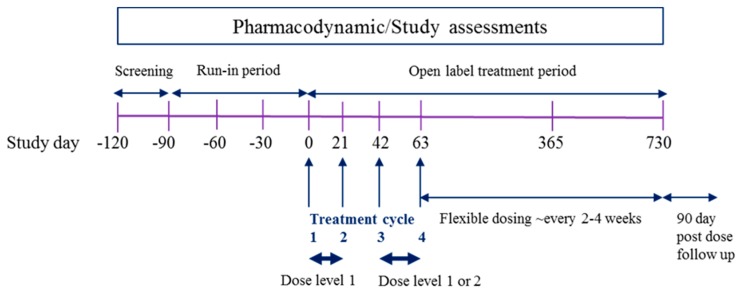
Mitochondrial neurogastrointestinal encephalomyopathy (MNGIE) is an autosomal recessive disorder which primarily affects the gastrointestinal and nervous systems. This disease is caused by mutations in the nuclear gene, which encodes for thymidine phosphorylase, an enzyme required for the normal metabolism of deoxynucleosides, thymidine, and deoxyuridine. The subsequent elevated systemic concentrations of deoxynucleosides lead to increased intracellular concentrations of their corresponding triphosphates, and ultimately mitochondrial failure due to progressive accumulation of mitochondrial DNA (mtDNA) defects and mtDNA depletion. Currently, there are no treatments for MNGIE where effectiveness has been evidenced in clinical trials. This Phase 2, multi-centre, multiple dose, open label trial without a control will investigate the application of erythrocyte-encapsulated thymidine phosphorylase (EE-TP) as an enzyme replacement therapy for MNGIE. Three EE-TP dose levels are planned with patients receiving the dose level that achieves metabolic correction. The study duration is 31 months, comprising 28 days of screening, 90 days of run-in, 24 months of treatment and 90 days of post-dose follow-up. The primary objectives are to determine the safety, tolerability, pharmacodynamics, and efficacy of multiple doses of EE-TP. The secondary objectives are to assess EE-TP immunogenicity after multiple dose administrations and changes in clinical assessments, and the pharmacodynamics effect of EE-TP on clinical assessments.
线粒体神经胃肠性脑肌病(MNGIE)是一种常染色体隐性疾病,主要影响胃肠系统和神经系统。这种疾病由核基因突变引起,该基因编码胸苷磷酸化酶,这是脱氧核苷、胸苷和脱氧尿苷正常代谢所需的一种酶。随后全身脱氧核苷浓度升高,导致其相应三磷酸酯的细胞内浓度增加,最终由于线粒体DNA(mtDNA)缺陷和mtDNA耗竭的逐渐积累而导致线粒体功能衰竭。目前,尚无在临床试验中证实有效的MNGIE治疗方法。这项2期、多中心、多剂量、无对照的开放标签试验将研究红细胞包裹的胸苷磷酸化酶(EE-TP)作为MNGIE酶替代疗法的应用。计划设置三个EE-TP剂量水平,患者接受能实现代谢纠正的剂量水平。研究持续时间为31个月,包括28天的筛查期、90天的导入期、24个月的治疗期和90天的给药后随访期。主要目标是确定多剂量EE-TP的安全性、耐受性、药效学和疗效。次要目标是评估多剂量给药后EE-TP的免疫原性以及临床评估的变化,以及EE-TP对临床评估的药效学作用。