Hefei National Laboratory for Physical Sciences at the Microscale, CAS Key Laboratory of Brain Function and Disease, Neurodegenerative Disorder Research Center, School of Life Sciences, Division of Life Sciences and Medicine, University of Science and Technology of China, Hefei, Anhui 230026, China.
Oxid Med Cell Longev. 2019 Jun 26;2019:2818415. doi: 10.1155/2019/2818415. eCollection 2019.
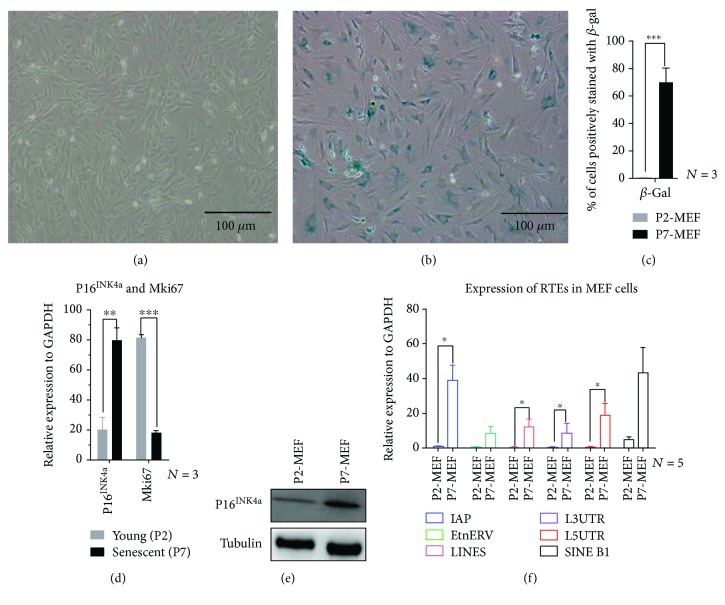
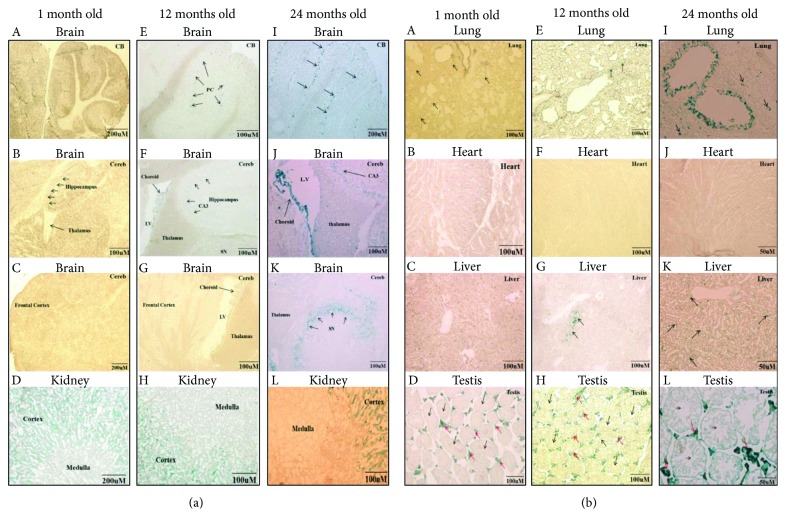
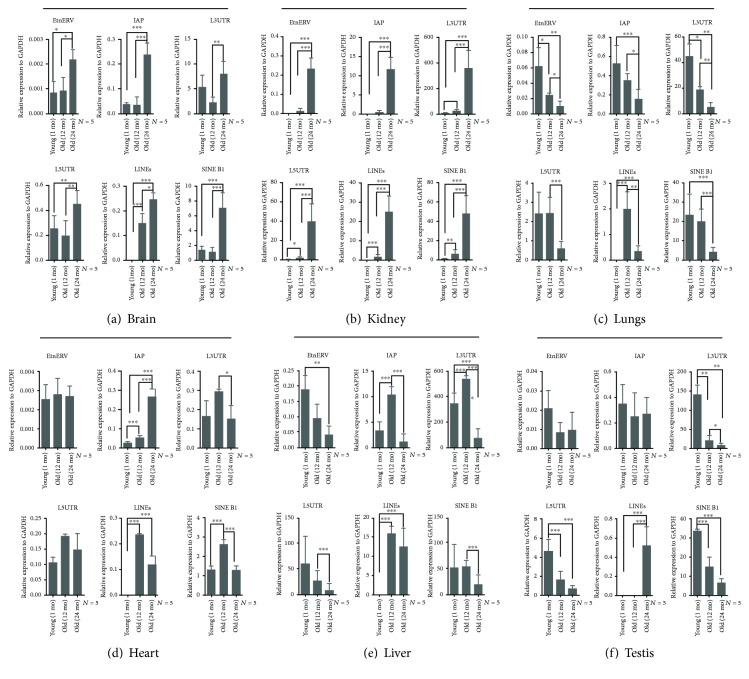
Tissue aging is the gradual decline of physiological homeostasis accompanied with accumulation of senescent cells, decreased clearance of unwanted biological compounds, and depletion of stem cells. Senescent cells were cell cycle arrested in response to various stimuli and identified using distinct phenotypes and changes in gene expression. Senescent cells that accumulate with aging can compromise normal tissue function and inhibit or stop repair and regeneration. Selective removal of senescent cells can slow the aging process and inhibits age-associated diseases leading to extended lifespans in mice and thus provides a possibility for developing antiaging therapy. To monitor the appearance of senescent cells and target them, a clearer understanding of senescent cell expression markers is needed. We investigated the age-associated expression of three molecular hallmarks of aging: SA--gal, P16, and retrotransposable elements (RTEs), in different mouse tissues during chronological aging. Our data showed that the expression of these markers is variable with aging in the different tissues. P16 showed consistent increases with age in most tissues, while expression of RTEs was variable among different tissues examined. These data suggest that biological changes occurring with physiological aging may be useful in choosing the appropriate timing of therapeutic interventions to slow the aging process or keep more susceptible organs healthier in the aging process.
组织衰老(Tissue aging)是指生理内稳态逐渐下降,伴随着衰老细胞的积累、不需要的生物化合物清除减少以及干细胞耗竭。衰老细胞对各种刺激做出细胞周期停滞反应,并通过独特的表型和基因表达变化来识别。随着衰老而积累的衰老细胞会损害正常组织功能,并抑制或停止修复和再生。选择性去除衰老细胞可以减缓衰老过程并抑制与年龄相关的疾病,从而延长小鼠的寿命,为开发抗衰老疗法提供了可能。为了监测衰老细胞的出现并靶向它们,需要更清楚地了解衰老细胞的表达标志物。我们研究了不同组织中三种衰老分子标志(衰老相关β-半乳糖苷酶(SA--gal)、P16 和反转录转座子(RTEs))在生理衰老过程中的年龄相关性表达。我们的数据表明,这些标志物在不同组织中的表达随年龄而变化。大多数组织中 P16 的表达随年龄的增长而持续增加,而 RTEs 的表达在不同组织之间存在差异。这些数据表明,与生理衰老相关的生物学变化可能有助于选择适当的治疗干预时机,以减缓衰老过程或使衰老过程中更易受影响的器官保持更健康。