Department of Functional and Comparative Genomics, Institute of Integrative Biology, University of Liverpool, Liverpool, United Kingdom.
Department of Biomedical Informatics, Harvard Medical School, Boston, Massachusetts, United States of America.
PLoS Negl Trop Dis. 2019 Jul 26;13(7):e0007540. doi: 10.1371/journal.pntd.0007540. eCollection 2019 Jul.
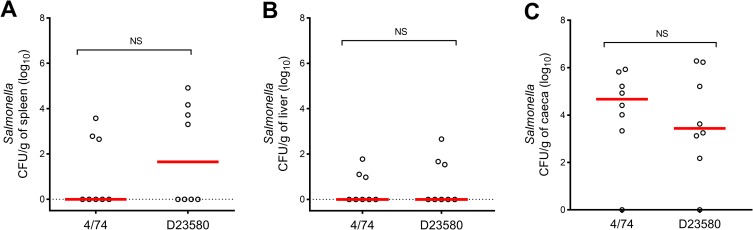
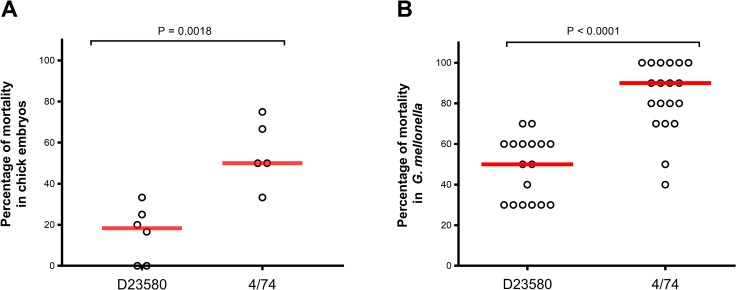
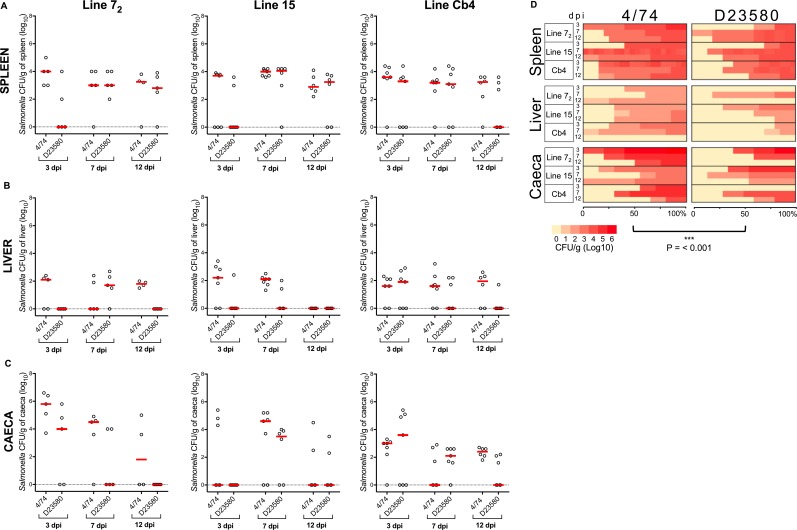
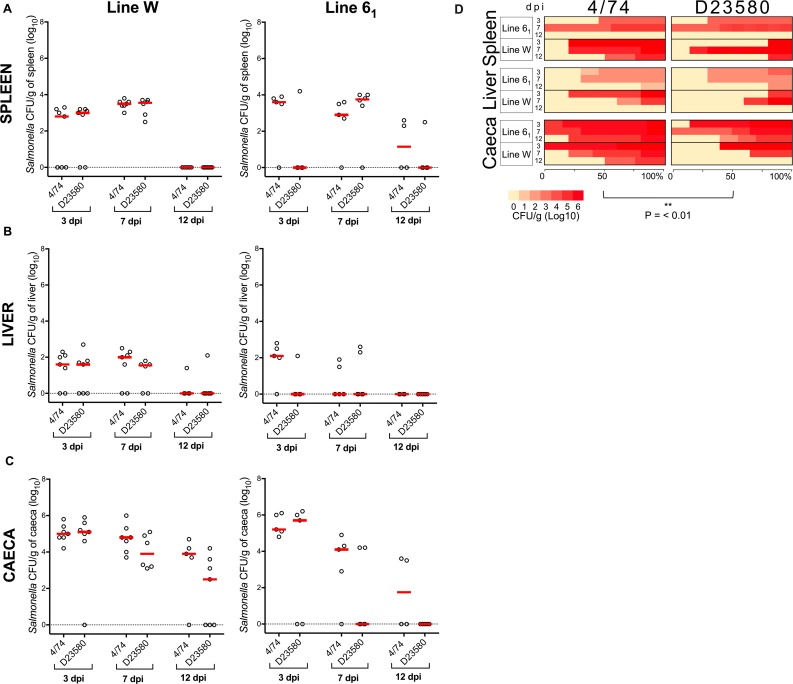
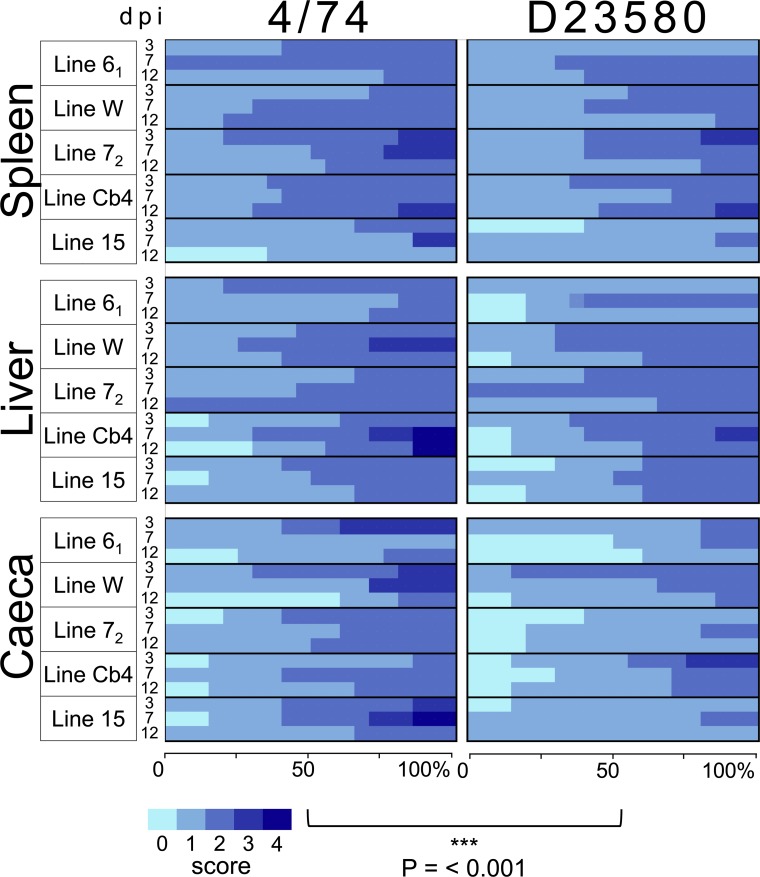
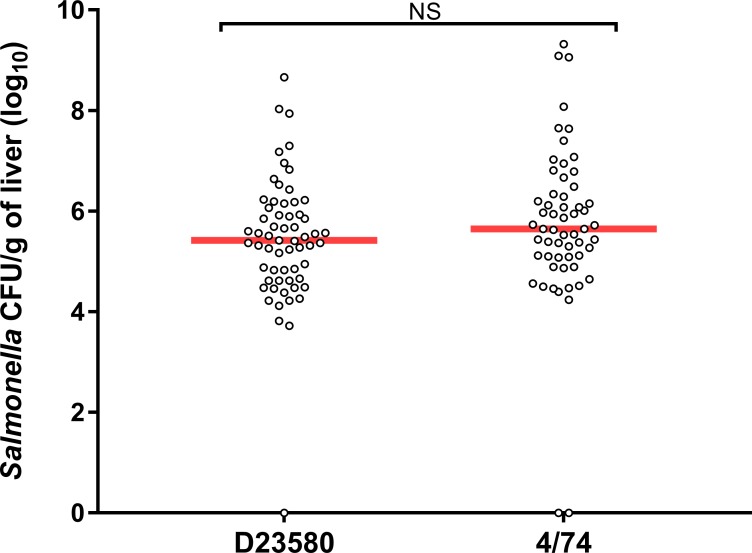
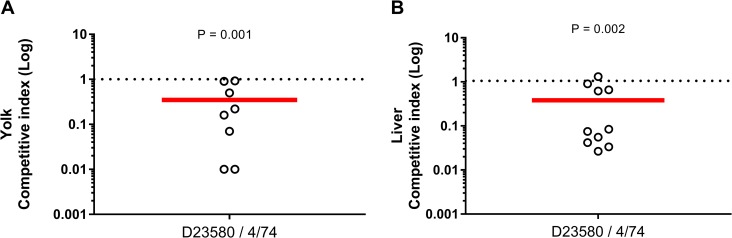
Over recent decades, Salmonella infection research has predominantly relied on murine infection models. However, in many cases the infection phenotypes of Salmonella pathovars in mice do not recapitulate human disease. For example, Salmonella Typhimurium ST313 is associated with enhanced invasive infection of immunocompromised people in Africa, but infection of mice and other animal models with ST313 have not consistently reproduced this invasive phenotype. The introduction of alternative infection models could help to improve the quality and reproducibility of pathogenesis research by facilitating larger-scale experiments. To investigate the virulence of S. Typhimurium ST313 in comparison with ST19, a combination of avian and insect disease models were used. We performed experimental infections in five lines of inbred and one line of outbred chickens, as well as in the alternative chick embryo and Galleria mellonella wax moth larvae models. This extensive set of experiments identified broadly similar patterns of disease caused by the African and global pathovariants of Salmonella Typhimurium in the chicken, the chicken embryo and insect models. A comprehensive analysis of all the chicken infection experiments revealed that the African ST313 isolate D23580 had a subtle phenotype of reduced levels of organ colonisation in inbred chickens, relative to ST19 strain 4/74. ST313 isolate D23580 also caused reduced mortality in chicken embryos and insect larvae, when compared with ST19 4/74. We conclude that these three infection models do not reproduce the characteristics of the systemic disease caused by S. Typhimurium ST313 in humans.
在过去的几十年中,沙门氏菌感染的研究主要依赖于鼠类感染模型。然而,在许多情况下,鼠类中沙门氏菌血清型的感染表型并不能重现人类疾病。例如,鼠伤寒沙门氏菌 ST313 与非洲免疫功能低下人群的侵袭性感染有关,但用 ST313 感染小鼠和其他动物模型并未一致重现这种侵袭性表型。引入替代感染模型可以通过促进更大规模的实验,来帮助提高发病机制研究的质量和重现性。为了研究鼠伤寒沙门氏菌 ST313 的毒力,我们使用了禽病和昆虫病模型的组合。我们在 5 条近交系和 1 条远交系鸡,以及替代鸡胚和家蚕幼虫模型中进行了实验感染。这一系列广泛的实验确定了在鸡、鸡胚和昆虫模型中,由非洲和全球鼠伤寒沙门氏菌血清型引起的疾病具有广泛相似的模式。对所有鸡感染实验的综合分析表明,与 ST19 菌株 4/74 相比,非洲 ST313 分离株 D23580 在近交系鸡中器官定植水平降低,表现出微妙的表型。与 ST19 4/74 相比,ST313 分离株 D23580 还导致鸡胚和昆虫幼虫的死亡率降低。我们得出结论,这三种感染模型不能重现人类感染鼠伤寒沙门氏菌 ST313 引起的全身性疾病的特征。