State Key Laboratory of Plant Genomics, Institute of Microbiology, Chinese Academy of Sciences, Beijing, 100101, China.
University of Chinese Academy of Sciences, Beijing, 10049, China.
Genome Biol. 2019 Jul 26;20(1):145. doi: 10.1186/s13059-019-1762-8.
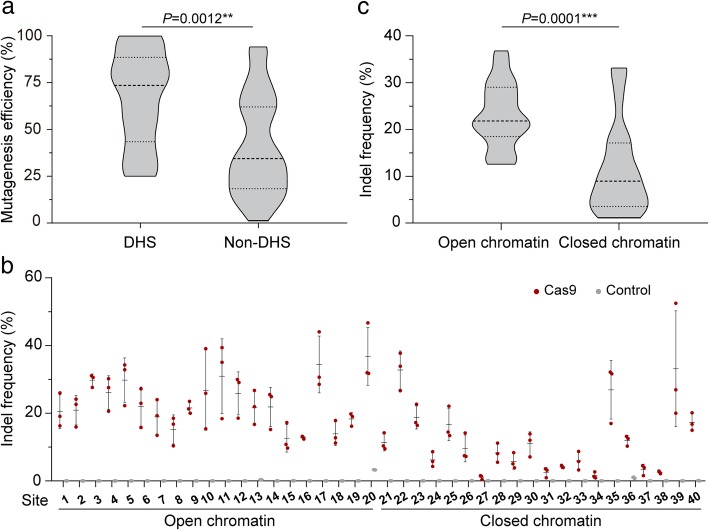
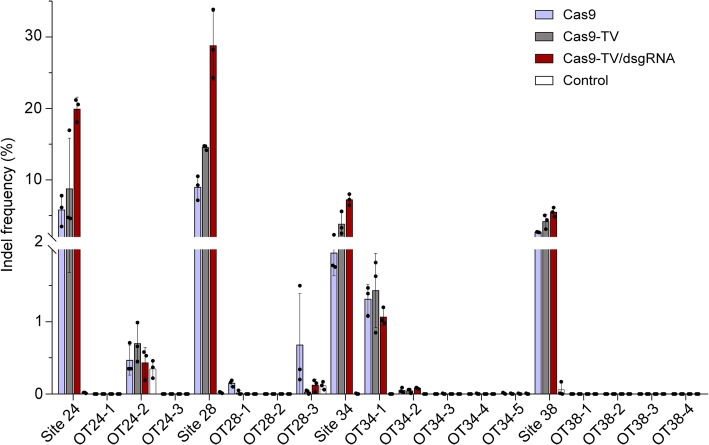
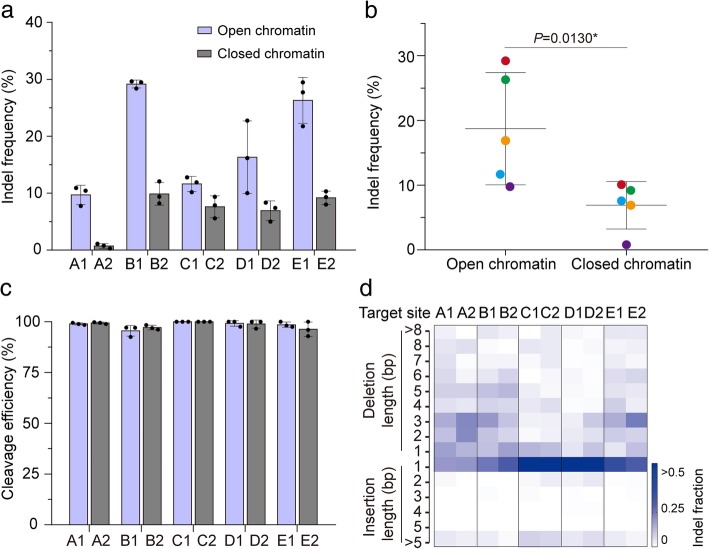
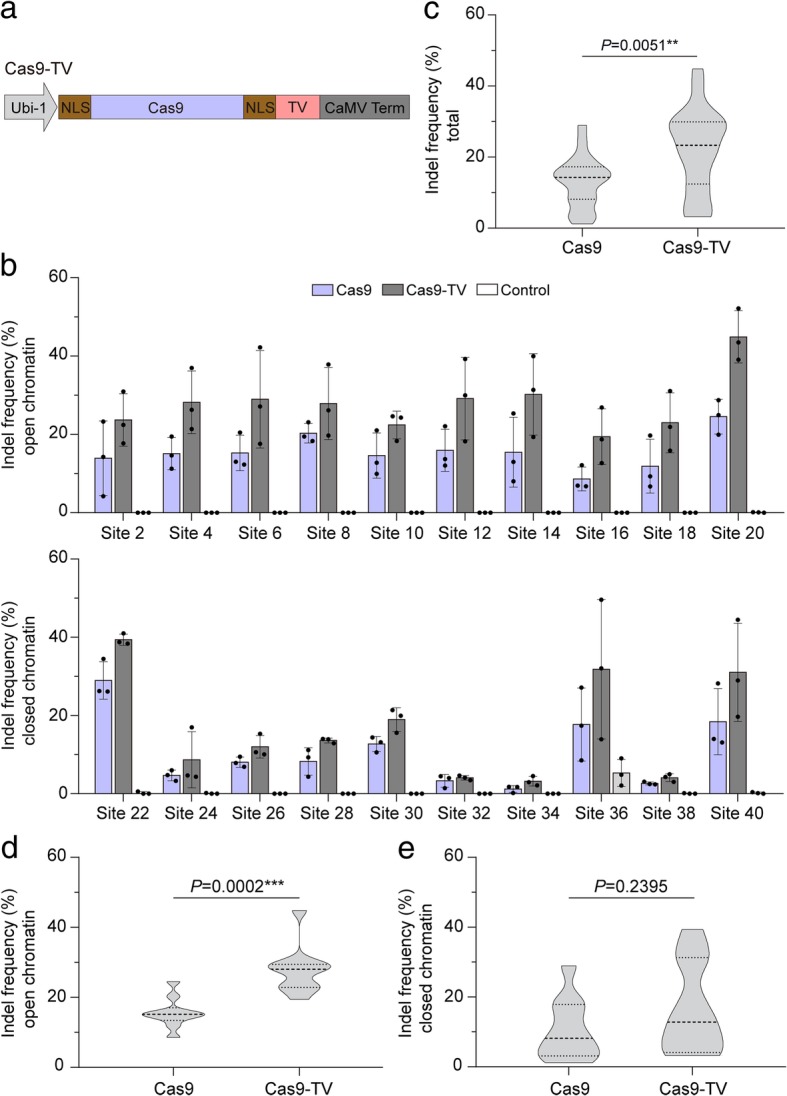
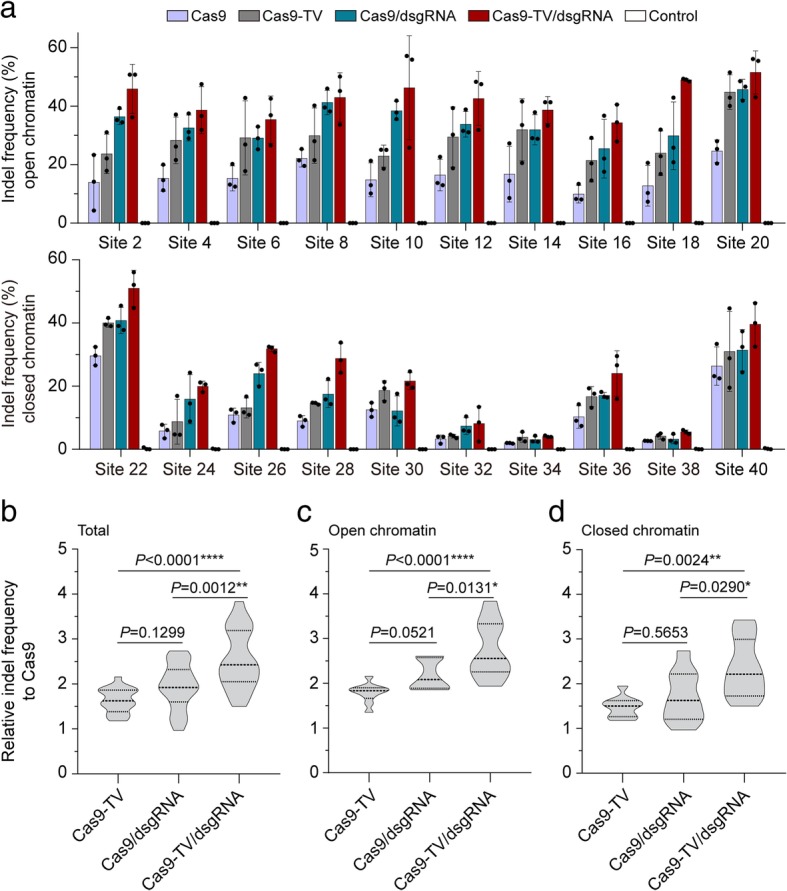
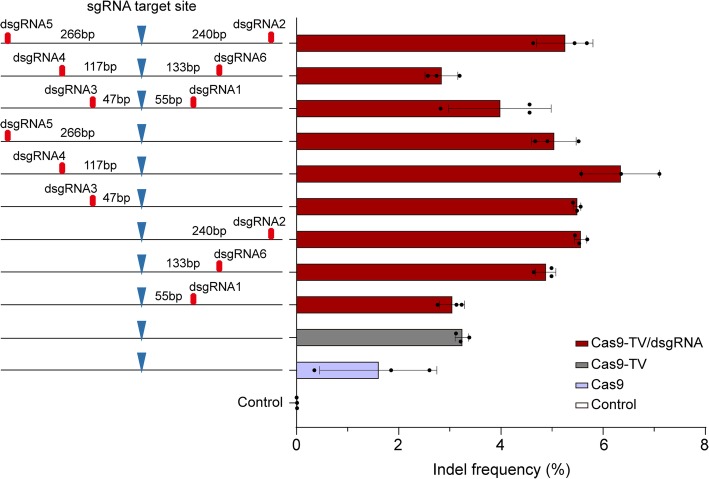
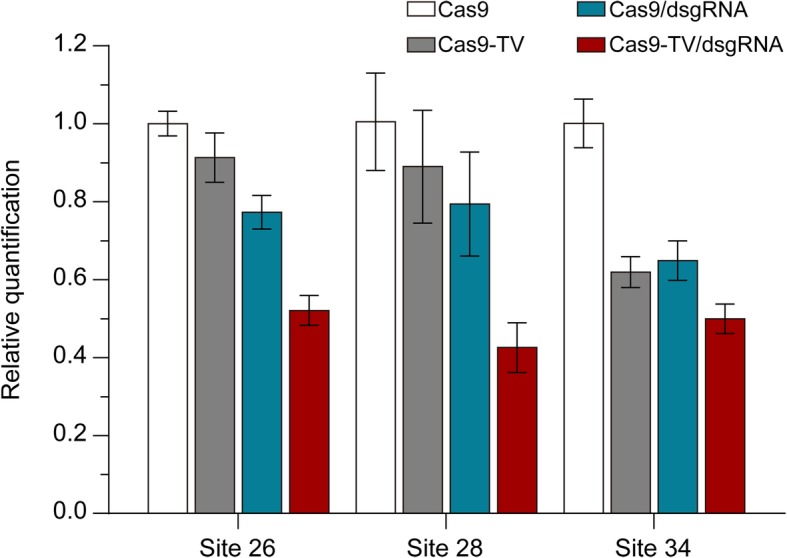
The CRISPR/Cas9 system is unable to edit all targetable genomic sites with full efficiency in vivo. We show that Cas9-mediated editing is more efficient in open chromatin regions than in closed chromatin regions in rice. A construct (Cas9-TV) formed by fusing a synthetic transcription activation domain to Cas9 edits target sites more efficiently, even in closed chromatin regions. Moreover, combining Cas9-TV with a proximally binding dead sgRNA (dsgRNA) further improves editing efficiency up to several folds. The use of Cas9-TV/dsgRNA thus provides a novel strategy for obtaining efficient genome editing in vivo, especially at nuclease-refractory target sites.
CRISPR/Cas9 系统无法在体内完全有效地编辑所有靶向基因组位点。我们表明,在水稻中,Cas9 介导的编辑在开放染色质区域比在封闭染色质区域更有效。通过将合成转录激活结构域融合到 Cas9 上形成的构建体(Cas9-TV),即使在封闭染色质区域中,也能更有效地编辑靶位点。此外,将 Cas9-TV 与近端结合的无效 sgRNA(dsgRNA)结合使用,可将编辑效率提高几倍。因此,Cas9-TV/dsgRNA 的使用为体内获得高效基因组编辑提供了一种新策略,特别是在核酸酶抗性靶位点。