• 文献检索
  • 文档翻译
  • 深度研究
  • 学术资讯
  • Suppr Zotero 插件Zotero 插件
  • 邀请有礼
  • 套餐&价格
  • 历史记录
应用&插件
Suppr Zotero 插件Zotero 插件浏览器插件Mac 客户端Windows 客户端微信小程序
定价
高级版会员购买积分包购买API积分包
服务
文献检索文档翻译深度研究API 文档MCP 服务
关于我们
关于 Suppr公司介绍联系我们用户协议隐私条款
关注我们

Suppr 超能文献

核心技术专利:CN118964589B侵权必究
粤ICP备2023148730 号-1Suppr @ 2026

文献检索

告别复杂PubMed语法,用中文像聊天一样搜索,搜遍4000万医学文献。AI智能推荐,让科研检索更轻松。

立即免费搜索

文件翻译

保留排版,准确专业,支持PDF/Word/PPT等文件格式,支持 12+语言互译。

免费翻译文档

深度研究

AI帮你快速写综述,25分钟生成高质量综述,智能提取关键信息,辅助科研写作。

立即免费体验

美国四个种族儿童的积木搭建技能及母子积木搭建互动情况

Children's Block-Building Skills and Mother-Child Block-Building Interactions Across Four U.S. Ethnic Groups.

作者信息

Suh Daniel D, Liang Eva, Ng Florrie Fei-Yin, Tamis-LeMonda Catherine S

机构信息

Center for Research on Culture, Development, and Education, Department of Applied Psychology, New York University, New York, NY, United States.

Department of Educational Psychology, The Chinese University of Hong Kong, Sha Tin, Hong Kong.

出版信息

Front Psychol. 2019 Jul 12;10:1626. doi: 10.3389/fpsyg.2019.01626. eCollection 2019.

DOI:10.3389/fpsyg.2019.01626
PMID:31354599
原文链接:https://pmc.ncbi.nlm.nih.gov/articles/PMC6639782/
Abstract

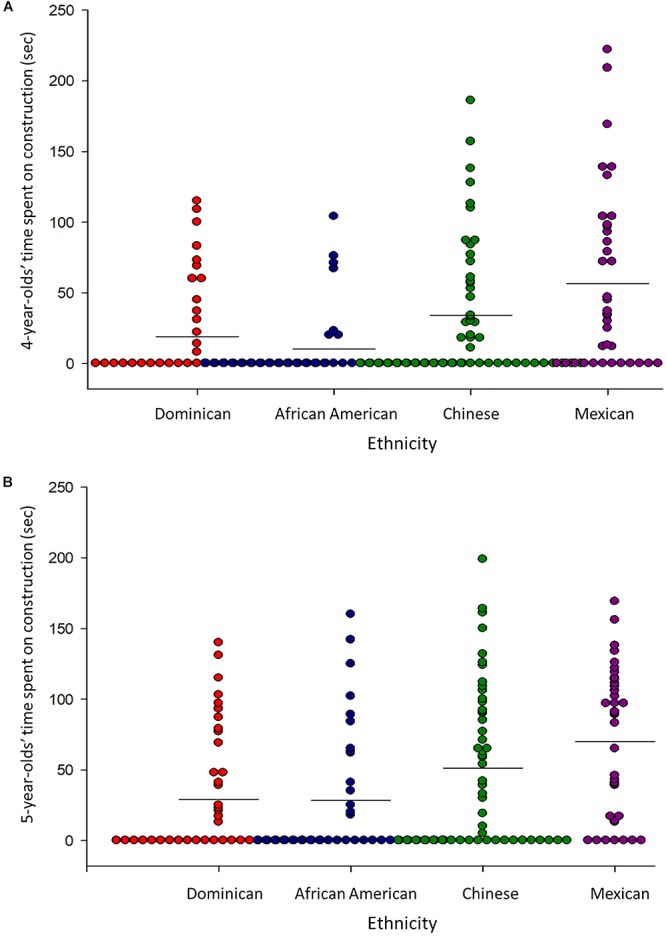
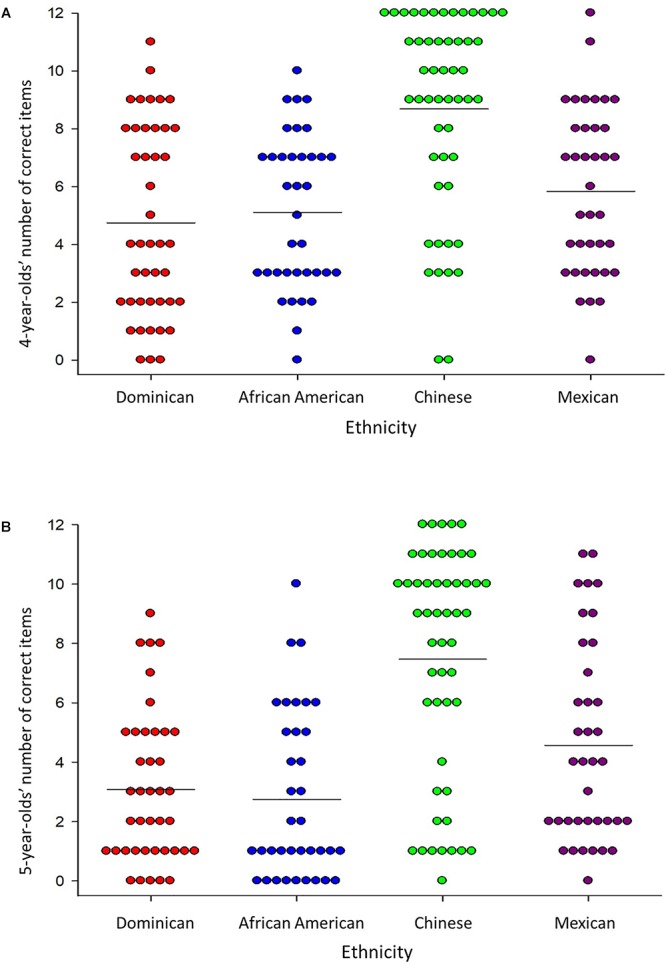
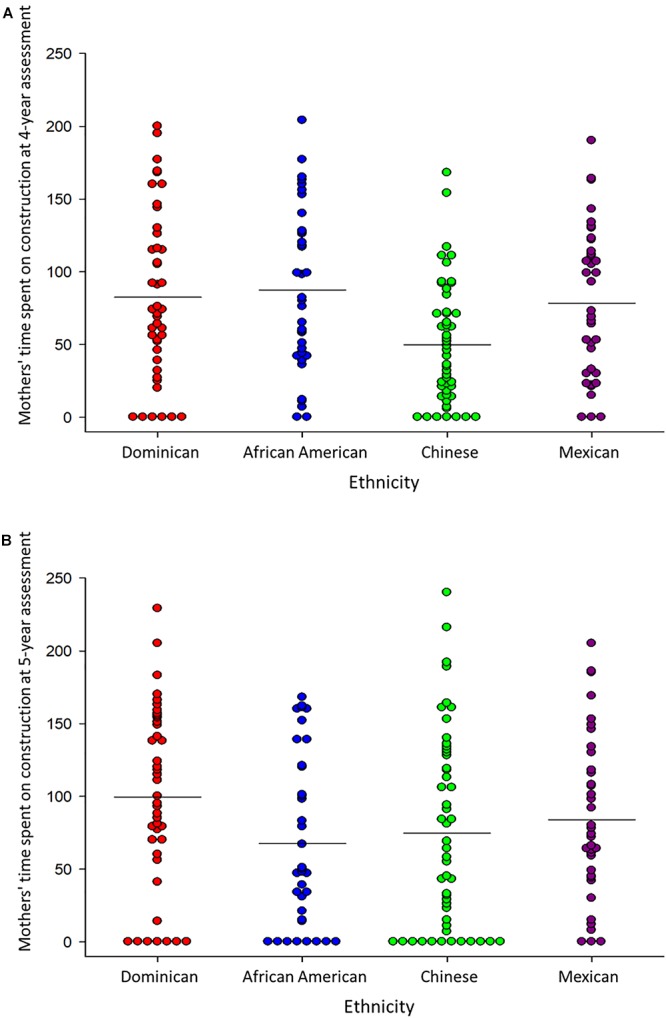
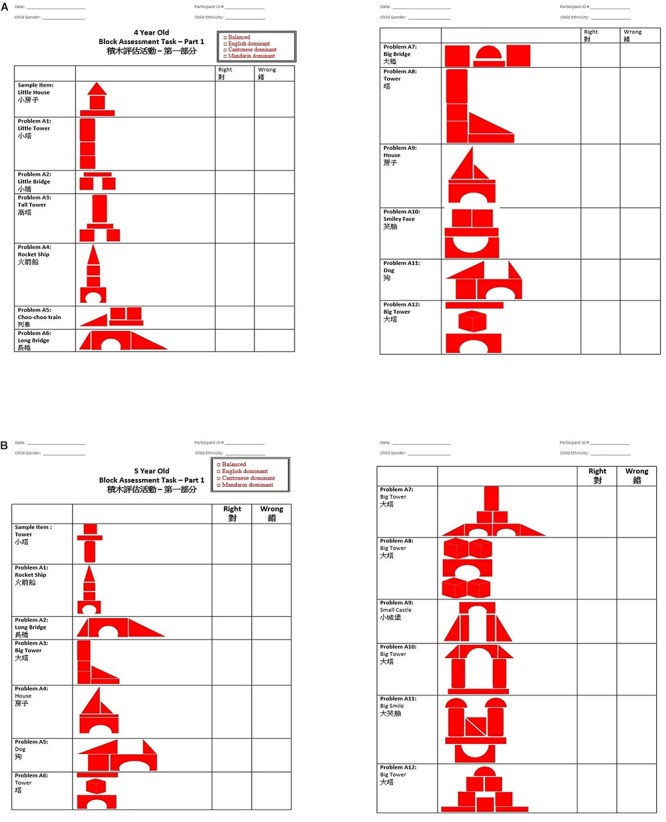
Play offers an unparalleled opportunity for young children to gain cognitive skills in informal settings. Block play in particular-including interactions with parents around block constructions-teaches children about intrinsic spatial features of objects (size, shape) and extrinsic spatial relations. In turn, early spatial cognition paves the way for later competencies in math and science. We assessed 4- and 5-year-old children's spatial skill on a set of block-building constructions and examined mother-child block building interactions in 167 U.S. dyads from African American, Dominican, Mexican, and Chinese backgrounds. At both ages, children were instructed to copy several 3D block constructions, followed by a "break" during which mothers and children were left alone with the blocks. A form that contained pictures of test items was left on the table. Video-recordings of mother-child interactions during the break were coded for two types of building behaviors - test-specific construction (building structures on the test form) or free-form construction (building structures not on the test form). Chinese children outperformed Mexican, African American, and Dominican children on the block-building assessment. Further, Chinese and Mexican mother-child dyads spent more time building test-specific constructions than did African American and Dominican dyads. At an individual level, mothers' time spent building test-specific constructions at the 4-year (but not 5-year) assessment, but not mothers' initiation of block building interactions or verbal instructions, related to children's performance, when controlling for ethnicity. Ethnic differences in children's block-building performance and experiences emerge prior to formal schooling and provide a valuable window into sources of individual differences in early spatial cognition.

摘要

玩耍为幼儿在非正式环境中获得认知技能提供了无与伦比的机会。特别是积木游戏——包括与父母围绕积木搭建进行互动——能让孩子们了解物体的内在空间特征(大小、形状)和外在空间关系。反过来,早期的空间认知为日后在数学和科学方面的能力发展奠定了基础。我们评估了167组来自非裔美国人、多米尼加人、墨西哥人和中国人背景的美国家庭中4岁和5岁儿童在一组积木搭建任务中的空间技能,并考察了母子积木搭建互动情况。在两个年龄段,孩子们都被要求复制几个三维积木结构,然后有一段“休息时间”,在此期间母亲和孩子单独与积木待在一起。一张包含测试项目图片的表格放在桌子上。对休息期间母子互动的视频记录进行编码,记录两种搭建行为——特定测试搭建(在测试表格上搭建结构)或自由形式搭建(不在测试表格上搭建结构)。在积木搭建评估中,中国孩子的表现优于墨西哥、非裔美国和多米尼加孩子。此外,中国和墨西哥的母子组合比非裔美国和多米尼加组合花更多时间进行特定测试搭建。在个体层面,在控制种族因素后,4岁(而非5岁)评估时母亲花在特定测试搭建上的时间,而非母亲发起积木搭建互动或言语指导的时间,与孩子的表现相关。儿童积木搭建表现和经历的种族差异在正式上学之前就已出现,为了解早期空间认知中个体差异的来源提供了一个宝贵的窗口。
https://cdn.ncbi.nlm.nih.gov/pmc/blobs/e38d/6639782/20c95534d8c7/fpsyg-10-01626-g004.jpg
https://cdn.ncbi.nlm.nih.gov/pmc/blobs/e38d/6639782/f30b9ae6fb50/fpsyg-10-01626-g001.jpg
https://cdn.ncbi.nlm.nih.gov/pmc/blobs/e38d/6639782/fa338c65eef2/fpsyg-10-01626-g002.jpg
https://cdn.ncbi.nlm.nih.gov/pmc/blobs/e38d/6639782/f158108acf4a/fpsyg-10-01626-g003.jpg
https://cdn.ncbi.nlm.nih.gov/pmc/blobs/e38d/6639782/20c95534d8c7/fpsyg-10-01626-g004.jpg
https://cdn.ncbi.nlm.nih.gov/pmc/blobs/e38d/6639782/f30b9ae6fb50/fpsyg-10-01626-g001.jpg
https://cdn.ncbi.nlm.nih.gov/pmc/blobs/e38d/6639782/fa338c65eef2/fpsyg-10-01626-g002.jpg
https://cdn.ncbi.nlm.nih.gov/pmc/blobs/e38d/6639782/f158108acf4a/fpsyg-10-01626-g003.jpg
https://cdn.ncbi.nlm.nih.gov/pmc/blobs/e38d/6639782/20c95534d8c7/fpsyg-10-01626-g004.jpg

相似文献

1
Children's Block-Building Skills and Mother-Child Block-Building Interactions Across Four U.S. Ethnic Groups.美国四个种族儿童的积木搭建技能及母子积木搭建互动情况
Front Psychol. 2019 Jul 12;10:1626. doi: 10.3389/fpsyg.2019.01626. eCollection 2019.
2
Mothers' distancing language relates to young children's math and literacy skills.母亲的疏远语言与幼儿的数学和读写技能有关。
J Exp Child Psychol. 2020 Aug;196:104863. doi: 10.1016/j.jecp.2020.104863. Epub 2020 May 4.
3
Children's vocabulary growth in English and Spanish across early development and associations with school readiness skills.儿童在早期发育过程中英语和西班牙语词汇的增长及其与入学准备技能的关联。
Dev Neuropsychol. 2014;39(2):69-87. doi: 10.1080/87565641.2013.827198.
4
Effects of Latino children on their mothers' dietary intake and dietary behaviors: The role of children's acculturation and the mother-child acculturation gap.拉丁裔儿童对其母亲饮食摄入和饮食行为的影响:儿童文化适应和母子文化适应差距的作用。
Soc Sci Med. 2017 Oct;191:125-133. doi: 10.1016/j.socscimed.2017.09.004. Epub 2017 Sep 5.
5
Encouraging Maternal Guidance of Preschoolers' Spatial Thinking During Block Play.鼓励母亲在积木游戏中引导学龄前儿童进行空间思维。
Child Dev. 2018 Jul;89(4):1209-1222. doi: 10.1111/cdev.12779. Epub 2017 Mar 13.
6
Spatial Skills Associated With Block-Building Complexity in Preschoolers.与学龄前儿童积木搭建复杂性相关的空间技能
Front Psychol. 2020 Oct 22;11:563493. doi: 10.3389/fpsyg.2020.563493. eCollection 2020.
7
Associations of 3-year-olds' block-building complexity with later spatial and mathematical skills.3岁儿童积木搭建复杂度与后期空间和数学技能的关联。
J Cogn Dev. 2020;21(3):383-405. doi: 10.1080/15248372.2020.1741363. Epub 2020 Mar 31.
8
The Impact of Individual Differences, Types of Model and Social Settings on Block Building Performance among Chinese Preschoolers.个体差异、模型类型和社会环境对中国学龄前儿童积木搭建表现的影响
Front Psychol. 2018 Jan 30;9:27. doi: 10.3389/fpsyg.2018.00027. eCollection 2018.
9
Children's questions: a mechanism for cognitive development.儿童的问题:一种认知发展机制。
Monogr Soc Res Child Dev. 2007;72(1):vii-ix, 1-112; discussion 113-26. doi: 10.1111/j.1540-5834.2007.00412.x.
10
Toward a Developmental Science of Politics.迈向政治发展科学。
Monogr Soc Res Child Dev. 2019 Sep;84(3):7-185. doi: 10.1111/mono.12410.

引用本文的文献

1
Early, concurrent, and consistent hand preferences predict stacking in toddlerhood.早期、同时且一致的手偏好可预测幼儿期的堆叠行为。
Dev Psychobiol. 2023 Jul;65(5):e22397. doi: 10.1002/dev.22397.
2
Spatial Language of Young Children During Block Play in Kindergartens in Urban China.中国城市幼儿园积木游戏中幼儿的空间语言
Front Psychol. 2021 Feb 23;12:568638. doi: 10.3389/fpsyg.2021.568638. eCollection 2021.

本文引用的文献

1
Gesture as simulated action: Revisiting the framework.手势即模拟动作:重新审视该框架。
Psychon Bull Rev. 2019 Jun;26(3):721-752. doi: 10.3758/s13423-018-1548-0.
2
Encouraging Maternal Guidance of Preschoolers' Spatial Thinking During Block Play.鼓励母亲在积木游戏中引导学龄前儿童进行空间思维。
Child Dev. 2018 Jul;89(4):1209-1222. doi: 10.1111/cdev.12779. Epub 2017 Mar 13.
3
How do gestures influence thinking and speaking? The gesture-for-conceptualization hypothesis.手势如何影响思维和语言?概念化手势假说。
Psychol Rev. 2017 Apr;124(3):245-266. doi: 10.1037/rev0000059. Epub 2017 Feb 27.
4
IV. RESULTS-LINKS BETWEEN SPATIAL ASSEMBLY, LATER SPATIAL SKILLS, AND CONCURRENT AND LATER MATHEMATICAL SKILLS.四、结果——空间组装、后期空间技能以及同时期和后期数学技能之间的联系。
Monogr Soc Res Child Dev. 2017 Mar;82(1):71-80. doi: 10.1111/mono.12283.
5
Producing Spatial Words Is Not Enough: Understanding the Relation Between Language and Spatial Cognition.产生空间词汇还不够:理解语言和空间认知之间的关系。
Child Dev. 2017 Nov;88(6):1966-1982. doi: 10.1111/cdev.12664. Epub 2016 Nov 8.
6
Spatial Processing in Infancy Predicts Both Spatial and Mathematical Aptitude in Childhood.婴儿时期的空间处理能力预测儿童时期的空间和数学能力。
Psychol Sci. 2016 Oct;27(10):1291-1298. doi: 10.1177/0956797616655977. Epub 2016 Aug 20.
7
Deconstructing building blocks: preschoolers' spatial assembly performance relates to early mathematical skills.解构积木:学龄前儿童的空间组装表现与早期数学技能相关。
Child Dev. 2014 May-Jun;85(3):1062-1076. doi: 10.1111/cdev.12165. Epub 2013 Sep 23.
8
Children's spatial thinking: does talk about the spatial world matter?儿童的空间思维:谈论空间世界有意义吗?
Dev Sci. 2011 Nov;14(6):1417-30. doi: 10.1111/j.1467-7687.2011.01088.x. Epub 2011 Oct 4.
9
Motor processes in mental rotation.
Cognition. 1998 Aug;68(1):77-94. doi: 10.1016/s0010-0277(98)00032-8.
10
Learning to express motion events in English and Korean: the influence of language-specific lexicalization patterns.学习用英语和韩语表达运动事件:特定语言词汇化模式的影响。
Cognition. 1991 Dec;41(1-3):83-121. doi: 10.1016/0010-0277(91)90033-z.