Yetton Benjamin D, Revord Julia, Margolis Seth, Lyubomirsky Sonja, Seitz Aaron R
Cognitive Science Department, University of California, Irvine, Irvine, CA, United States.
Cognitive Science Department, University of California, Riverside, Riverside, CA, United States.
Front Psychol. 2019 Jul 12;10:1630. doi: 10.3389/fpsyg.2019.01630. eCollection 2019.
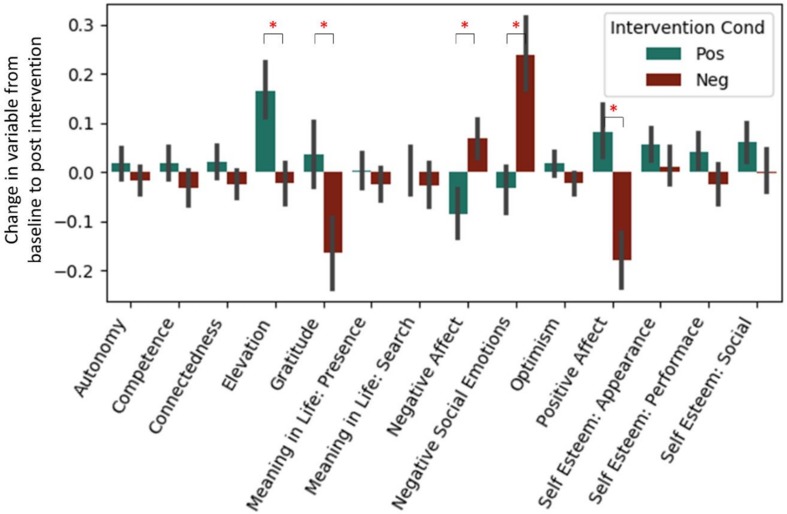
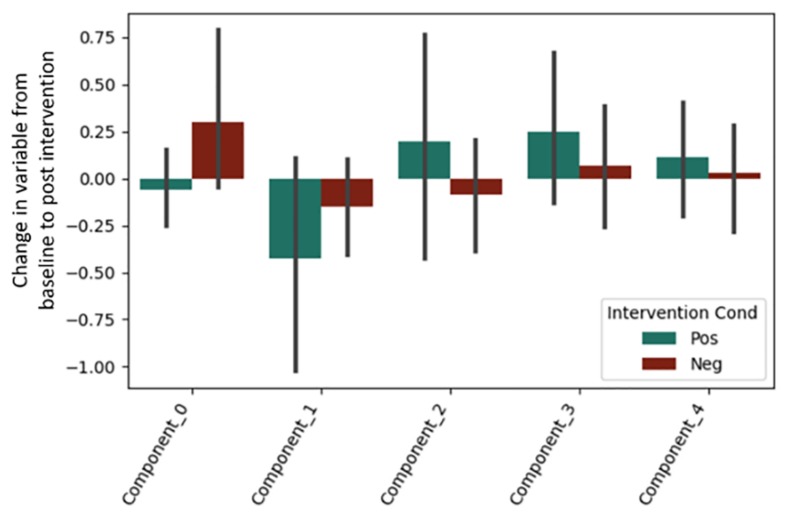
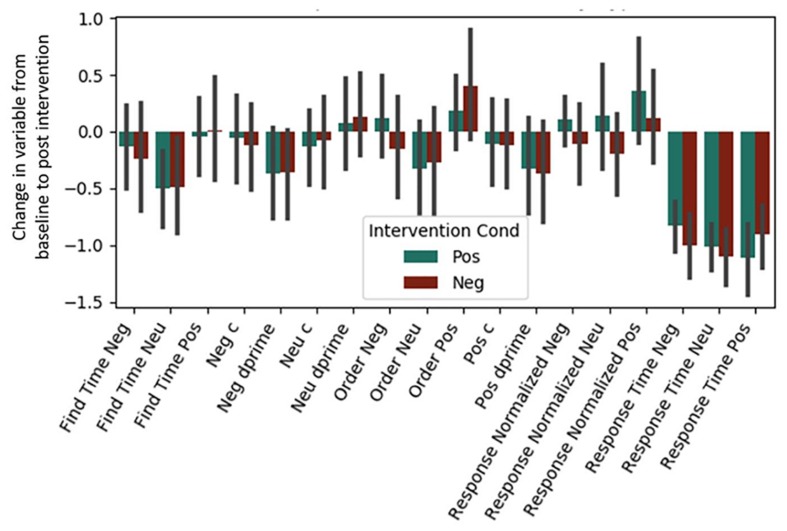
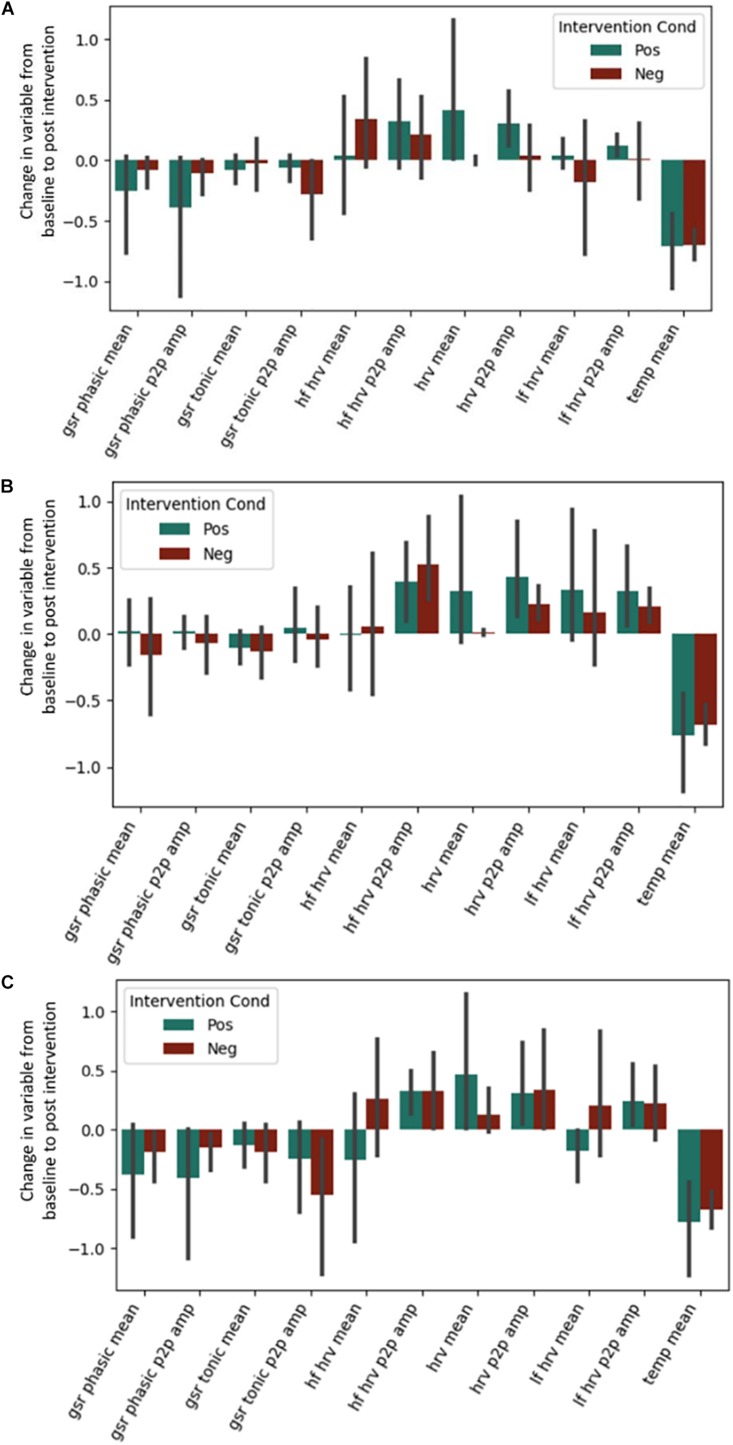
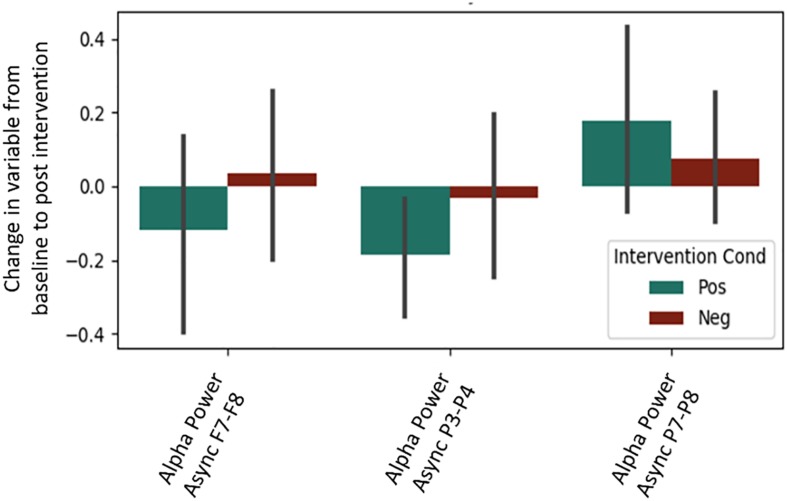
Social and personality psychology have been criticized for overreliance on potentially biased self-report variables. In well-being science, researchers have called for more "objective" physiological and cognitive measures to evaluate the efficacy of well-being-increasing interventions. This may now be possible with the recent rise of cost-effective, commercially available wireless physiological recording devices and smartphone-based cognitive testing. We sought to determine whether cognitive and physiological measures, coupled with machine learning methods, could quantify the effects of positive interventions. The current 2-part study used a college sample ( = 245) to contrast the cognitive (memory, attention, construal) and physiological (autonomic, electroencephalogram) effects of engaging in one of two randomly assigned writing activities (i.e., prosocial or "antisocial"). In the prosocial condition, participants described an interaction when they acted in a kind way, then described an interaction when they received kindness. In the "antisocial" condition, participants wrote instead about an interaction when they acted in an kind way and received kindness, respectively. Our study replicated previous research on the beneficial effects of recalling prosocial experiences as assessed by self-report. However, we did not detect an effect of the positive or negative activity intervention on either cognitive or physiological measures. More research is needed to investigate under what conditions cognitive and physiological measures may be applicable, but our findings lead us to conclude that they should not be unilaterally favored over the traditional self-report approach.
社会心理学和人格心理学因过度依赖可能存在偏差的自我报告变量而受到批评。在幸福科学领域,研究人员呼吁采用更多“客观”的生理和认知测量方法来评估增进幸福感干预措施的效果。随着近期性价比高的商用无线生理记录设备和基于智能手机的认知测试的兴起,现在这或许成为可能。我们试图确定认知和生理测量方法,结合机器学习方法,是否能够量化积极干预措施的效果。当前这项分为两部分的研究以大学生样本((n = 245))为对象,对比参与两种随机分配的写作活动(即亲社会或“反社会”)之一所产生的认知(记忆、注意力、解释)和生理(自主神经、脑电图)影响。在亲社会条件下,参与者描述他们以友善方式行事时的一次互动,然后描述他们受到友善对待时的一次互动。在“反社会”条件下,参与者分别撰写他们以不友善方式行事和受到不友善对待时的一次互动。我们的研究重复了先前关于回忆亲社会经历的有益效果的自我报告研究。然而,我们未检测到积极或消极活动干预对认知或生理测量产生影响。需要更多研究来调查认知和生理测量方法在何种条件下可能适用,但我们的研究结果使我们得出结论,不应单方面青睐它们而摒弃传统的自我报告方法。