Murthy Aditi, Gerber Scott A, Koch Cameron J, Lord Edith M
Department of Microbiology and Immunology, University of Rochester School of Medicine and Dentistry, Rochester, NY 14642.
Department of Surgery, University of Rochester School of Medicine and Dentistry, Rochester, NY 14642; and.
Immunohorizons. 2019 Apr 29;3(4):149-160. doi: 10.4049/immunohorizons.1900017.
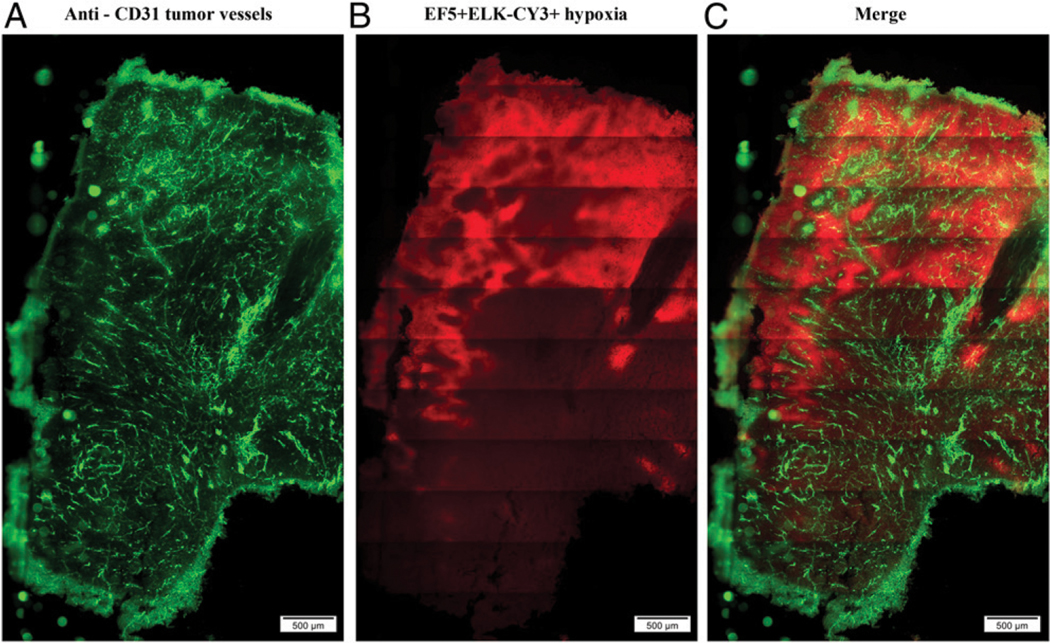
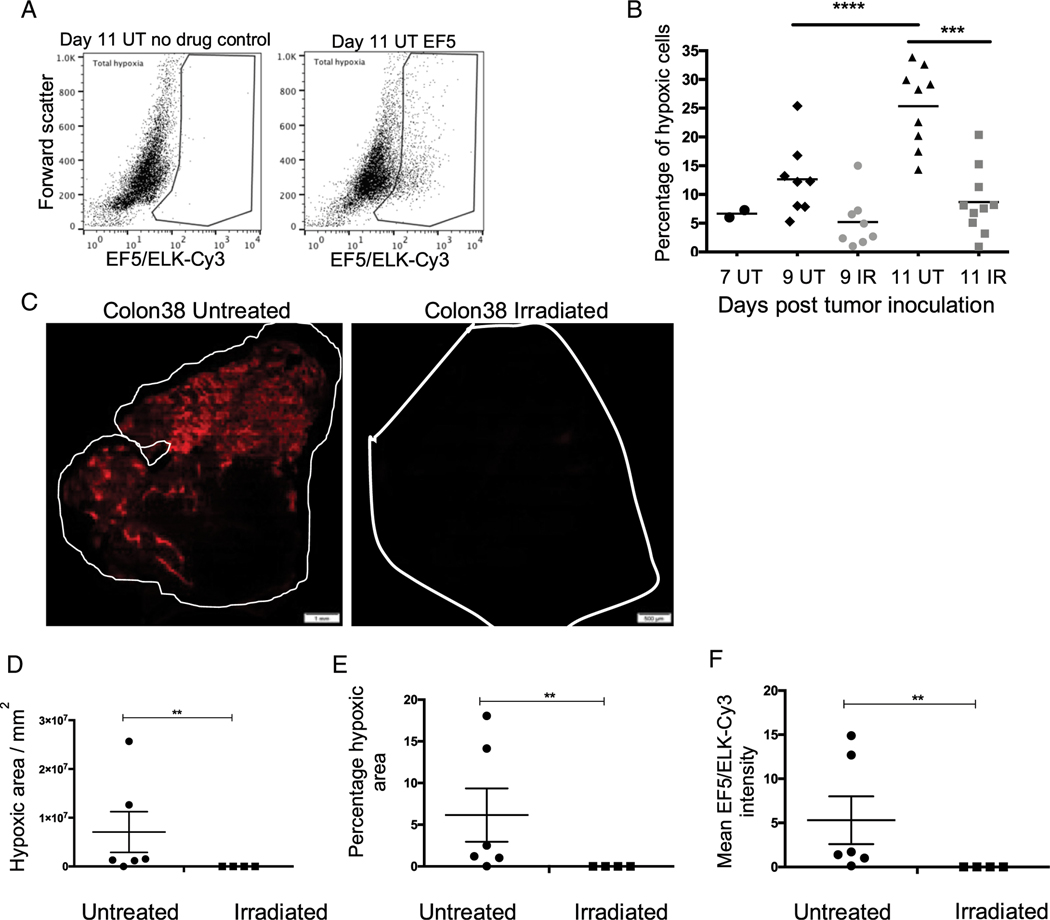
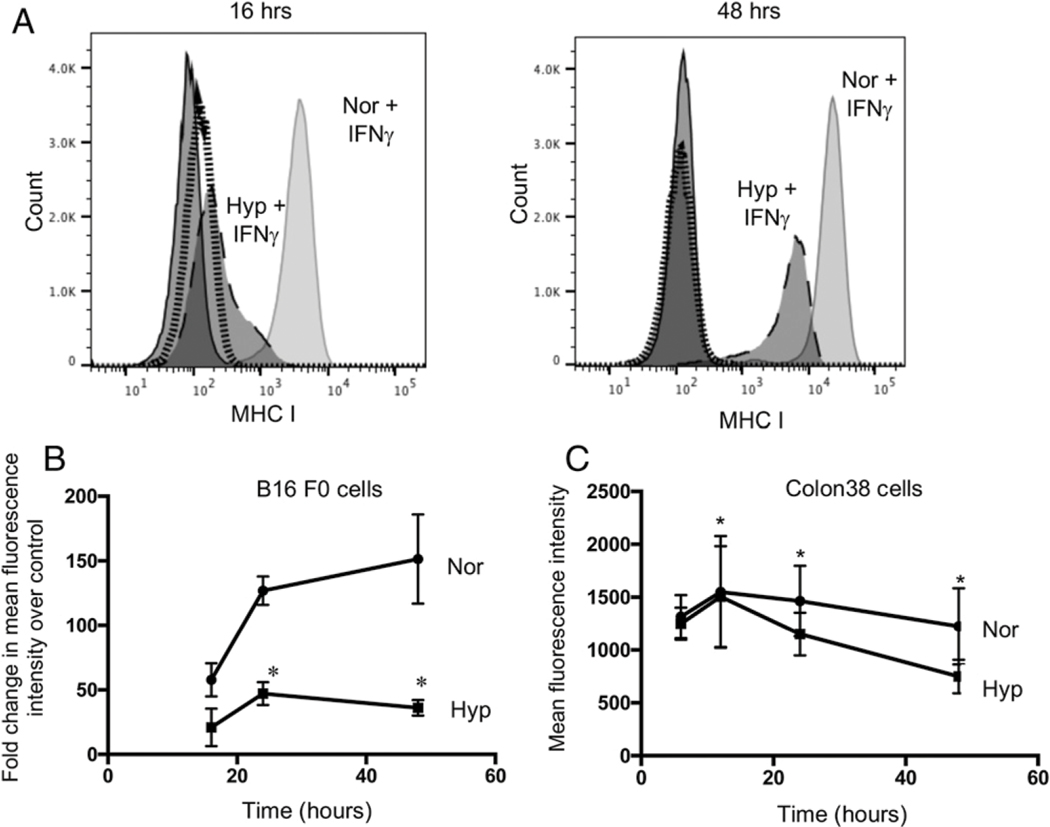
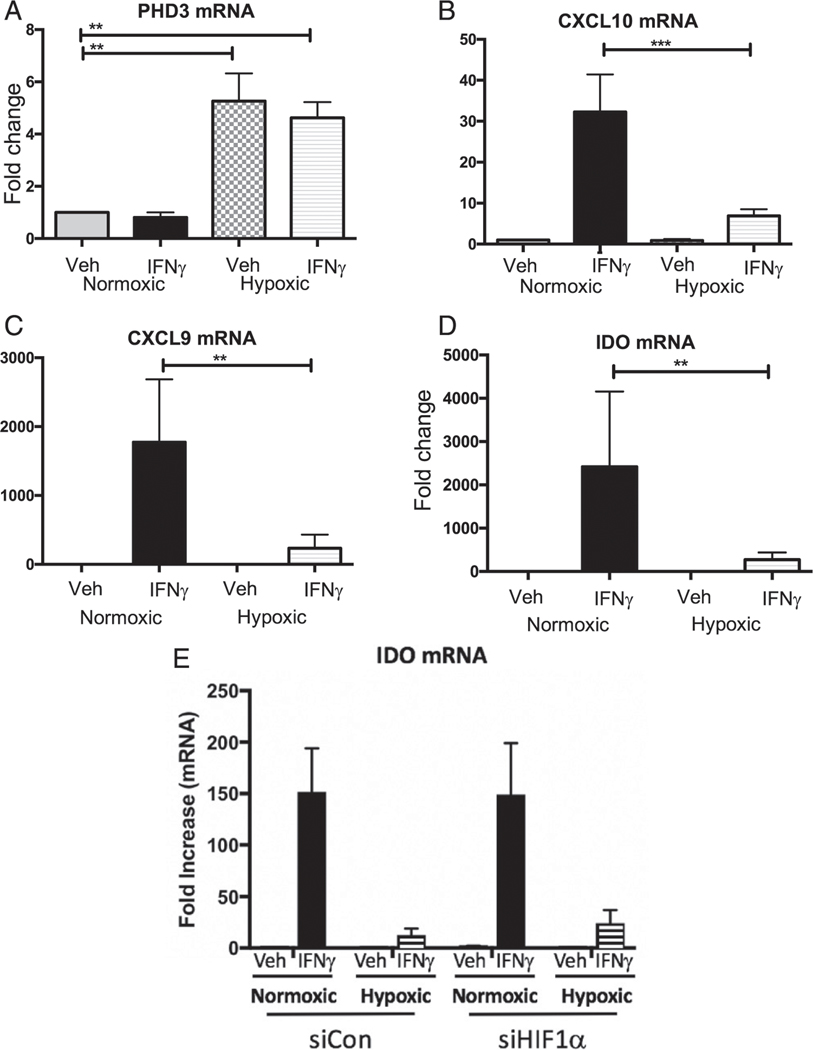
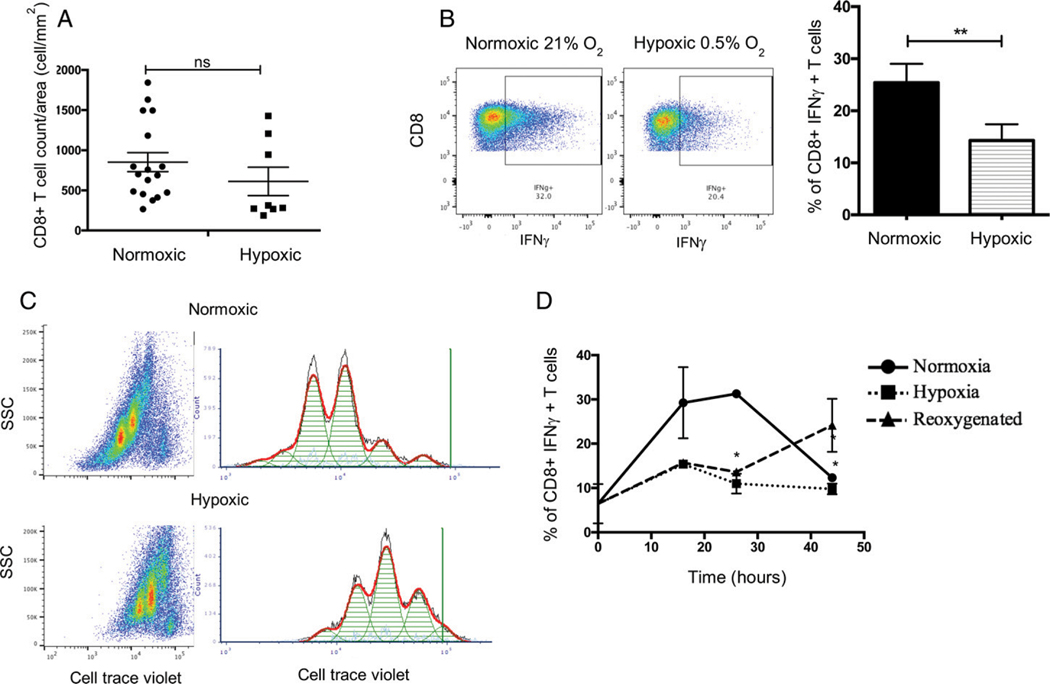
Tumor hypoxia occurs because of an increased demand for oxygen by the rapidly growing tumor cells, together with reduction in the oxygen supply due to malformed and nonfunctional tumor vasculature. The effects of tumor hypoxia on radiotherapy (RT) are well known; however, recent findings suggest it may also suppress immunotherapy, although the mechanisms governing this observation remain undetermined. Our laboratory and others have shown that IFN-γ conditions the tumor milieu and is important for the efficacy of RT. Thus, we hypothesized that hypoxia could inhibit IFN-γ-mediated antitumor responses, resulting in decreased RT efficacy. This inhibition could involve the production and/or the cellular response to IFN-γ. To test this, we used murine tumor cell lines B16F0 and Colon38. We observed that hypoxia inhibited upregulation of IFN-γ-dependent MHC class I expression by tumor cells along with the gene expression of IFN-γ-dependent chemokines CXCL9 and CXCL10, essential for immune cell infiltration. Furthermore, CD8 T cells, an important source of IFN-γ, which mediate effector antitumor responses, had reduced ability to proliferate and generate IFN-γ under hypoxic conditions in vitro. Interestingly, reoxygenation restored the cytokine-producing capability of these cells. Studies performed in vivo using a mouse tumor model and the hypoxia marker EF5 demonstrated that RT could reverse the hypoxia within treated tumors. This study has identified a unique mechanism of hypoxia-induced immune suppression involving the downregulation of IFN-γ production and cellular responsiveness to this essential cytokine. These results suggest that therapies that target and reduce tumor hypoxia can potentially boost antitumor immune responses.
肿瘤缺氧的发生是由于快速生长的肿瘤细胞对氧气的需求增加,同时肿瘤血管畸形和功能异常导致氧气供应减少。肿瘤缺氧对放射治疗(RT)的影响是众所周知的;然而,最近的研究结果表明,它也可能抑制免疫治疗,尽管导致这一现象的机制尚不清楚。我们实验室和其他研究表明,干扰素-γ(IFN-γ)可调节肿瘤微环境,对放疗疗效至关重要。因此,我们推测缺氧可能抑制IFN-γ介导的抗肿瘤反应,从而降低放疗疗效。这种抑制可能涉及IFN-γ的产生和/或细胞对IFN-γ的反应。为了验证这一点,我们使用了小鼠肿瘤细胞系B16F0和Colon38。我们观察到,缺氧抑制了肿瘤细胞中IFN-γ依赖性主要组织相容性复合体I类分子(MHC class I)表达的上调以及IFN-γ依赖性趋化因子CXCL9和CXCL10的基因表达,而这些趋化因子对免疫细胞浸润至关重要。此外,作为IFN-γ重要来源的CD8 T细胞,在体外缺氧条件下介导效应抗肿瘤反应的增殖和产生IFN-γ的能力降低。有趣的是,复氧恢复了这些细胞产生细胞因子的能力。使用小鼠肿瘤模型和缺氧标志物EF5进行的体内研究表明,放疗可以逆转治疗肿瘤内的缺氧状态。本研究确定了一种独特的缺氧诱导免疫抑制机制,涉及IFN-γ产生的下调以及细胞对这种重要细胞因子的反应性。这些结果表明,针对并减少肿瘤缺氧的治疗方法可能会增强抗肿瘤免疫反应。