Guangzhou Digestive Disease Center, Guangzhou First People's Hospital and The Second Affiliated Hospital, South China University of Technology School of Medicine, South China University of Technology, Guangzhou, China.
Center for Pancreatic Cancer Research and Department of Immunology, The South China University of Technology School of Medicine, South China University of Technology, Guangzhou, China.
J Immunother Cancer. 2023 Aug;11(8). doi: 10.1136/jitc-2023-007080.
Immunotherapy, including adoptive cell therapy (ACT) and immune checkpoint inhibitors (ICIs), has a limited effect in most patients with colorectal cancer (CRC), and the efficacy is further limited in patients with liver metastasis. Lack of antitumor lymphocyte infiltration could be a major cause, and there remains an urgent need for more potent and safer therapies for CRC.
In this study, the antitumoral synergism of low molecular weight heparin (LMWH) combined with immunotherapy in the microsatellite stable (MSS) highly aggressive murine model of CRC was fully evaluated.
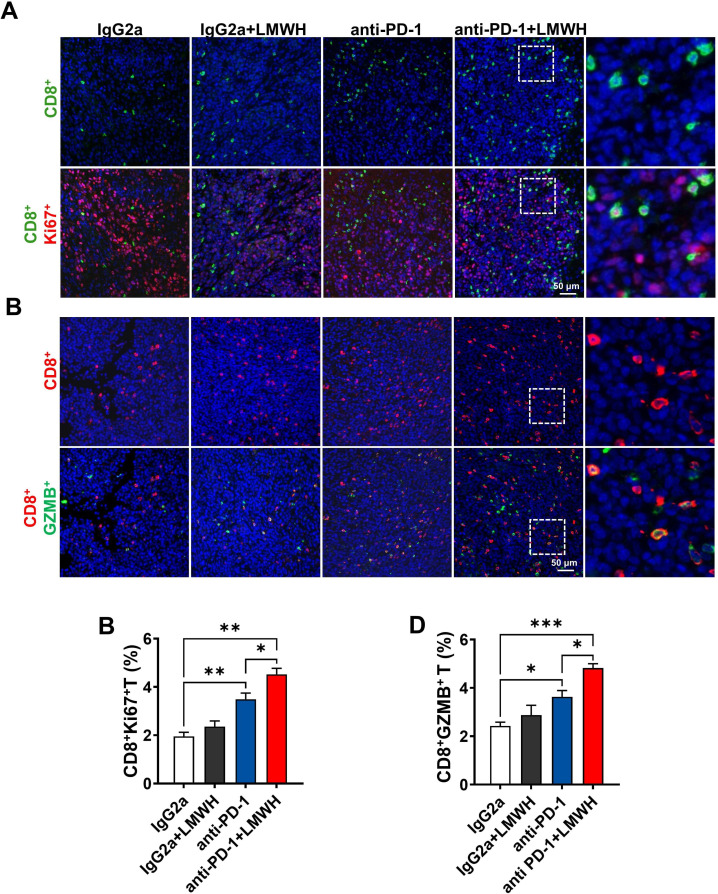
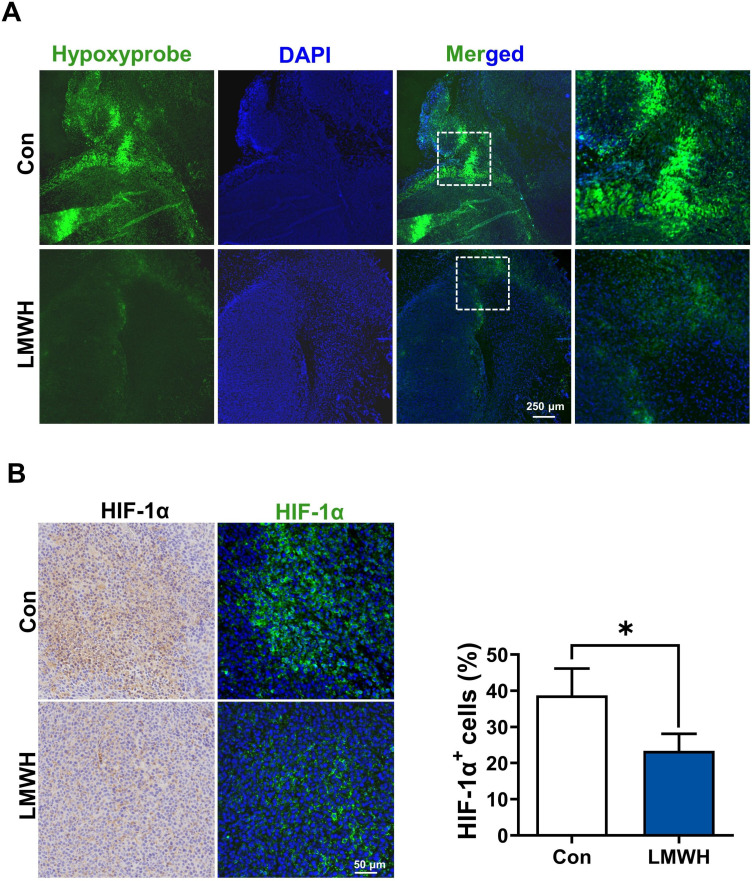
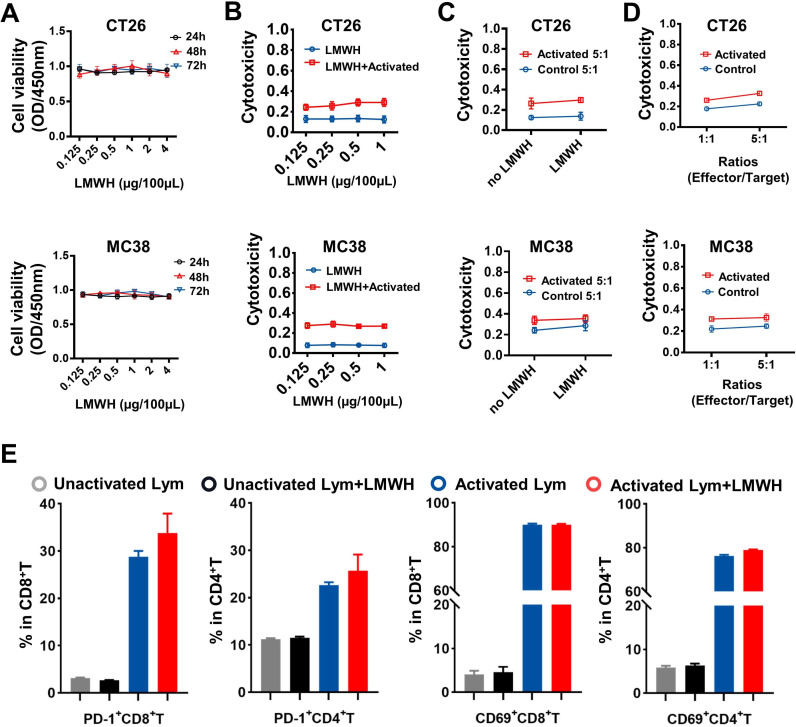
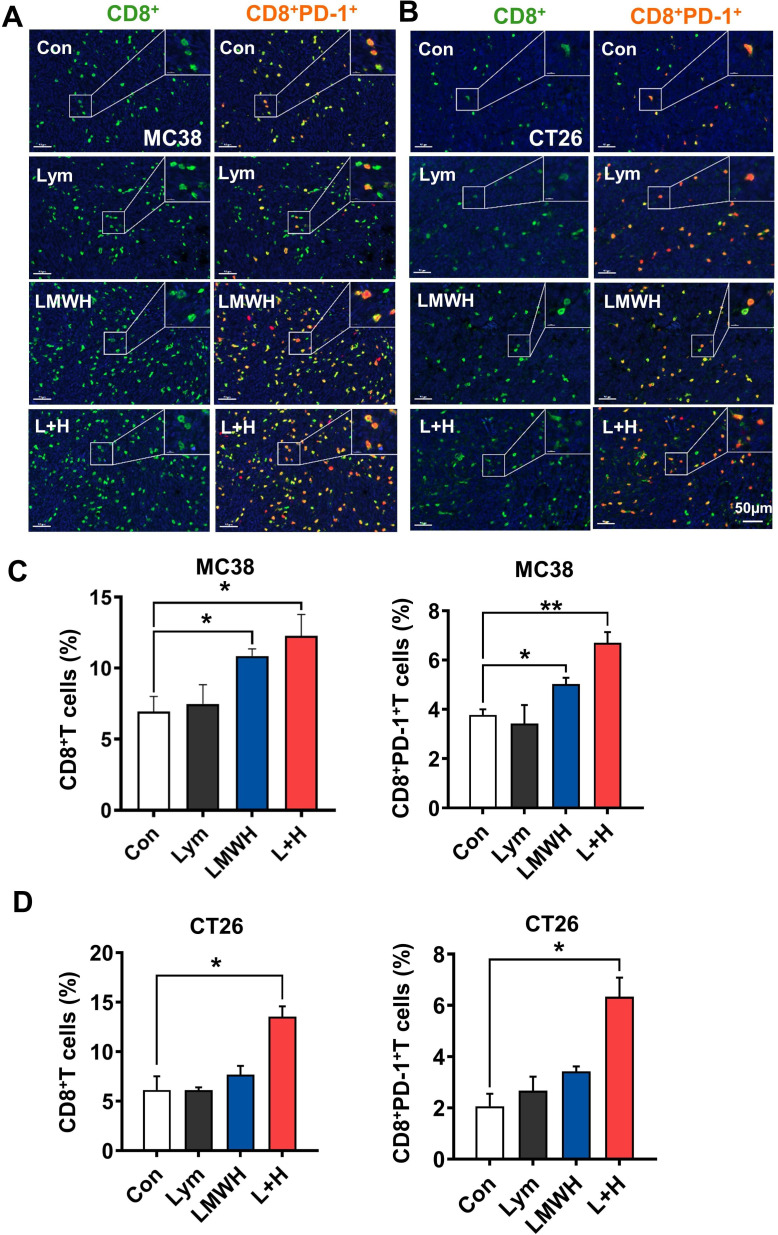
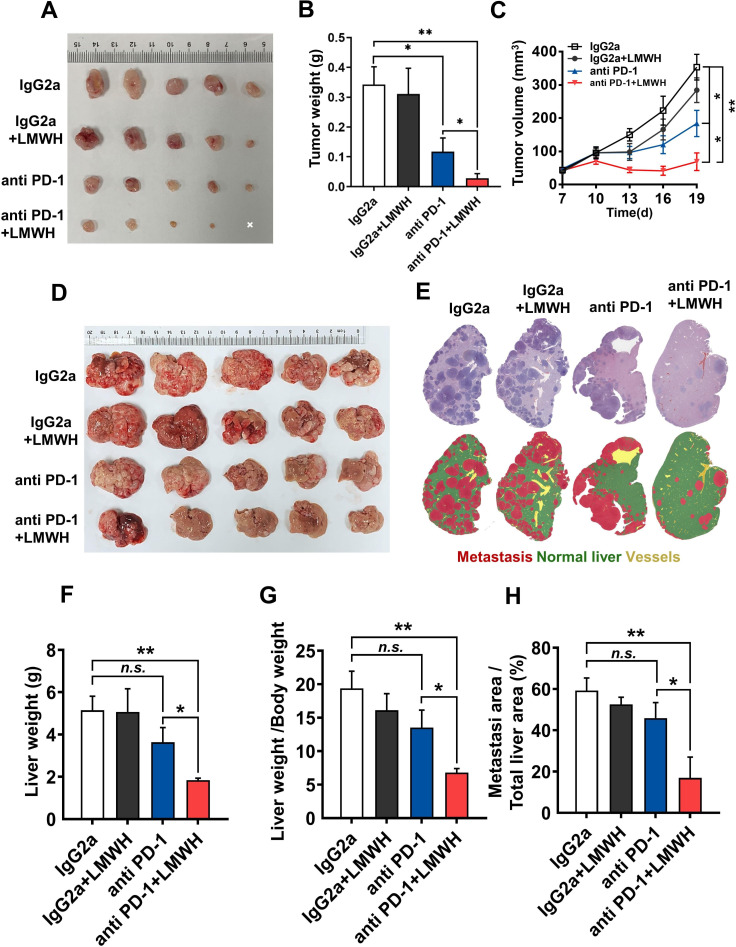
Dual LMWH and ACT objectively mediated the stagnation of tumor growth and inhibition of liver metastasis, neither LMWH nor ACT alone had any antitumoral activity on them. The combination of LMWH and ACT obviously increased the infiltration of intratumor CD8 T cells, as revealed by multiplex immunohistochemistry, purified CD8 T-cell transfer assay, and IVIM in vivo imaging. Mechanistically, evaluation of changes in the tumor microenvironment revealed that LMWH improved tumor vascular normalization and facilitated the trafficking of activated CD8 T cells into tumors. Similarly, LMWH combined with anti-programmed cell death protein 1 (PD-1) therapy provided superior antitumor activity as compared with the single PD-1 blockade in murine CT26 tumor models.
LMWH could enhance ACT and ICIs-based immunotherapy by increasing lymphocyte infiltration into tumors, especially cytotoxic CD8 T cells. These results indicate that combining LMWH with an immunotherapy strategy presents a promising and safe approach for CRC treatment, especially in MSS tumors.
免疫疗法,包括过继细胞疗法(ACT)和免疫检查点抑制剂(ICIs),在大多数结直肠癌(CRC)患者中的效果有限,在肝转移患者中的疗效进一步受限。肿瘤内淋巴细胞浸润不足可能是一个主要原因,因此迫切需要更有效和更安全的 CRC 治疗方法。
在这项研究中,全面评估了低分子量肝素(LMWH)联合免疫疗法在微卫星稳定(MSS)高度侵袭性 CRC 小鼠模型中的抗肿瘤协同作用。
双重 LMWH 和 ACT 客观地介导了肿瘤生长的停滞和肝转移的抑制,LMWH 和 ACT 单独使用对它们均无抗肿瘤活性。LMWH 和 ACT 的联合明显增加了肿瘤内 CD8 T 细胞的浸润,这通过多重免疫组化、纯化 CD8 T 细胞转移实验和 IVIM 体内成像得到证实。从肿瘤微环境的变化评估来看,LMWH 改善了肿瘤血管正常化,促进了激活的 CD8 T 细胞向肿瘤内的转移。同样,LMWH 联合抗程序性细胞死亡蛋白 1(PD-1)治疗与单独 PD-1 阻断在 CT26 肿瘤模型中相比,提供了更好的抗肿瘤活性。
LMWH 可以通过增加淋巴细胞浸润肿瘤,特别是细胞毒性 CD8 T 细胞,增强 ACT 和基于 ICI 的免疫疗法。这些结果表明,将 LMWH 与免疫治疗策略相结合,为 CRC 治疗,特别是 MSS 肿瘤的治疗提供了一种有前途和安全的方法。