Dienaitė Lijana, Pukalskienė Milda, Pukalskas Audrius, Pereira Carolina V, Matias Ana A, Venskutonis Petras Rimantas
Department of Food Science and Technology, Kaunas University of Technology, Radvilėnų˛ pl. 19, LT-50254 Kaunas, Lithuania.
IBET-Instituto de Biologia Experimental e Tecnológica, Food & Health Division Apartado 12, 2780-901 Oeiras, Portugal.
Antioxidants (Basel). 2019 Jul 27;8(8):249. doi: 10.3390/antiox8080249.
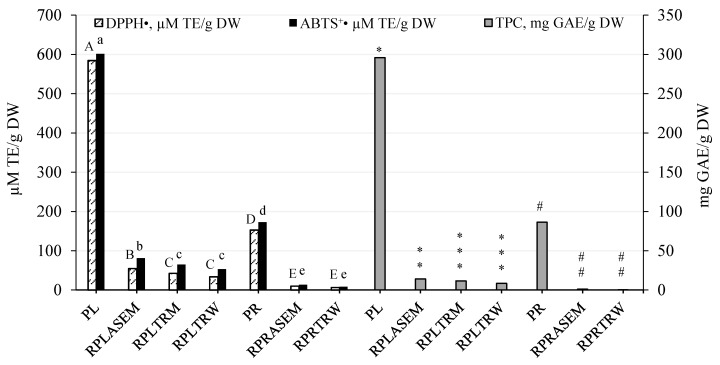
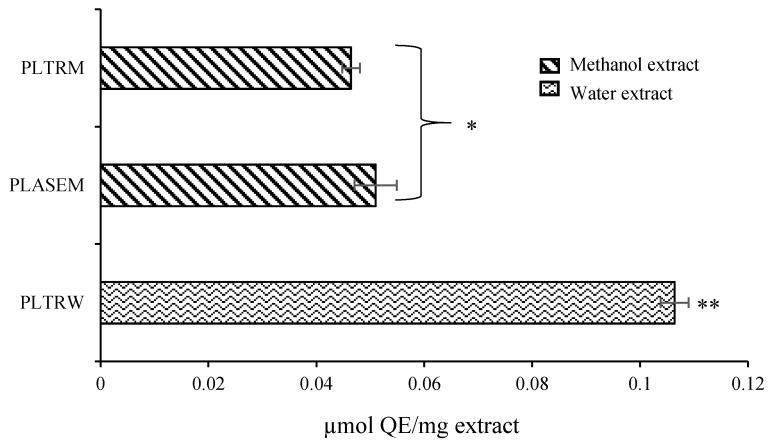
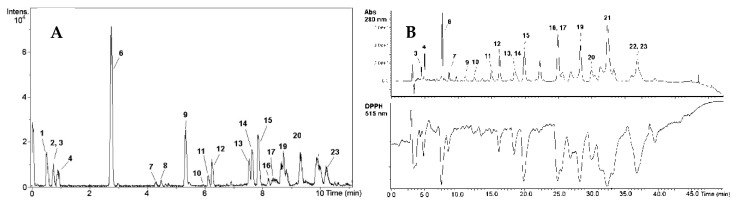
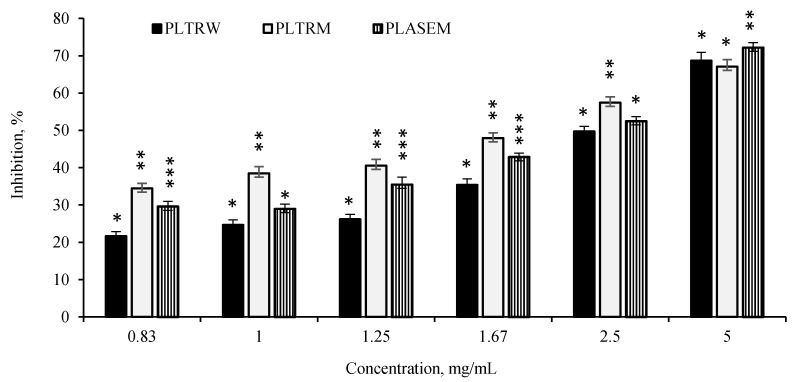
extracts from leaves and roots were tested for their antioxidant potential using in vitro chemical (Folin-Ciocalteu, 2,2-diphenyl-1-picrylhydrazyl radical (DPPH), 2,2'-azino--3-ethylbenzothiazoline-6-sulfonic acid (ABTS), oxygen radical absorbance capacity (ORAC), hydroxyl radical antioxidant capacity (HORAC), hydroxyl radical scavenging capacity HOSC)) and cellular antioxidant activity (CAA) assays. Leaf extracts were stronger antioxidants than root extracts, while methanol was a more effective solvent than water in chemical assays. However, the selected water extract of leaves was a stronger antioxidant in CAA than the methanol extract (0.106 vs. 0.046 µmol quercetin equivalents/mg). Twenty compounds were identified by ultra performance liquid chromatography-quadrupole-time-of-flight (UPLC-Q-TOF) mass spectrometer, while on-line screening of their antioxidant capacity by high performance liquid chromatography (HPLC) with a DPPH-scavenging detector revealed that gallic acid derivatives are the major peony antioxidants. Root water and leaf methanol extracts inhibited α-amylase in a dose dependent manner. The IC value for the strongest inhibitor, the methanol extract of leaves, was 1.67 mg/mL. In addition, the cytotoxicity assessment of extracts using human Caco-2 cells demonstrated that none of them possessed cytotoxic effects.
采用体外化学方法(福林 - 西奥尔特法、2,2 - 二苯基 - 1 - 苦基肼自由基(DPPH)、2,2'- 联氮 - 双 - 3 - 乙基苯并噻唑啉 - 6 - 磺酸(ABTS)、氧自由基吸收能力(ORAC)、羟基自由基抗氧化能力(HORAC)、羟基自由基清除能力(HOSC))和细胞抗氧化活性(CAA)测定法,对叶和根的提取物的抗氧化潜力进行了测试。叶提取物比根提取物具有更强的抗氧化能力,而在化学测定中,甲醇是比水更有效的溶剂。然而,所选的叶水提取物在CAA中比甲醇提取物具有更强的抗氧化能力(分别为0.106和0.046 μmol槲皮素当量/毫克)。通过超高效液相色谱 - 四极杆 - 飞行时间(UPLC - Q - TOF)质谱仪鉴定出20种化合物,同时通过配备DPPH清除检测器的高效液相色谱(HPLC)对其抗氧化能力进行在线筛选,结果表明没食子酸衍生物是芍药的主要抗氧化剂。根水提取物和叶甲醇提取物以剂量依赖性方式抑制α - 淀粉酶。最强抑制剂叶甲醇提取物的IC值为1.67毫克/毫升。此外,使用人Caco - 2细胞对提取物进行细胞毒性评估表明它们均无细胞毒性作用。