Department of Health and Human Physiology, The University of Iowa, Iowa City, Iowa, USA.
Nursing and Biosciences, Federal University of the State of Rio de Janeiro, Rio de Janeiro, Brazil.
FASEB J. 2019 Nov;33(11):11735-11745. doi: 10.1096/fj.201900766R. Epub 2019 Aug 9.
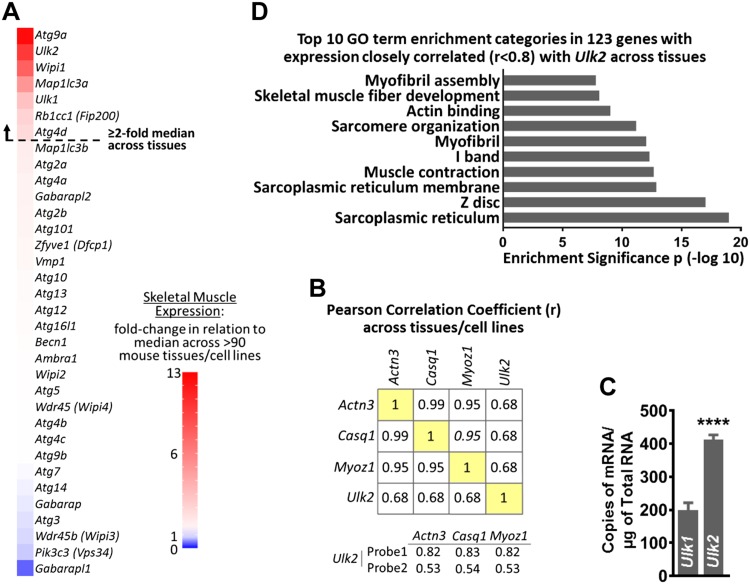
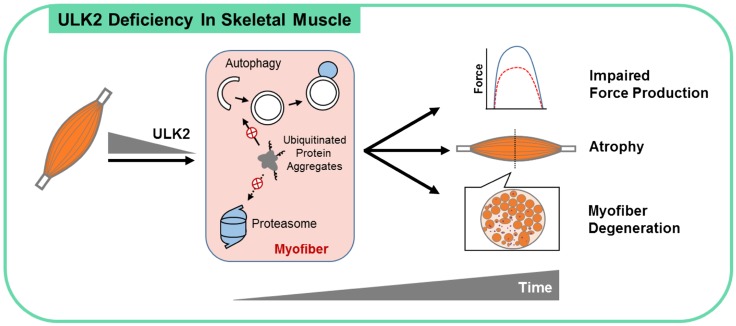
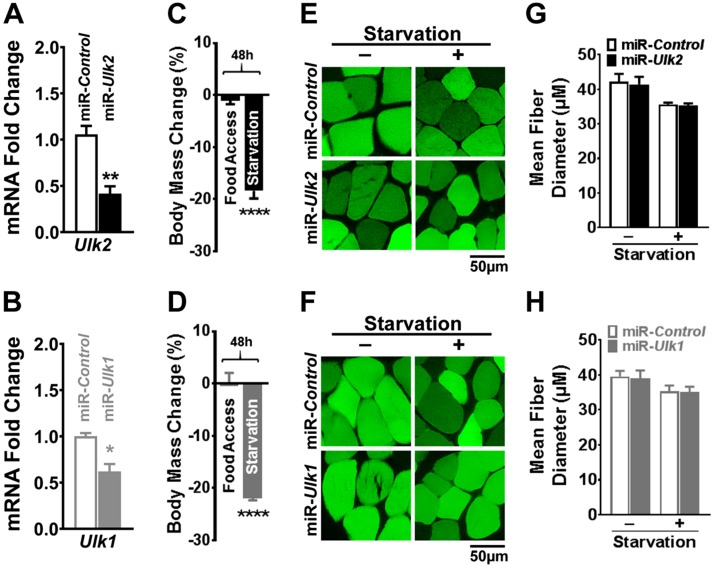
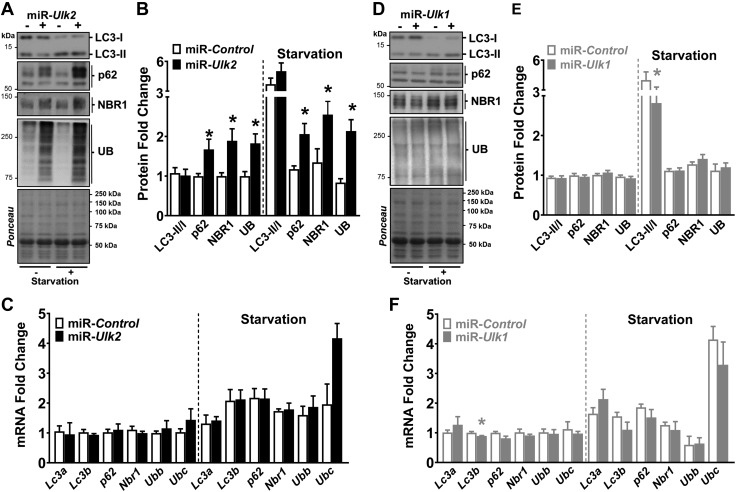
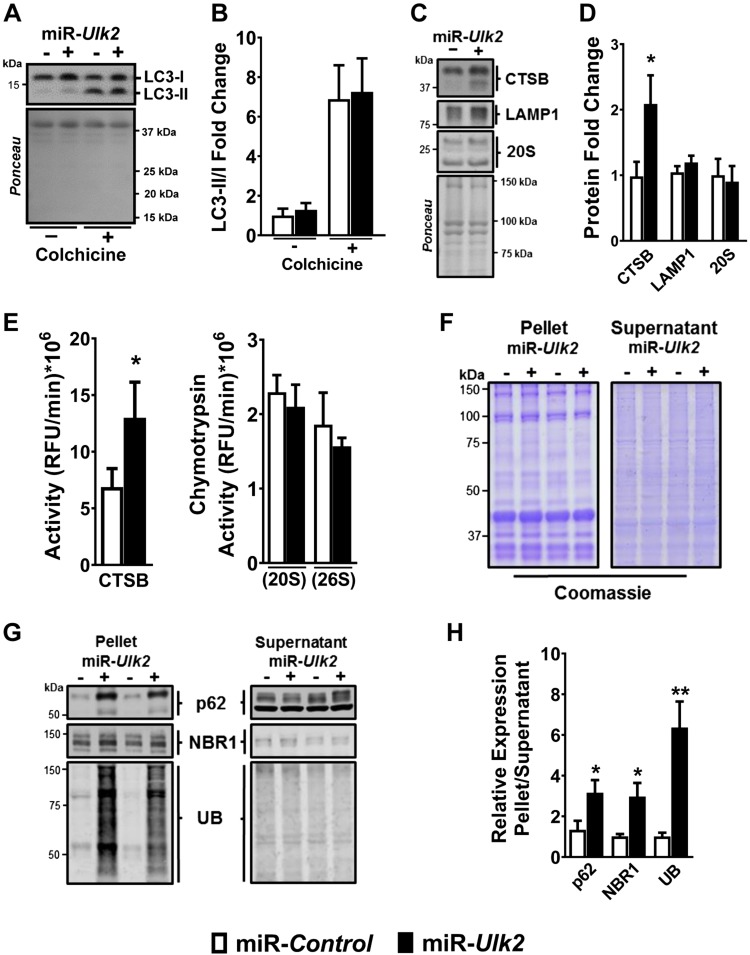
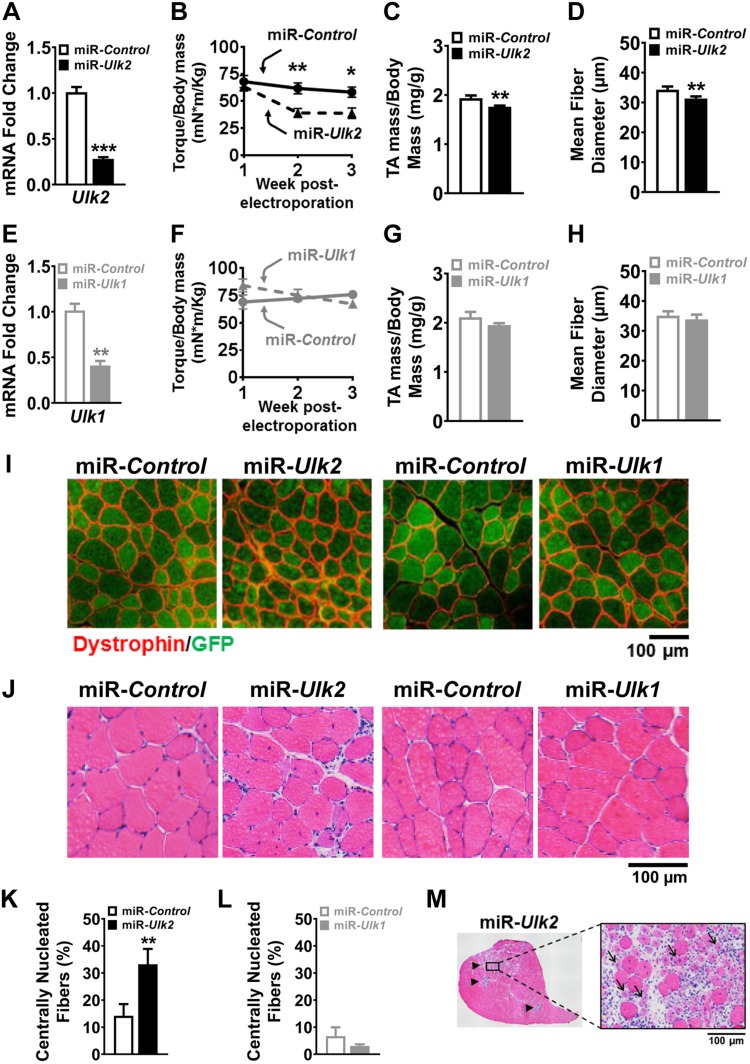
Basal protein turnover, which largely relies on the degradation of ubiquitinated substrates, is instrumental for maintenance of muscle mass and function. However, the regulation of ubiquitinated protein degradation in healthy, nonatrophying skeletal muscle is still evolving, and potential tissue-specific modulators remain unknown. Using an unbiased expression analysis of 34 putative autophagy genes across mouse tissues, we identified unc-51 like autophagy activating kinase (), a homolog of the yeast autophagy related protein 1, as particularly enriched in skeletal muscle. Subsequent experiments revealed accumulations of insoluble ubiquitinated protein aggregates associated with the adaptors sequestosome 1 (SQSTM1, also known as p62) and next to breast cancer type 1 susceptibility protein gene 1 protein (NBR1) in adult muscles with ULK2 deficiency. ULK2 deficiency also led to impaired muscle force and caused myofiber atrophy and degeneration. These features were not observed in muscles with deficiency of the ULK2 paralog, ULK1. Furthermore, short-term ULK2 deficiency did not impair autophagy initiation, autophagosome to lysosome fusion, or protease activities of the lysosome and proteasome. Altogether, our results indicate that skeletal muscle ULK2 has a unique role in basal selective protein degradation by stimulating the recognition and proteolytic sequestration of insoluble ubiquitinated protein aggregates associated with p62 and NBR1. These findings have potential implications for conditions of poor protein homeostasis in muscles as observed in several myopathies and aging.-Fuqua, J. D., Mere, C. P., Kronemberger, A., Blomme, J., Bae, D., Turner, K. D., Harris, M. P., Scudese, E., Edwards, M., Ebert, S. M., de Sousa, L. G. O., Bodine, S. C., Yang, L., Adams, C. M., Lira, V. A. ULK2 is essential for degradation of ubiquitinated protein aggregates and homeostasis in skeletal muscle.
基础蛋白周转率在很大程度上依赖于泛素化底物的降解,对于维持肌肉质量和功能至关重要。然而,健康非萎缩性骨骼肌中泛素化蛋白降解的调节仍在不断发展,潜在的组织特异性调节剂尚不清楚。我们通过对 34 种潜在自噬基因在小鼠组织中的无偏表达分析,发现了 UNC-51 样自噬激活激酶(),一种酵母自噬相关蛋白 1 的同源物,在骨骼肌中特别丰富。随后的实验表明,在 ULK2 缺乏的成年肌肉中,与衔接蛋白 sequestosome 1(SQSTM1,也称为 p62)和乳腺癌 1 易感性蛋白基因 1 蛋白(NBR1)相邻的不溶性泛素化蛋白聚集体的积累与 ULK2 缺乏有关。ULK2 缺乏也导致肌肉力量受损,并导致肌纤维萎缩和退化。这些特征在 ULK2 平行物 ULK1 缺乏的肌肉中没有观察到。此外,短期 ULK2 缺乏不会损害自噬起始、自噬体与溶酶体融合,或溶酶体和蛋白酶体的蛋白酶活性。总的来说,我们的结果表明,骨骼肌 ULK2 通过刺激与 p62 和 NBR1 相关的不溶性泛素化蛋白聚集体的识别和蛋白水解隔离,在基础选择性蛋白降解中发挥独特作用。这些发现可能对几种肌病和衰老中观察到的肌肉中蛋白质稳态不良的情况具有潜在意义。