Nunes Marcos Ceita, Posser Ticiano Dozza, Israel Charles Leonardo, Spinelli Leandro de Freitas, Calieron Luis Gustavo, Kim Jung Ho
Serviço de Ortopedia Pediátrica, Hospital São Vicente de Paulo, Passo Fundo, RS, Brasil.
Laboratório de Bioengenharia, Universidade de Passo Fundo, Passo Fundo, RS, Brasil.
Rev Bras Ortop (Sao Paulo). 2019 May;54(3):261-267. doi: 10.1055/s-0039-1688756. Epub 2019 Jun 27.
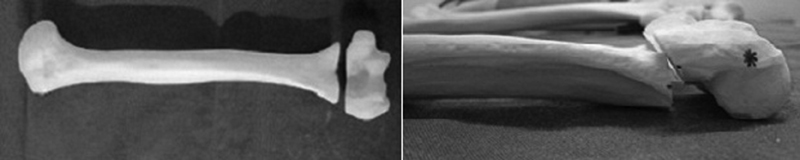
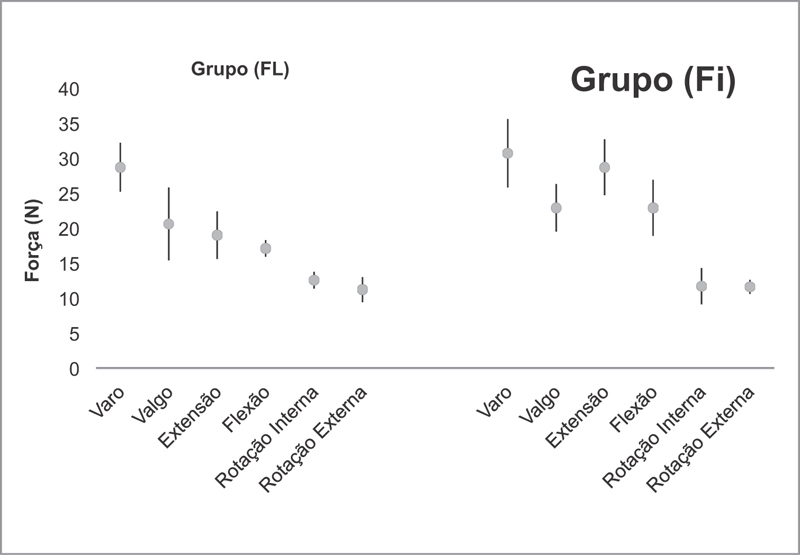
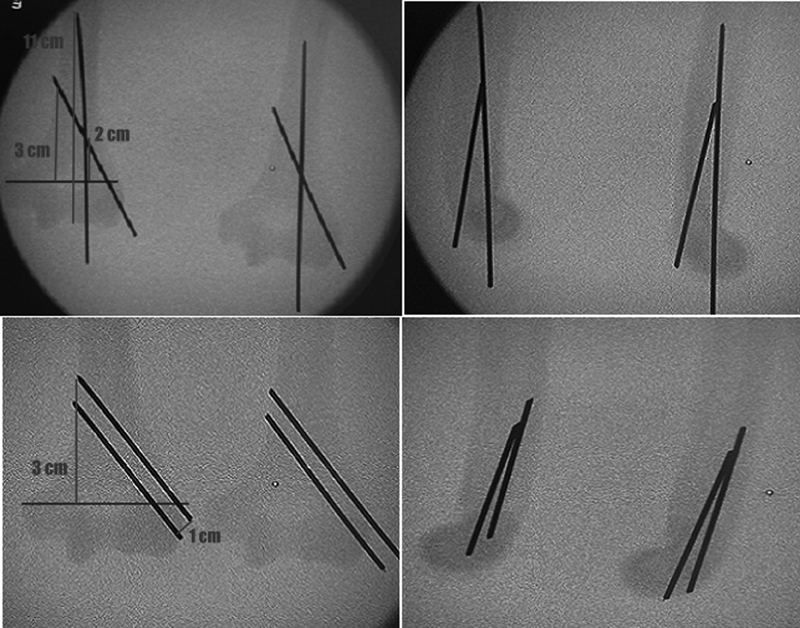
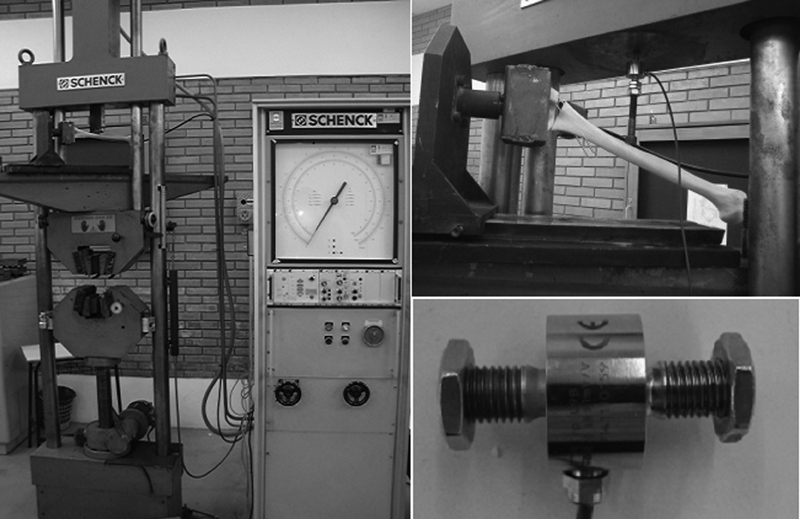
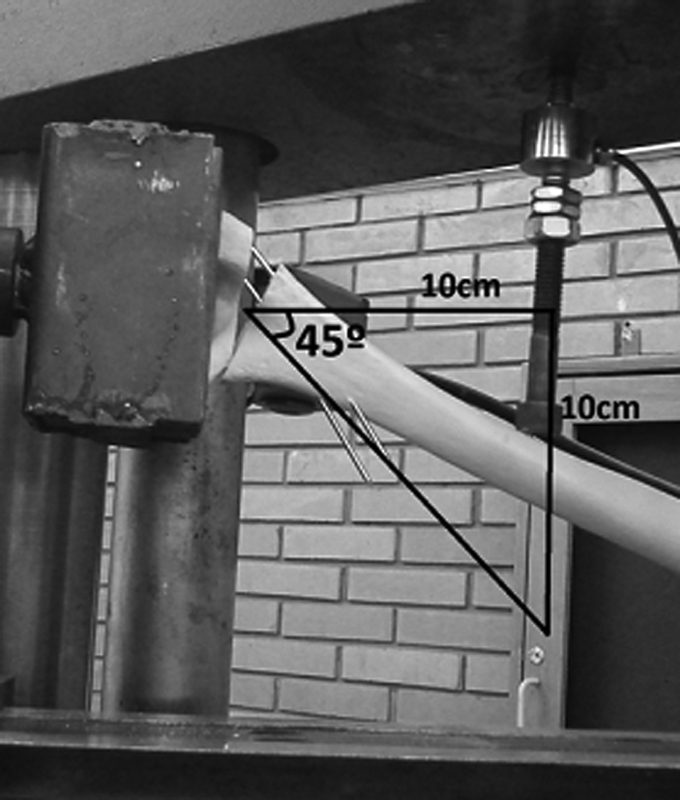
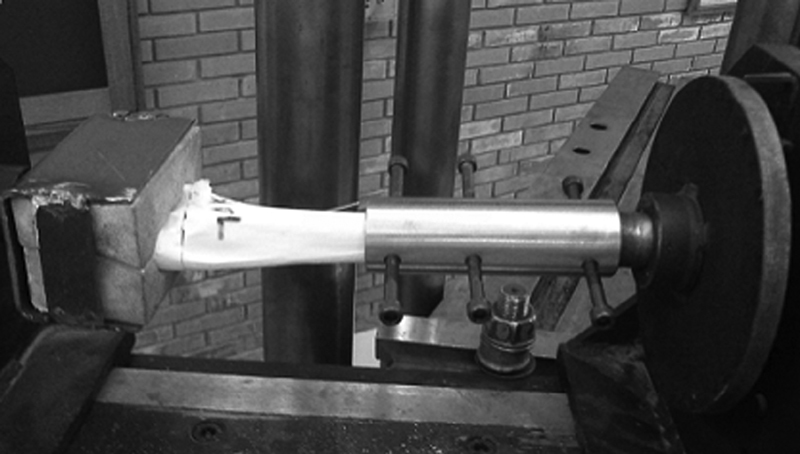
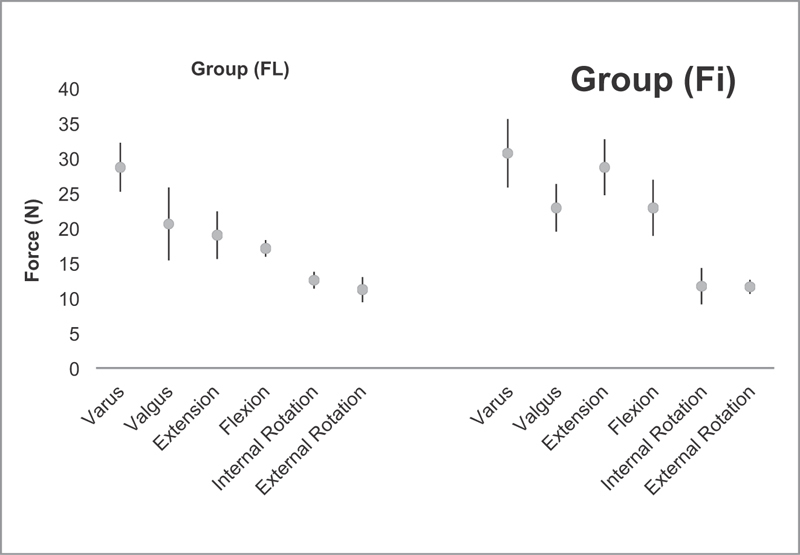
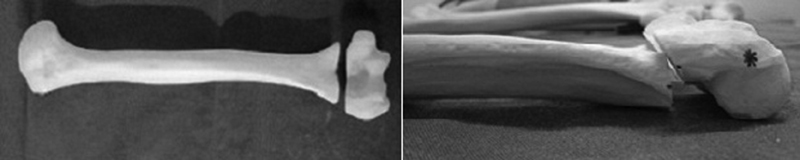
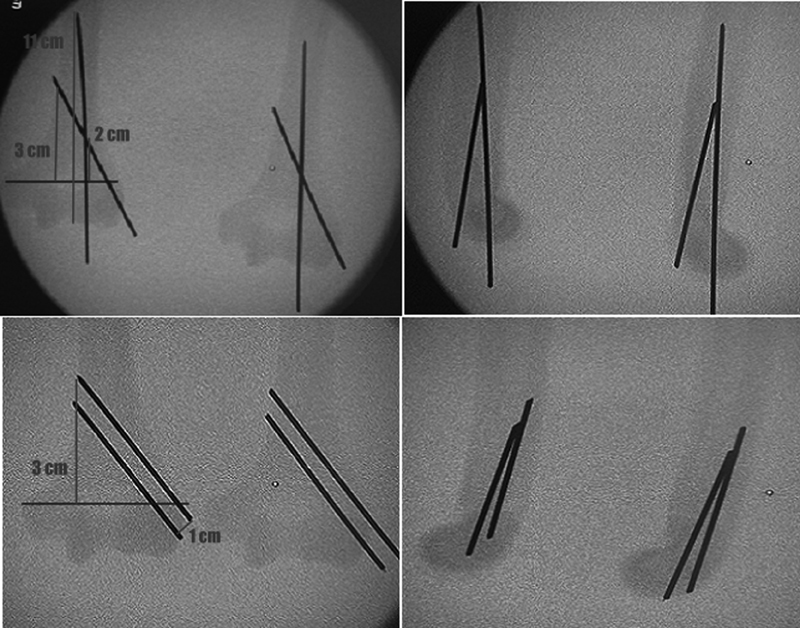
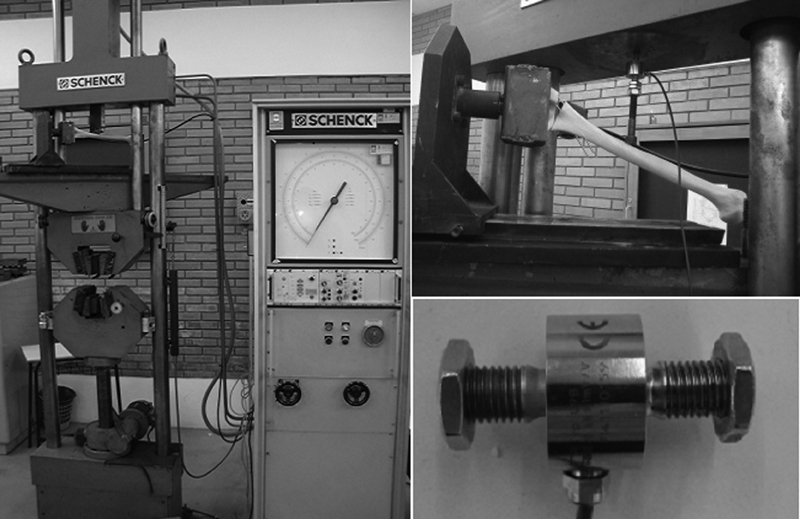
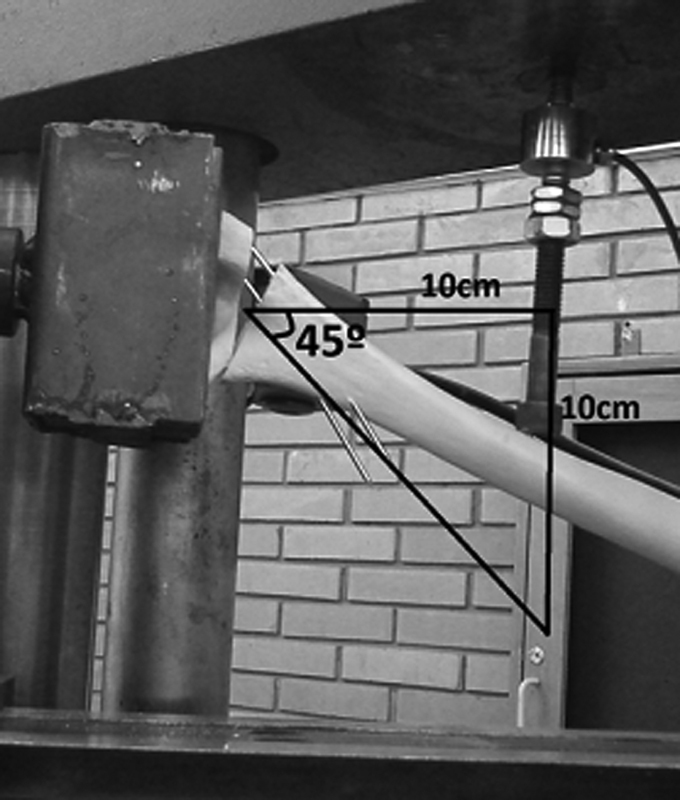
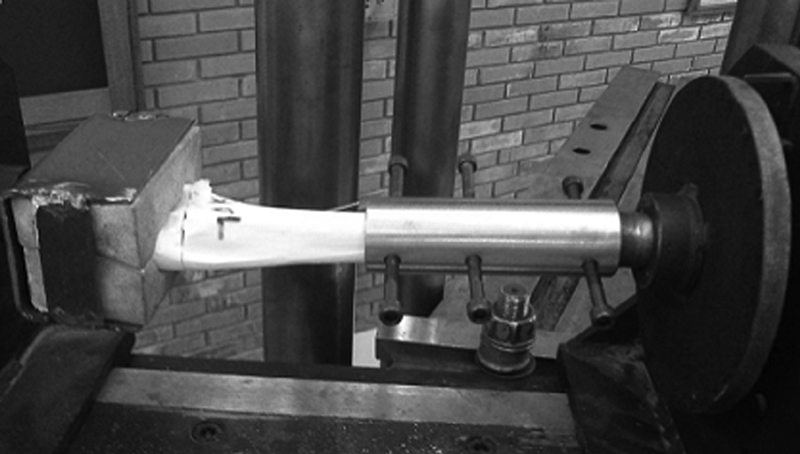
To analyze the stability of humerus supracondylar fracture fixation with Kirschner wires comparing intramedullary and lateral (Fi), and two parallel lateral wires (FL) fixation in experimental models, to define which configuration presents greater stability. A total of 72 synthetic humeri were cross-sectioned to simulate the fracture. These bones were divided into two equal groups and the fractures were fixed with parallel Kirschner wires (FL) and with a lateral and intramedullary (Fi) wire. Then, the test specimens were subjected to stress load tests on a universal test machine, measured in Newtons (N). Each group was subdivided into varus load, valgus, extension, flexion, external rotation and internal rotation. An analysis of the data was performed comparing the subgroups of the FL group with their respective subgroups of the Fi group through the two-tailed t test. The two-tailed t test showed that in 4 of the 6 evaluated conditions there was no significant statistical difference between the groups ( > 0.05). We have found a significant difference between the group with extension load with a mean of 19 N (FL group) and of 28.7 N (Fi group) ( = 0.004), and also between the groups with flexural load with the mean of the forces recorded in the FL group of 17.1 N and of 22.9 N in the Fi group ( = 0.01). Fixation with one intramedullary wire and one lateral wire, considering loads in extension and flexion, presents greater stability when compared to a fixation with two lateral wires, suggesting similar clinical results.
通过比较克氏针髓内和外侧固定(Fi)以及两根平行外侧克氏针(FL)固定在实验模型中对肱骨髁上骨折固定的稳定性,以确定哪种构型具有更高的稳定性。总共72根合成肱骨被横切以模拟骨折。这些骨头被分成两组,骨折分别用平行克氏针(FL)和一根外侧及一根髓内克氏针(Fi)固定。然后,测试标本在万能试验机上进行应力加载测试,以牛顿(N)为单位测量。每组再细分为内翻负荷、外翻、伸展、屈曲、外旋和内旋。通过双尾t检验对FL组的亚组与其相应的Fi组亚组进行数据比较分析。双尾t检验表明,在6种评估条件中的4种条件下,两组之间没有显著的统计学差异(P>0.05)。我们发现在伸展负荷组中,平均力为19 N(FL组)和28.7 N(Fi组)之间存在显著差异(P = 0.004),在屈曲负荷组中,FL组记录的平均力为17.1 N,Fi组为22.9 N之间也存在显著差异(P = 0.01)。考虑到伸展和屈曲负荷,一根髓内针和一根外侧针固定比两根外侧针固定具有更高的稳定性,提示临床结果相似。