Ramesh Anita, Jeffries Claire L, Castanha Priscila, Oliveira Paula A S, Alexander Neal, Cameron Mary, Braga Cynthia, Walker Thomas
Department of Parasitology, Instituto Aggeu Magalhães(IAM/FIOCRUZ Pernambuco), Recife, Brazil.
Department of Infectious Disease Epidemiology, London School of Hygiene & Tropical Medicine, London, WC1E 7HT, UK.
Wellcome Open Res. 2019 Jun 10;4:93. doi: 10.12688/wellcomeopenres.15295.1. eCollection 2019.
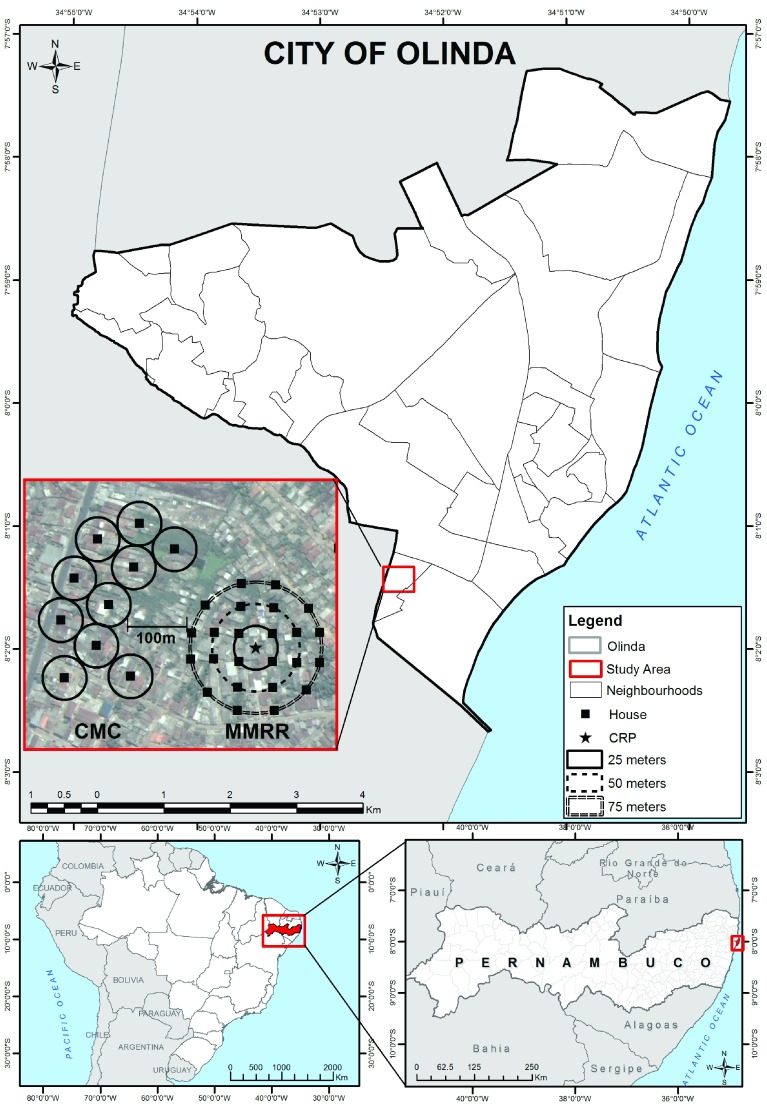
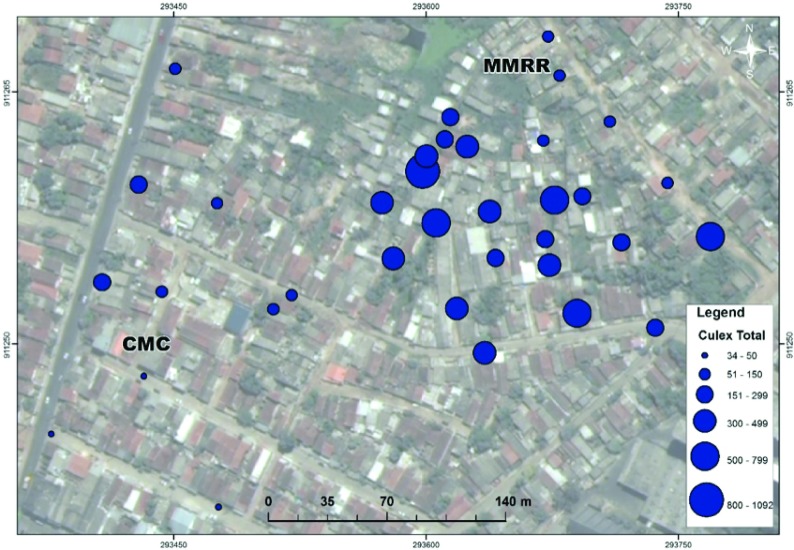
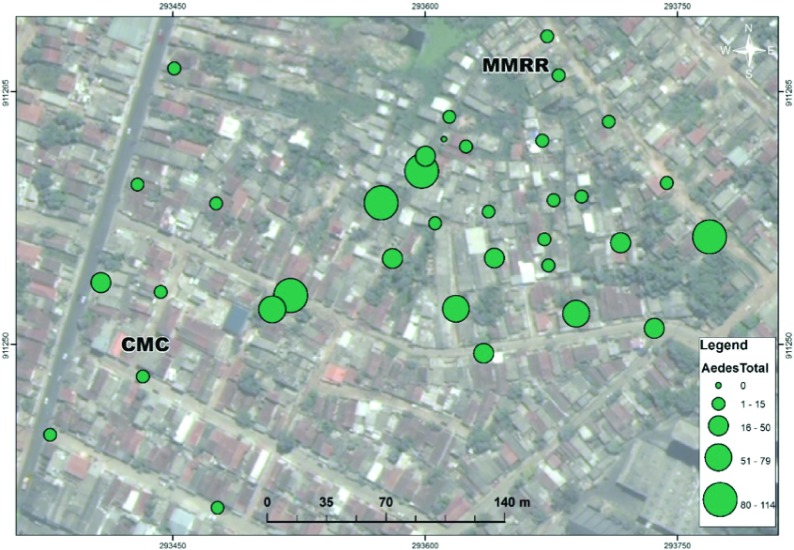
The Recife Metropolitan Region (RMR), north-eastern Brazil, was the epicentre of the 2015 Zika virus (ZIKV) epidemic, which was followed by a 2016 chikungunya virus (CHIKV) epidemic. It historically has amongst the highest incidence of dengue virus (DENV) infections and is the only remaining focus of lymphatic filariasis (LF) in Brazil. In early 2015, a molecular xenomonitoring surveillance project focused on commenced to inform LF elimination activities. mosquitoes were also collected, concurrent with the first microcephaly cases detected in the RMR. In terms of the 2015 ZIKV epidemic, these are the earliest known field-collected mosquitoes, preserved for potential RNA virus detection, when ZIKV was known to be circulating locally. Adult mosquitoes were collected in two sites (0.4 km ) of Sítio Novo, Olinda, RMR, from July 22 to August 21, 2015. Mosquitoes were morphologically identified, sorted by physiological status, and pooled (up to 10 mosquitoes per house per day or week). RNA was extracted, reverse transcribed and the cDNA tested by real-time PCR. A total of 10,139 adult female and 939 adult female were captured. All female specimens were included within 156 pools and screened for ZIKV, DENV and CHIKV. In addition, a sub-set of 1,556 adult females in 182 pools were screened for ZIKV. No evidence of infection with any of the three arboviruses was found. The absence of arbovirus detection may have been expected given the extremely restricted geographic area and collection of mosquitoes during a very short time period of peak mosquito abundance (July-September), but low arbovirus circulation (November-March). However, this study demonstrates the potential to retrospectively screen for additional unexpected pathogens in situations of rapid emergence, such as occurred during the outbreak of ZIKV in the RMR.
巴西东北部的累西腓大都市区(RMR)是2015年寨卡病毒(ZIKV)疫情的中心,随后在2016年又爆发了基孔肯雅病毒(CHIKV)疫情。该地区历来登革热病毒(DENV)感染发病率极高,且是巴西仅存的淋巴丝虫病(LF)疫源地。2015年初,一个聚焦于蚊虫的分子异体监测项目启动,为LF消除活动提供信息。在RMR首次检测到小头畸形病例的同时,也收集了蚊虫。就2015年ZIKV疫情而言,这些是已知最早在野外采集并保存用于潜在RNA病毒检测的蚊虫,当时已知ZIKV在当地传播。2015年7月22日至8月21日,在RMR奥林达新镇的两个地点(相距0.4公里)采集了成年蚊虫。对蚊虫进行形态学鉴定,按生理状态分类,并进行合并(每户每天或每周最多10只蚊虫)。提取RNA,进行逆转录,并通过实时PCR检测cDNA。共捕获10139只成年雌性埃及伊蚊和939只成年雌性白纹伊蚊。所有雌性埃及伊蚊标本被纳入156个样本池,检测ZIKV、DENV和CHIKV。此外,对182个样本池中的1556只成年雌性白纹伊蚊亚组进行了ZIKV检测。未发现感染这三种虫媒病毒中任何一种的证据。鉴于地理区域极为有限,且在蚊虫数量高峰期(7月至9月)的很短时间内进行蚊虫采集,同时虫媒病毒传播率较低(11月至3月),未检测到虫媒病毒或许在意料之中。然而,本研究表明,在快速出现疫情的情况下,如RMR的ZIKV疫情期间,有潜力对其他意外病原体进行回顾性筛查。