Department of Chemistry, Indiana University, 800 Kirkwood Avenue, Bloomington, IN, 47401, USA.
J Am Soc Mass Spectrom. 2019 Nov;30(11):2438-2445. doi: 10.1007/s13361-019-02292-6. Epub 2019 Jul 30.
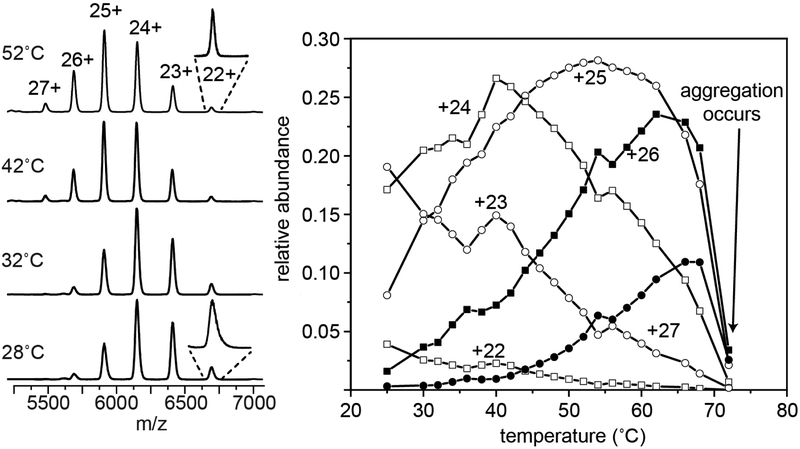
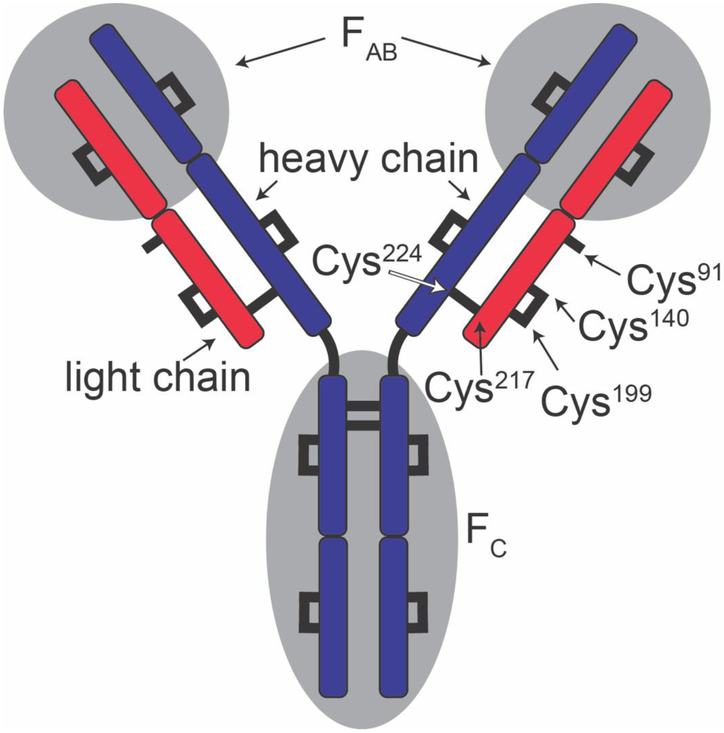
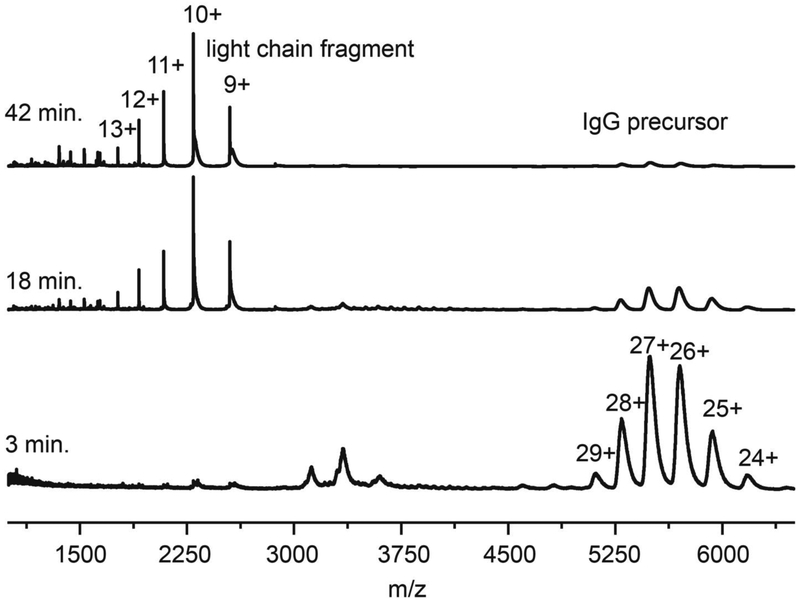
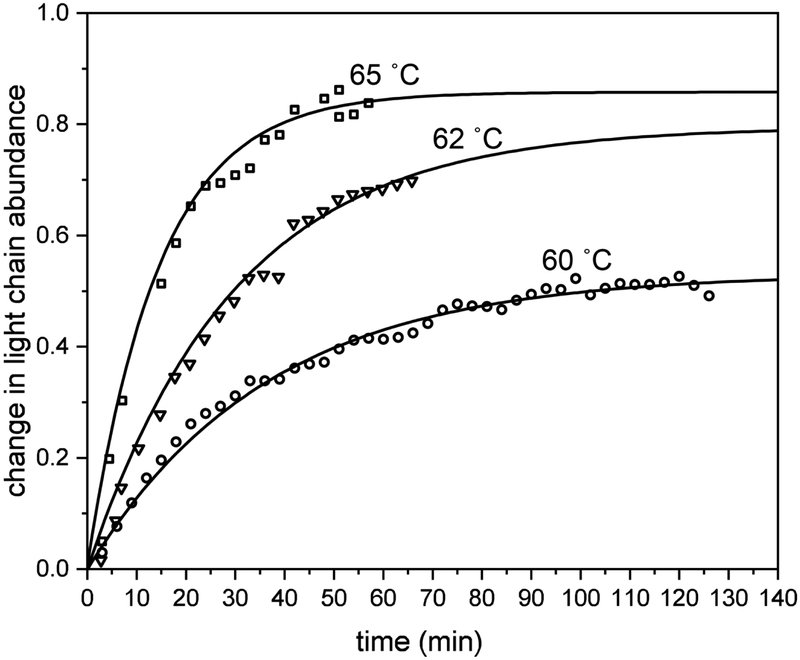
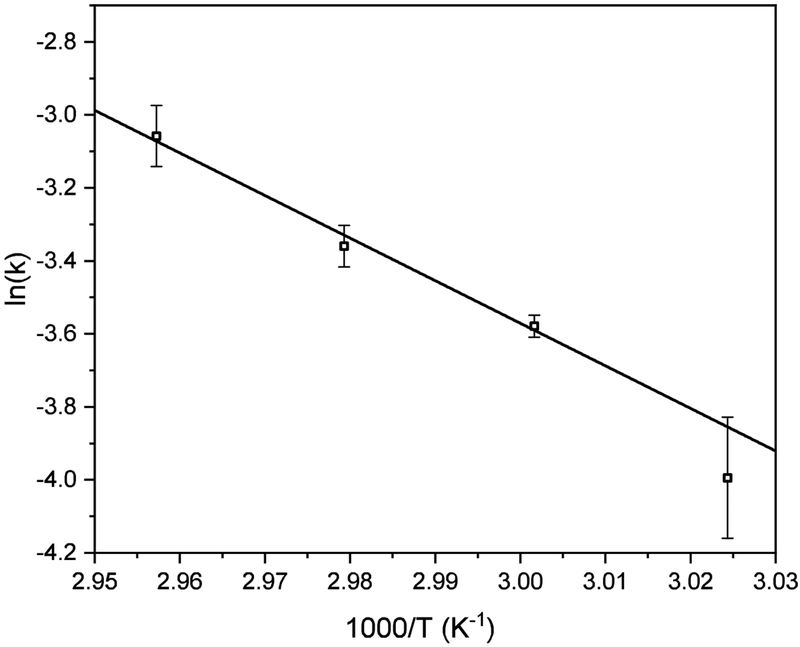
Variable temperature electrospray ionization (ESI) is coupled with mass spectrometry techniques in order to investigate structural transitions of monoclonal antibody immunoglobulin G (IgG) in a 100-mM ammonium acetate (pH 7.0) solution from 26 to 70 °C. At 26 °C, the mass spectrum for intact IgG shows six charge states + 22 to + 26. Upon increasing the solution temperature, the fraction of low-charge states decreases and new, higher-charge state ions are observed. Upon analysis, it appears that heating the solution aids in desolvation of the intact IgG precursor. Above ~ 50 °C, a cleavage event between the light and heavy chains is observed. An analysis of the kinetics for these processes at different temperatures yields transition state thermochemistry of ΔH = 95 ± 10 kJ mol, ΔS = 8 ± 1 J mol K, and ΔG = 92 ± 11 kJ mol. The mechanism for light chain dissociation appears to involve disulfide bond scrambling that ultimately results in a non-native Cys-Cys disulfide bond in the light chain product. Above ~ 70 °C, we are unable to produce a stable ESI signal. The loss of signal is ascribed to aggregation that is primarily associated with the remaining portion of the antibody after having lost the light chain. Graphical Abstract.
变温电喷雾电离(ESI)与质谱技术相结合,用于研究单克隆抗体免疫球蛋白 G(IgG)在 100mM 乙酸铵(pH7.0)溶液中的结构转变,温度范围为 26 至 70°C。在 26°C 时,完整 IgG 的质谱显示出 6 种电荷状态+22 至+26。随着溶液温度的升高,低电荷状态的比例降低,观察到新的高电荷状态离子。分析表明,加热溶液有助于完整 IgG 前体的去溶剂化。在50°C 以上,观察到轻链和重链之间的裂解事件。在不同温度下对这些过程的动力学进行分析,得出过渡态热化学ΔH=95±10kJmol,ΔS=8±1JmolK,和ΔG=92±11kJmol。轻链解离的机制似乎涉及二硫键重排,最终导致轻链产物中非天然的 Cys-Cys 二硫键。在70°C 以上,我们无法产生稳定的 ESI 信号。信号的丢失归因于聚合,聚合主要与失去轻链后的抗体剩余部分有关。