Stainer Alexander R, Sasikumar Parvathy, Bye Alexander P, Unsworth Amanda J, Holbrook Lisa M, Tindall Marcus, Lovegrove Julie A, Gibbins Jonathan M
Institute for Cardiovascular and Metabolic Research, School of Biological Sciences, University of Reading, Reading, United Kingdom.
Centre for Haematology, Imperial College London, London, United Kingdom.
TH Open. 2019 Jul 30;3(3):e244-e258. doi: 10.1055/s-0039-1694028. eCollection 2019 Jul.
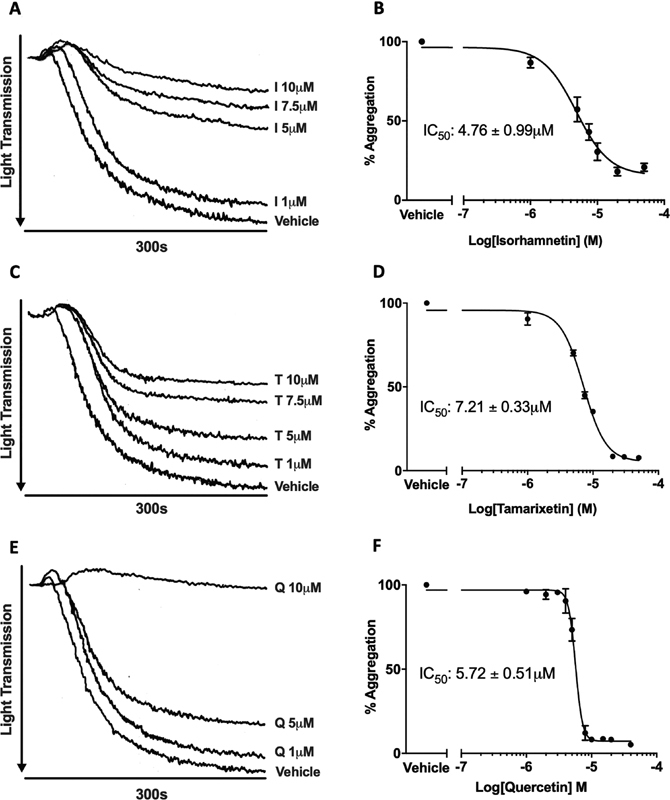
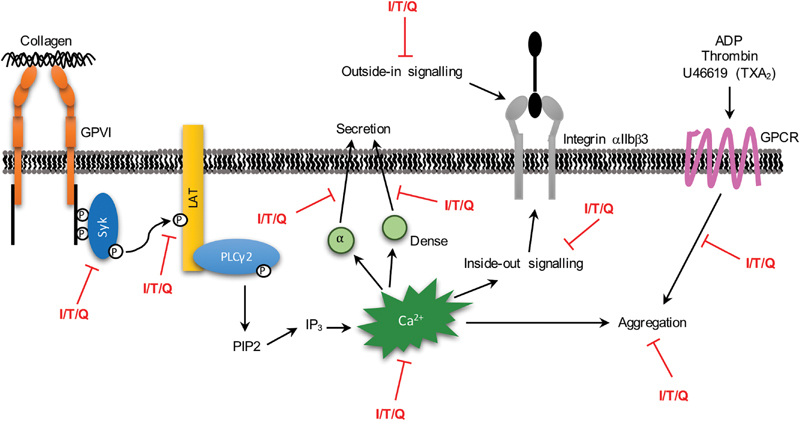
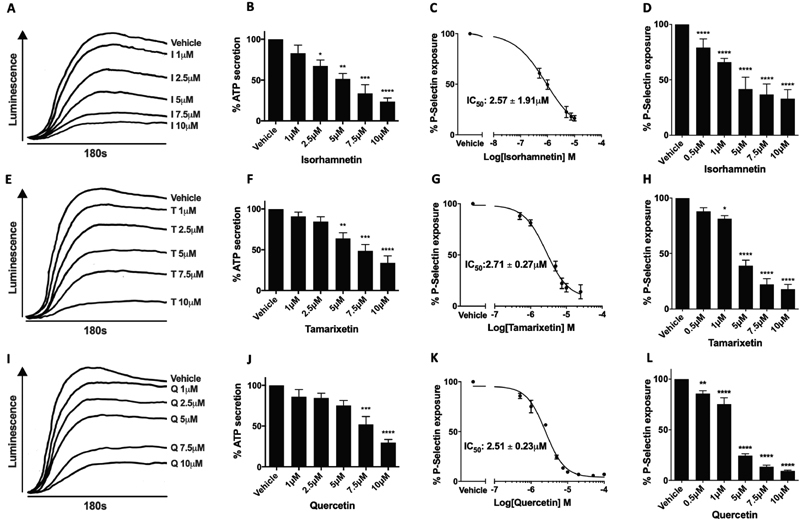
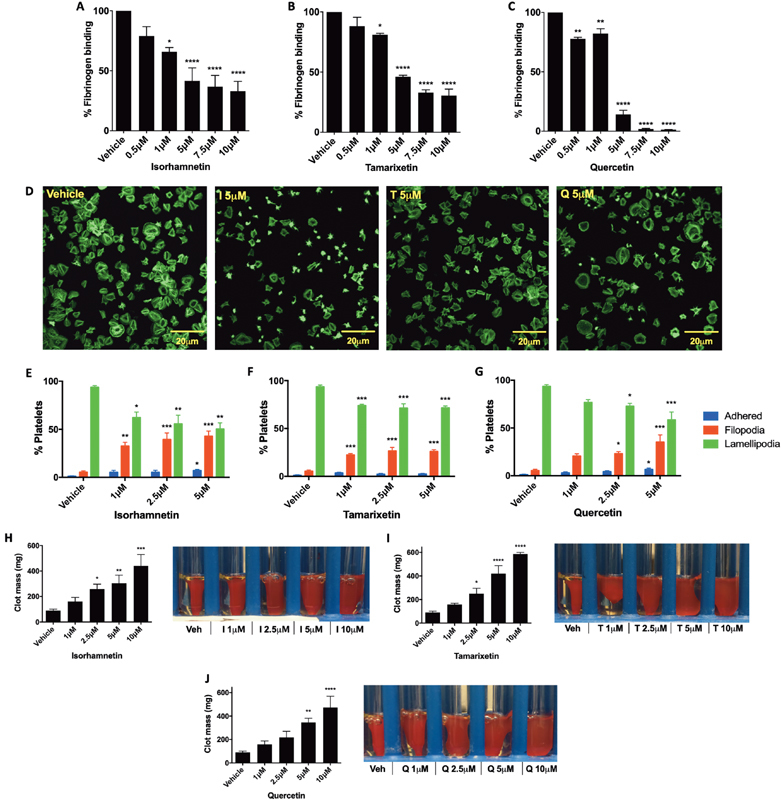
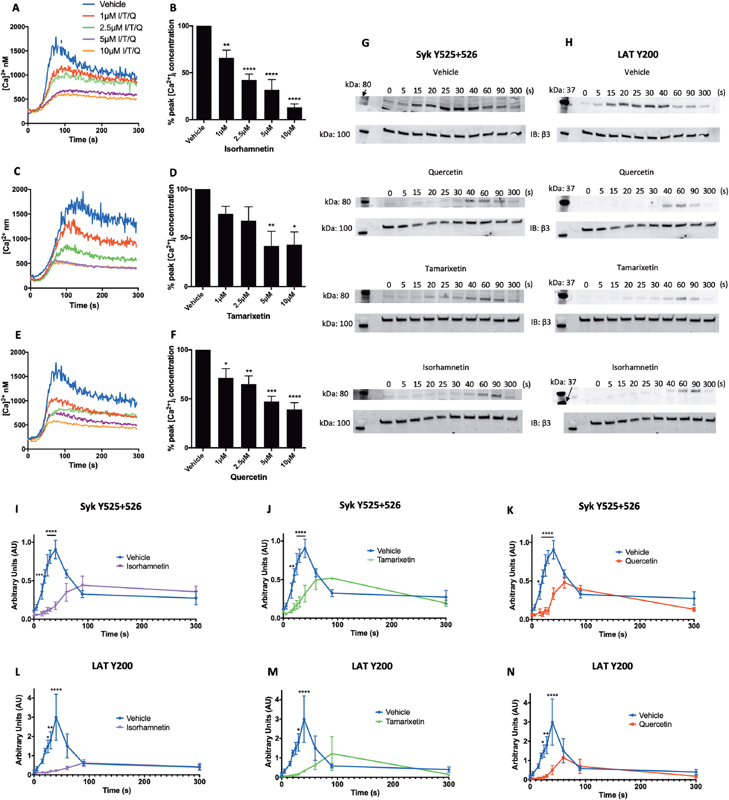
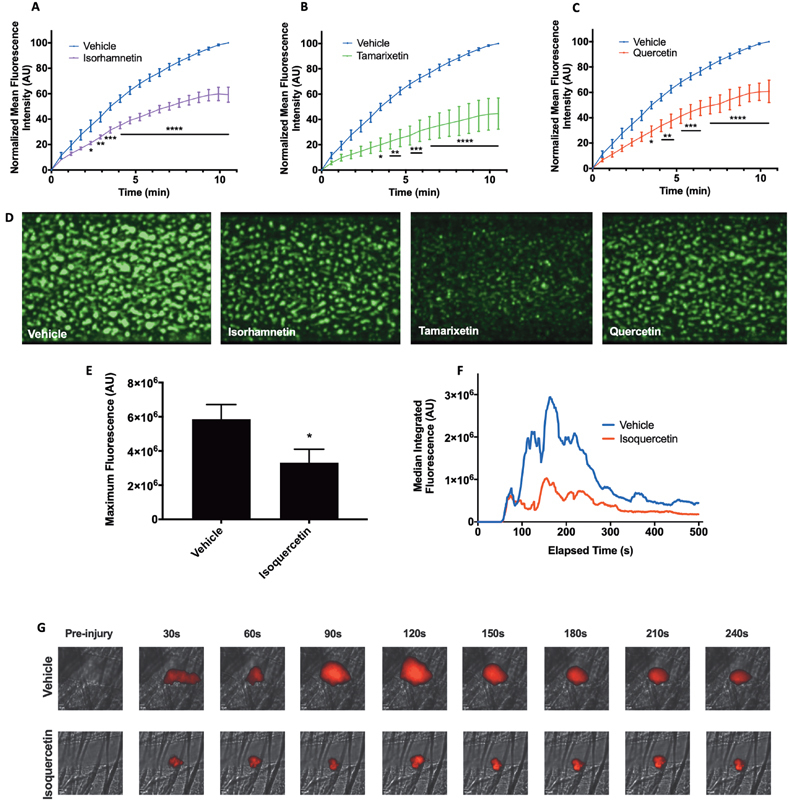
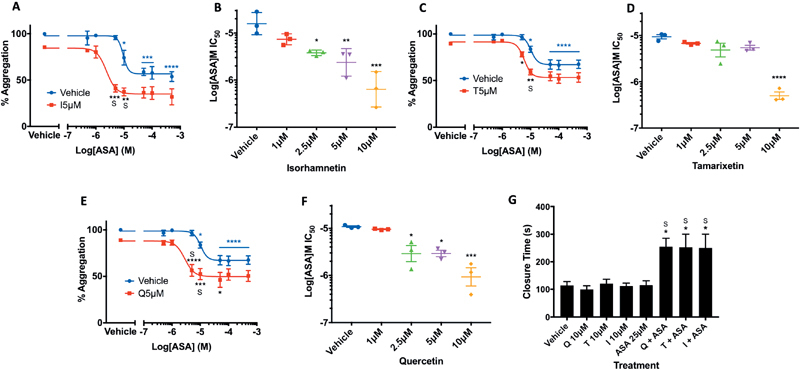
Quercetin, a dietary flavonoid, has been reported to possess antiplatelet activity. However, its extensive metabolism following ingestion has resulted in difficulty elucidating precise mechanisms of action. In this study, we aimed to characterize the antiplatelet mechanisms of two methylated metabolites of quercetin-isorhamnetin and tamarixetin-and explore potential interactions with aspirin. Isorhamnetin and tamarixetin inhibited human platelet aggregation, and suppressed activatory processes including granule secretion, integrin αIIbβ3 function, calcium mobilization, and spleen tyrosine kinase (Syk)/linker for activation of T cells (LAT) phosphorylation downstream of glycoprotein VI with similar potency to quercetin. All three flavonoids attenuated thrombus formation in an in vitro microfluidic model, and isoquercetin, a 3-O-glucoside of quercetin, inhibited thrombosis in a murine laser injury model. Isorhamnetin, tamarixetin, and quercetin enhanced the antiplatelet effects of aspirin more-than-additively in a plate-based aggregometry assay, reducing aspirin IC values by an order of magnitude, with this synergy maintained in a whole blood test of platelet function. Our data provide mechanistic evidence for the antiplatelet activity of two quercetin metabolites, isorhamnetin and tamarixetin, and suggest a potential antithrombotic role for these flavonoids. In combination with their interactions with aspirin, this may represent a novel avenue of investigation for the development of new antithrombotic strategies and management of current therapies.
槲皮素是一种膳食类黄酮,据报道具有抗血小板活性。然而,摄入后其广泛的代谢导致难以阐明确切的作用机制。在本研究中,我们旨在表征槲皮素的两种甲基化代谢产物异鼠李素和柽柳素的抗血小板机制,并探索与阿司匹林的潜在相互作用。异鼠李素和柽柳素抑制人血小板聚集,并抑制包括颗粒分泌、整合素αIIbβ3功能、钙动员以及糖蛋白VI下游的脾酪氨酸激酶(Syk)/T细胞活化连接蛋白(LAT)磷酸化等活化过程,其效力与槲皮素相似。在体外微流控模型中,这三种类黄酮均减弱血栓形成,并且槲皮素的3 - O - 葡萄糖苷异槲皮素在小鼠激光损伤模型中抑制血栓形成。在基于平板的凝集试验中,异鼠李素、柽柳素和槲皮素增强阿司匹林的抗血小板作用,且增强程度超过相加作用,使阿司匹林的半数抑制浓度(IC)值降低一个数量级,这种协同作用在血小板功能的全血试验中得以维持。我们的数据为槲皮素的两种代谢产物异鼠李素和柽柳素的抗血小板活性提供了机制证据,并表明这些类黄酮具有潜在的抗血栓形成作用。结合它们与阿司匹林的相互作用,这可能代表了开发新的抗血栓策略和管理当前疗法的一条新的研究途径。