Department of Biomedical Engineering, University of Michigan, 1101 Beal Ave, Ann Arbor, MI, 48109, USA.
Department of Emergency Medicine, University of Michigan, 1500 E. Medical Center Drive, Ann Arbor, MI, 48109, USA.
Anal Bioanal Chem. 2019 Sep;411(24):6435-6447. doi: 10.1007/s00216-019-02024-5. Epub 2019 Aug 1.
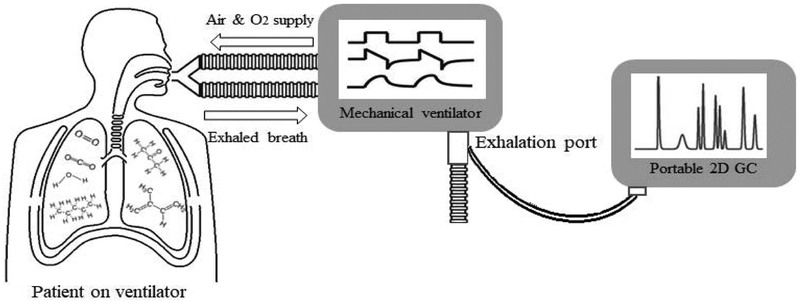
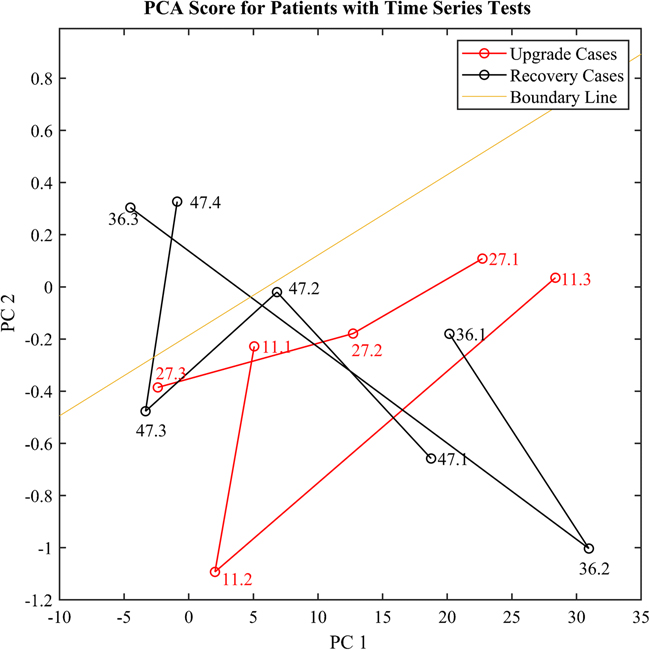
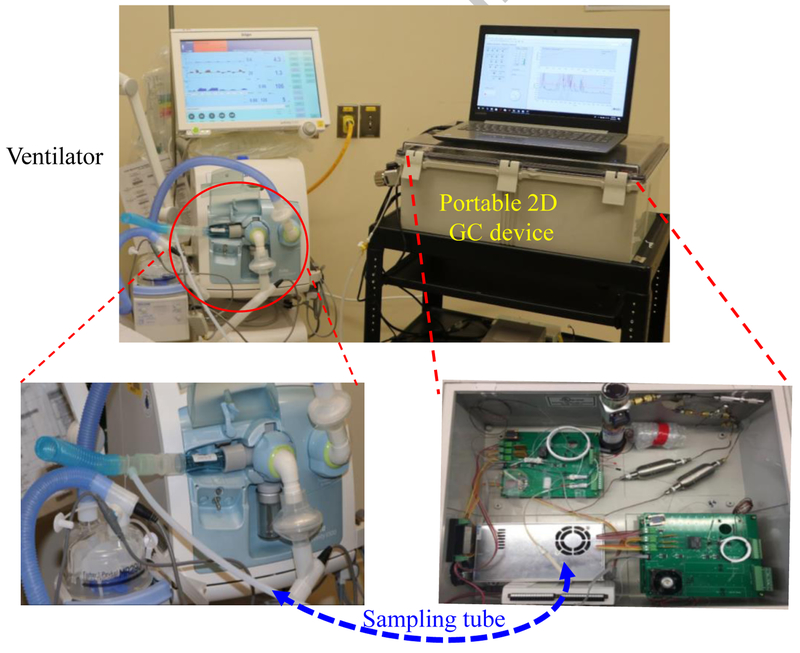
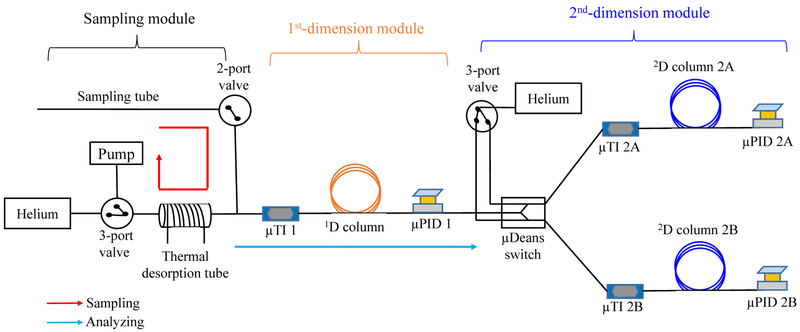
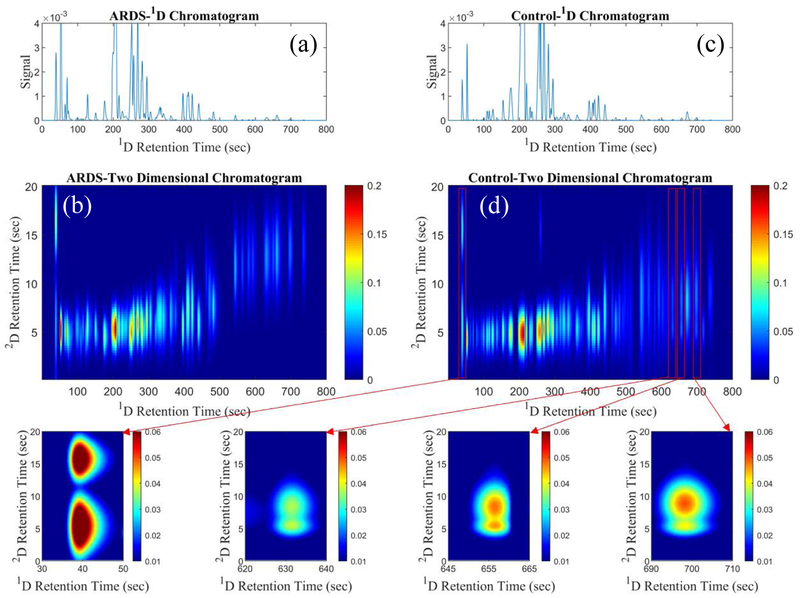
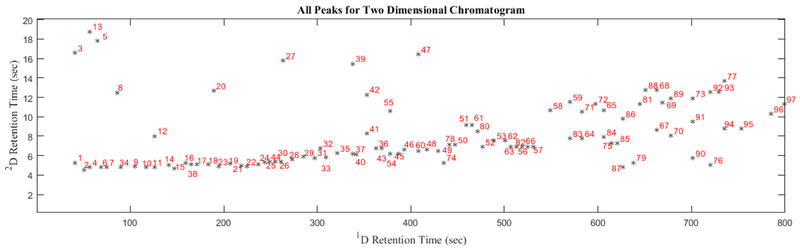
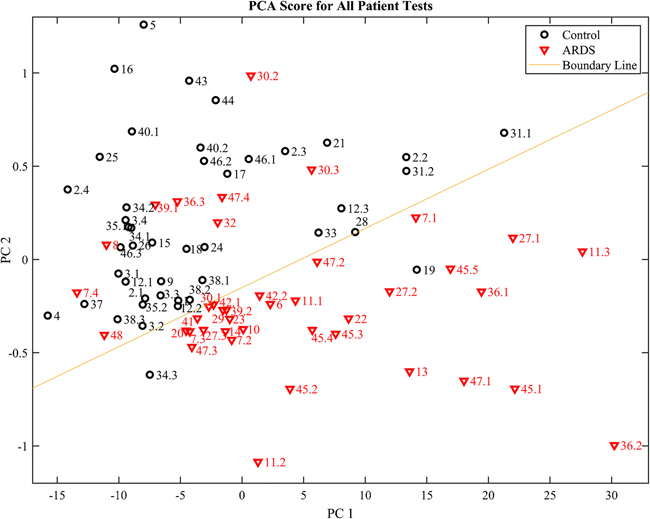
Acute respiratory distress syndrome (ARDS) is the most severe form of acute lung injury, responsible for high mortality and long-term morbidity. As a dynamic syndrome with multiple etiologies, its timely diagnosis is difficult as is tracking the course of the syndrome. Therefore, there is a significant need for early, rapid detection and diagnosis as well as clinical trajectory monitoring of ARDS. Here, we report our work on using human breath to differentiate ARDS and non-ARDS causes of respiratory failure. A fully automated portable 2-dimensional gas chromatography device with high peak capacity (> 200 at the resolution of 1), high sensitivity (sub-ppb), and rapid analysis capability (~ 30 min) was designed and made in-house for on-site analysis of patients' breath. A total of 85 breath samples from 48 ARDS patients and controls were collected. Ninety-seven elution peaks were separated and detected in 13 min. An algorithm based on machine learning, principal component analysis (PCA), and linear discriminant analysis (LDA) was developed. As compared to the adjudications done by physicians based on the Berlin criteria, our device and algorithm achieved an overall accuracy of 87.1% with 94.1% positive predictive value and 82.4% negative predictive value. The high overall accuracy and high positive predicative value suggest that the breath analysis method can accurately diagnose ARDS. The ability to continuously and non-invasively monitor exhaled breath for early diagnosis, disease trajectory tracking, and outcome prediction monitoring of ARDS may have a significant impact on changing practice and improving patient outcomes. Graphical abstract.
急性呼吸窘迫综合征(ARDS)是最严重的急性肺损伤形式,其死亡率高,且长期存在发病率。作为一种具有多种病因的动态综合征,其及时诊断和对疾病进程的跟踪都很困难。因此,ARDS 有很大的早期、快速检测和诊断以及临床轨迹监测的需求。在这里,我们报告了使用人体呼吸来区分 ARDS 和非 ARDS 引起的呼吸衰竭的工作。我们设计并制造了一种全自动便携式二维气相色谱仪,具有高峰容量(在 1 的分辨率下>200)、高灵敏度(亚 ppb)和快速分析能力(~30 分钟),用于现场分析患者的呼吸。共收集了 48 名 ARDS 患者和对照者的 85 份呼吸样本。在 13 分钟内分离和检测到 97 个洗脱峰。开发了一种基于机器学习、主成分分析(PCA)和线性判别分析(LDA)的算法。与基于柏林标准由医生做出的裁决相比,我们的设备和算法的整体准确率为 87.1%,阳性预测值为 94.1%,阴性预测值为 82.4%。高的整体准确率和高的阳性预测值表明,呼吸分析方法可以准确地诊断 ARDS。连续和非侵入性地监测呼出呼吸以进行早期诊断、疾病轨迹跟踪和 ARDS 预后预测监测的能力可能会对改变实践和改善患者预后产生重大影响。