Department of Animal Biology and Conservation Science, University of Ghana, Accra, Ghana.
Department of Pharmacology, University for Development Studies, Tamale, Ghana.
PLoS Negl Trop Dis. 2019 Aug 1;13(8):e0007221. doi: 10.1371/journal.pntd.0007221. eCollection 2019 Aug.
Worldwide, snakebite envenomations total ~2.7 million reported cases annually with ~100,000 fatalities. Since 2009, snakebite envenomation has intermittently been classified as a very important 'neglected tropical disease' by the World Health Organisation. Despite this emerging awareness, limited efforts have been geared towards addressing the serious public health implications of snakebites, particularly in sub-Saharan Africa, where baseline epidemiological and ecological data remain incomplete. Due to poverty as well as limited infrastructure and public health facilities, people in rural Africa, including Ghana, often have no other choice than to seek treatment from traditional medical practitioners (TMPs). The African 'snakebite crisis' is highlighted here using regionally representative complementary data from a community-based epidemiological and ecological study in the savanna zone of northern Ghana.
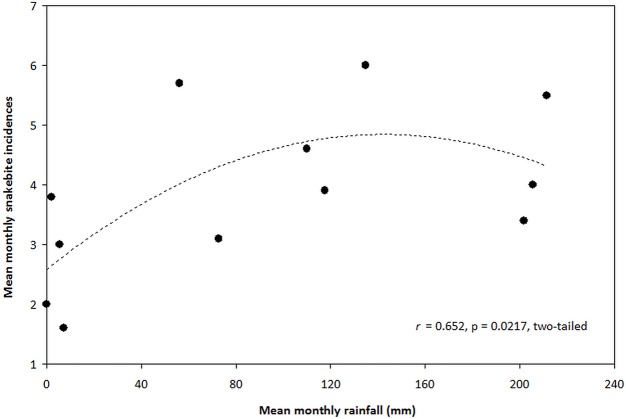
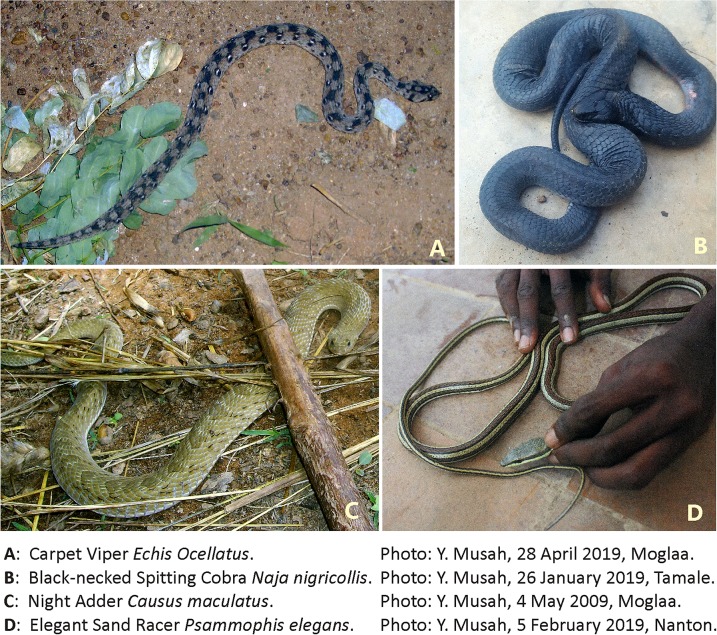
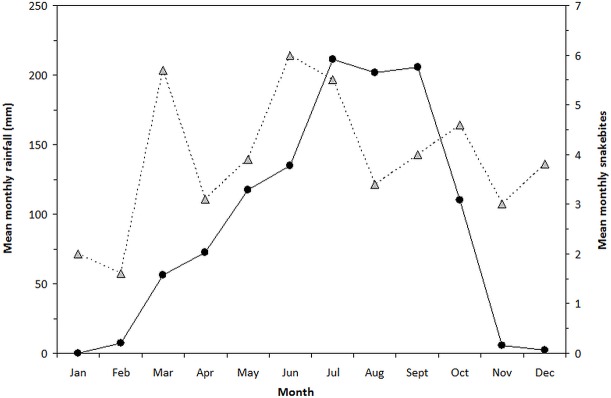
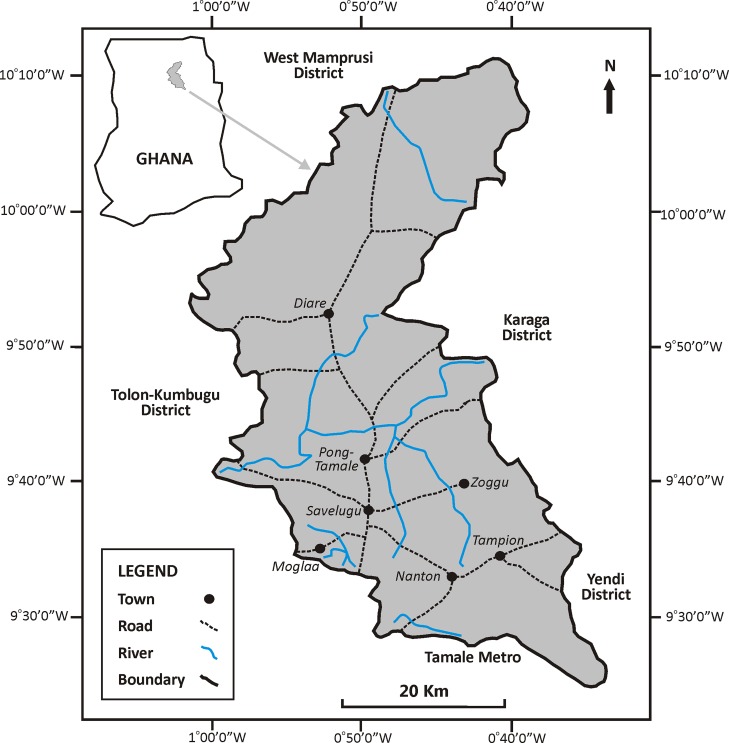
Our baseline study involved two data collection methods in the Savelugu-Nanton District (in 2019 the district was separated into Savelugu and Nanton districts) in northern Ghana, comprising a cross-sectional study of 1,000 residents and 24 TMPs between December 2008 and May 2009. Semi-structured interviews, as well as collection of retrospective snakebite and concurrent rainfall records from the Savelugu-Nanton District Hospital and Ghana Meteorological Authority respectively over 10-years (1999-2008) were used in the study. Variables tested included demography, human activity patterns, seasonality, snake ecology and clinical reports. Complementary data showed higher snakebite prevalence during the rainy season, and a hump-shaped correlation between rainfall intensity and snakebite incidences. Almost 6% of respondents had experienced a personal snakebite, whereas 60% of respondents had witnessed a total of 799 snakebite cases. Out of a total of 857 reported snakebite cases, 24 (2.8%) died. The highest snakebite prevalence was recorded for males in the age group 15-44 years during farming activities, with most bites occurring in the leg/foot region. The highest snakebite rate was within farmlands, most severe bites frequently caused by the Carpet viper (Echis ocellatus).
The relatively high community-based prevalence of ~6%, and case fatality ratio of ~3%, indicate that snakebites represent an important public health risk in northern Ghana. Based on the high number of respondents and long recording period, we believe these data truly reflect the general situation in the rural northern savanna zone of Ghana and West Africa at large. We recommend increased efforts from both local and international health authorities to address the current snakebite health crisis generally compromising livelihoods and productivity of rural farming communities in West Africa.
全球范围内,每年报告的蛇咬伤病例约为 270 万例,其中有 10 万人死亡。自 2009 年以来,蛇咬伤间歇性地被世界卫生组织列为非常重要的“被忽视的热带病”。尽管这种新的认识已经出现,但很少有人致力于解决蛇咬伤带来的严重公共卫生问题,特别是在撒哈拉以南非洲地区,那里的基本流行病学和生态学数据仍然不完整。由于贫困以及基础设施和公共卫生设施有限,非洲农村地区的人们,包括加纳人,除了向传统医学从业者(TMP)寻求治疗外,别无选择。这里使用加纳北部萨凡卢-纳顿地区(2019 年该地区分为萨凡卢和纳顿地区)社区为基础的流行病学和生态学研究的补充代表性数据来突出非洲的“蛇咬伤危机”。
我们的基线研究包括加纳北部萨凡卢-纳顿地区(2019 年该地区分为萨凡卢和纳顿地区)的两种数据收集方法,包括 2008 年 12 月至 2009 年 5 月期间对 1000 名居民和 24 名 TMP 进行的横断面研究。研究中使用了半结构化访谈,以及从萨凡卢-纳顿地区医院和加纳气象局分别收集过去 10 年(1999-2008 年)的回顾性蛇咬伤和同期降雨记录。测试的变量包括人口统计学、人类活动模式、季节性、蛇类生态学和临床报告。补充数据显示,雨季蛇咬伤的发生率较高,降雨强度与蛇咬伤发生率之间呈驼峰形相关。近 6%的受访者曾经历过个人蛇咬伤,而约 60%的受访者总共目睹了 799 例蛇咬伤病例。在总共报告的 857 例蛇咬伤病例中,有 24 例(2.8%)死亡。在男性中,15-44 岁的男性在农业活动中蛇咬伤的患病率最高,咬伤部位主要在腿部/脚部。在农田中蛇咬伤的发生率最高,最严重的咬伤经常是由地毯蛇(Echis ocellatus)引起的。
基于社区的相对较高的患病率约为 6%,以及 3%的病死率,表明蛇咬伤在加纳北部是一个重要的公共卫生风险。基于受访者人数众多和记录时间长,我们相信这些数据真实反映了加纳北部农村萨凡纳地区和整个西非的一般情况。我们建议当地和国际卫生当局加大力度,解决目前普遍影响西非农村农业社区生计和生产力的蛇咬伤健康危机。