Boudaden Jamila, Klumpp Armin, Endres Hanns-Erik, Eisele Ignaz
Fraunhofer Research Institution for Microsystems and Solid State Technologies EMFT, Silicon Technologies and Devices, Hansastrasse 27d, 80686 Munich, Germany.
Institute of Electronic and Sensor Materials, TU Bergakademie Freiberg, Gustav-Zeuner-Str. 3, 09599 Freiberg, Germany.
Nanomaterials (Basel). 2019 Jul 31;9(8):1097. doi: 10.3390/nano9081097.
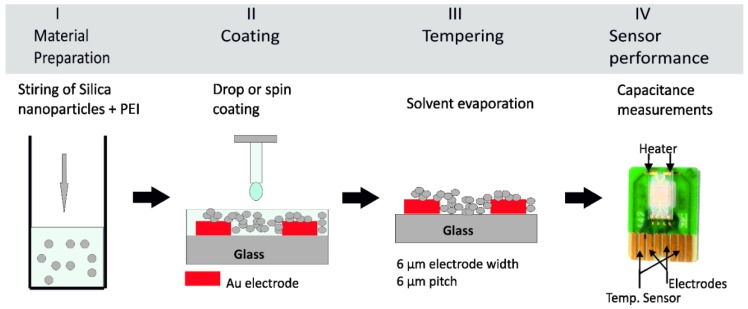
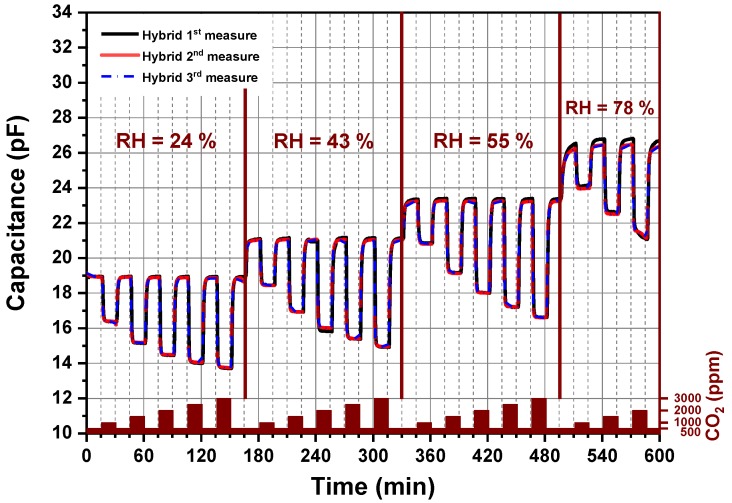
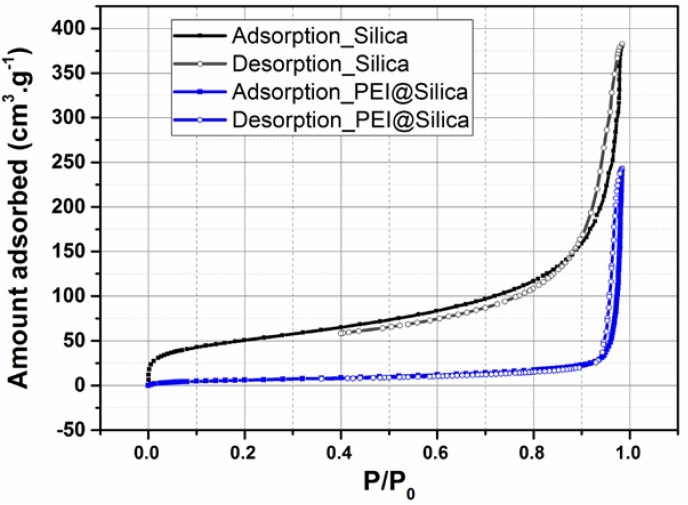
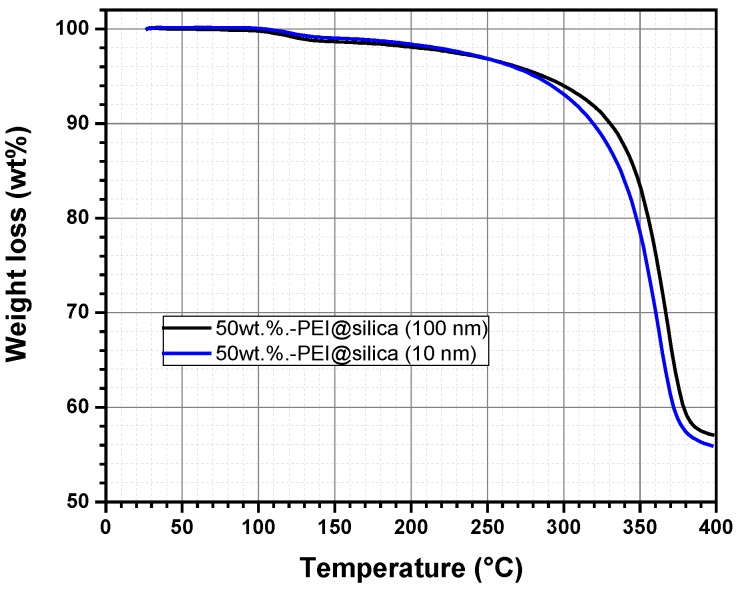
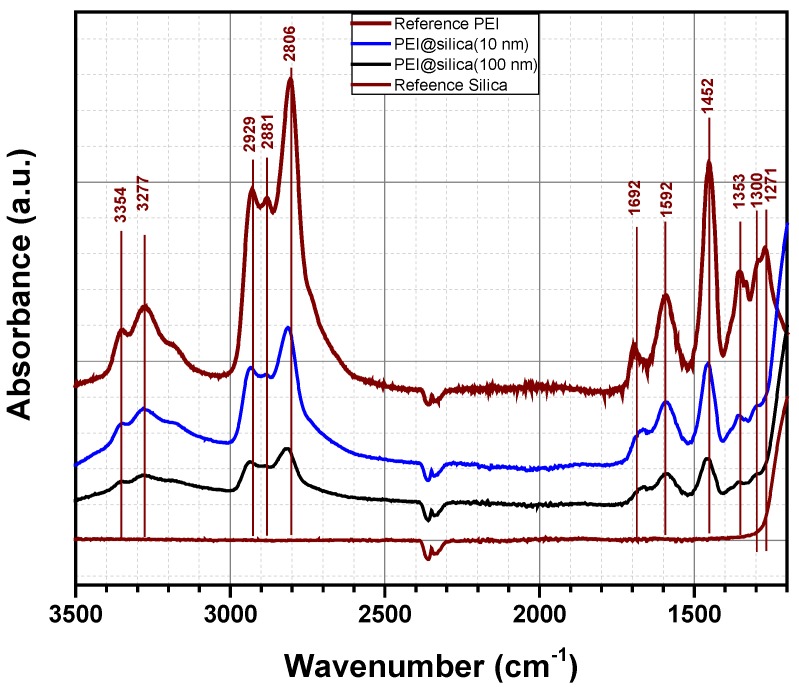
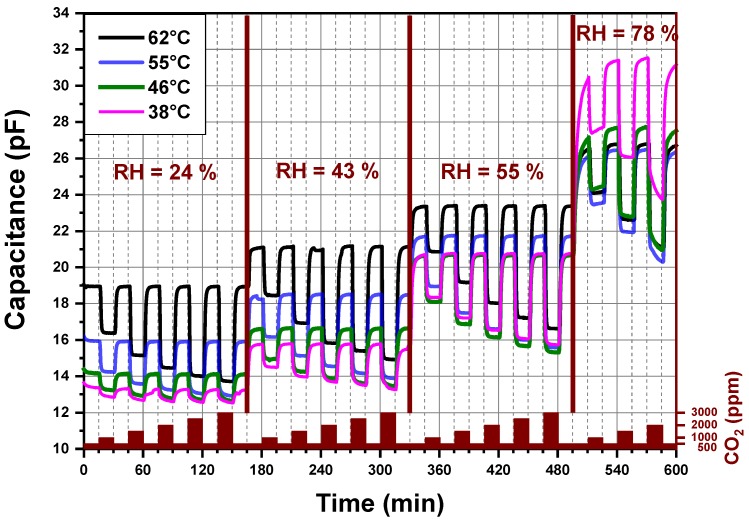
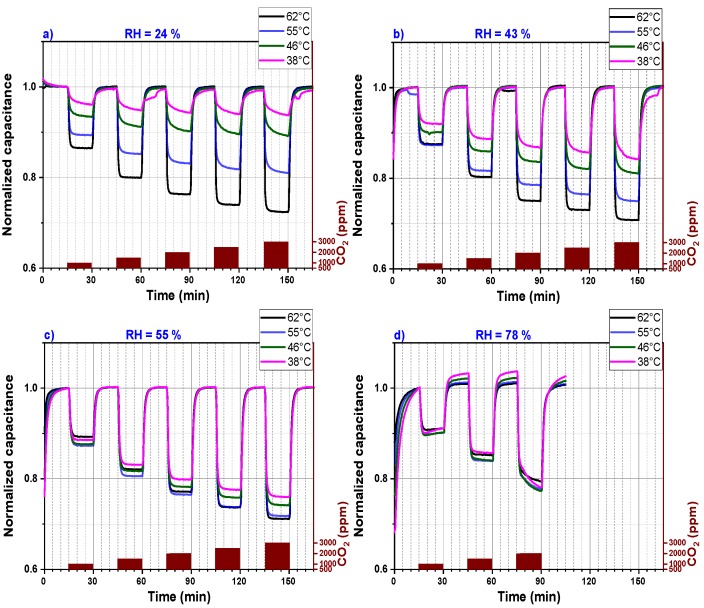
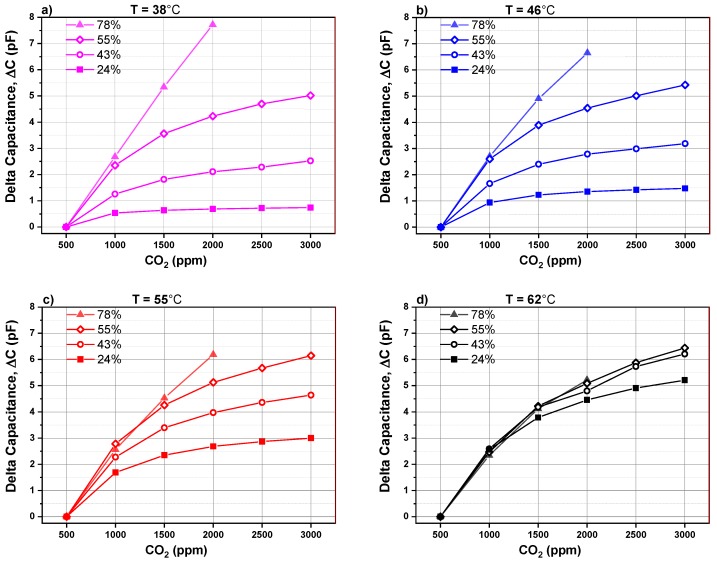
Hybrid materials based on inorganic particles and an organic polymer were developed and used as an efficient sensing material for carbon dioxide (CO). The sensing material consists of fumed silica that is functionalized with an organic polymer, polyethylenimine, by means of the impregnation method. The organic polymer is effectively immobilized around the silica nanoparticles and confirmed by infrared spectroscopy. Thermogravimetric analysis proves the thermal stability of the sensing material. CO capacitive sensors operating at temperatures lower than 70 °C were fabricated by depositing a thin layer of hybrid sensing material on interdigitated gold electrodes. Impedance spectroscopy explored the sensing capability of the hybrid organic-inorganic material towards CO in the presence of different relative humidity levels, as well as its stability and reversibility. This strategy to couple organic and inorganic materials as a sensing layer for CO paves the way for the design of a low-cost CO sensor.
基于无机颗粒和有机聚合物的混合材料被研发出来,并用作二氧化碳(CO)的高效传感材料。该传感材料由通过浸渍法用有机聚合物聚乙烯亚胺功能化的气相二氧化硅组成。有机聚合物有效地固定在二氧化硅纳米颗粒周围,并通过红外光谱得到证实。热重分析证明了传感材料的热稳定性。通过在叉指式金电极上沉积一层薄的混合传感材料,制备了在低于70°C的温度下工作的CO电容式传感器。阻抗谱研究了这种有机-无机混合材料在不同相对湿度水平下对CO的传感能力,以及其稳定性和可逆性。这种将有机和无机材料结合作为CO传感层的策略为低成本CO传感器的设计铺平了道路。