Division of Primary Care Medicine, Department of Community Medicine, Primary Care and Emergency Medicine, Geneva University Hospitals, Geneva, Switzerland.
Faculty of Medicine, University of Geneva, Geneva, Switzerland.
BMC Emerg Med. 2019 Aug 1;19(1):41. doi: 10.1186/s12873-019-0254-1.
Patient satisfaction has become an increasingly important element in a service-oriented healthcare market. Although satisfaction is influenced by many factors, the waiting time to be seen by medical staff has been shown to be one of the key criteria. However, waiting is not an objective experience and several factors can influence its perception.
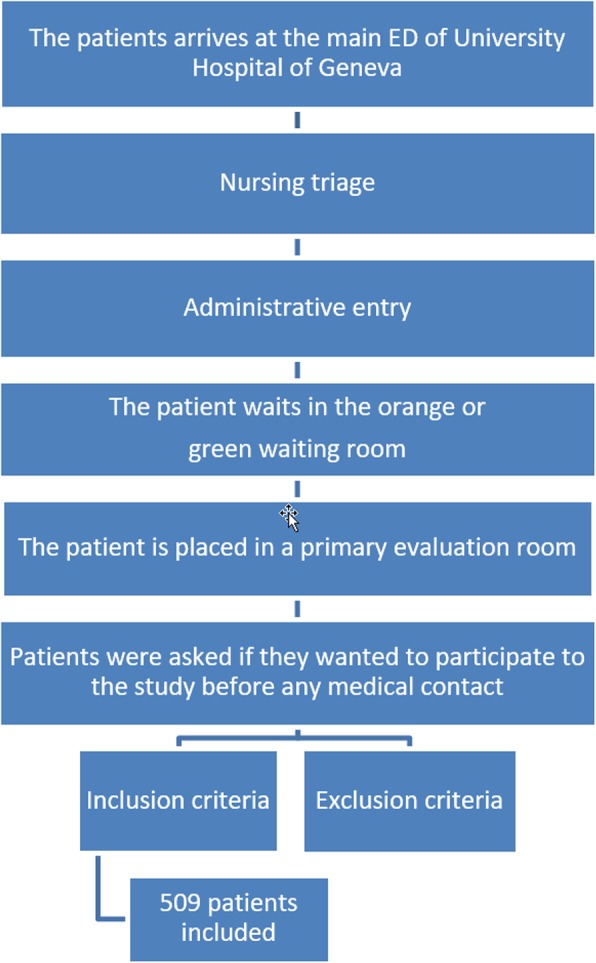
We conducted a questionnaire-based, cross-sectional study among patients attending the emergency unit of a Swiss university hospital in order to explore the key factors influencing wait perception.
A total of 509 patients participated in the study. Appropriate assessment of emergency level by caregivers, the feeling of being forgotten, respect of privacy, and lack of information on the exact waiting time were identified as significant variables for wait perception.
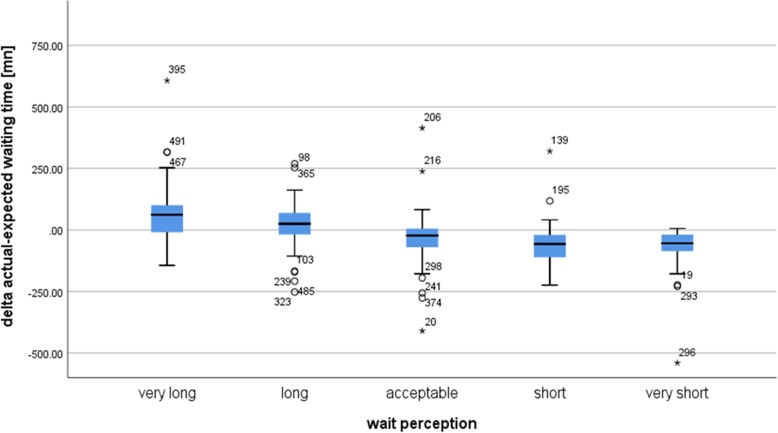
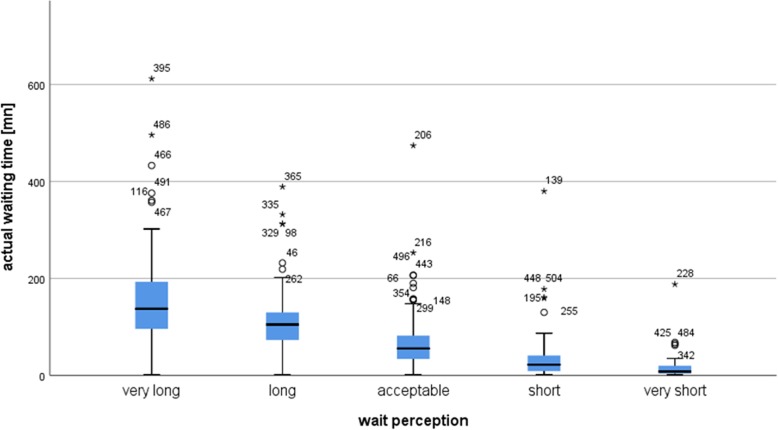
Our study confirmed the existence of a 'golden hour' when the patient is willing to wait until the medical encounter. In case the wait cannot be limited, an appropriate assessment of the emergency level by caregivers and avoiding the patients of feeling being forgotten are very important factors to avoid a negative perception of the waiting time before seeing a doctor.
(ID REQ-2016-00555).
患者满意度已成为以服务为导向的医疗保健市场中越来越重要的因素。尽管满意度受到许多因素的影响,但与医务人员见面的等待时间已被证明是关键标准之一。然而,等待不是一种客观的体验,有几个因素会影响其感知。
我们对瑞士一所大学医院的急诊部的患者进行了一项基于问卷调查的横断面研究,以探讨影响等待感知的关键因素。
共有 509 名患者参加了这项研究。医护人员对急诊程度的适当评估、被遗忘的感觉、对隐私的尊重以及缺乏有关确切等待时间的信息,被确定为影响等待感知的重要变量。
我们的研究证实了存在一个“黄金时间”,即患者愿意等待直到医疗接触。如果无法限制等待时间,医护人员对急诊程度的适当评估和避免让患者感觉被遗忘,是避免对就医前等待时间产生负面感知的重要因素。
(注册号 REQ-2016-00555)。