• 文献检索
  • 文档翻译
  • 深度研究
  • 学术资讯
  • Suppr Zotero 插件Zotero 插件
  • 邀请有礼
  • 套餐&价格
  • 历史记录
应用&插件
Suppr Zotero 插件Zotero 插件浏览器插件Mac 客户端Windows 客户端微信小程序
定价
高级版会员购买积分包购买API积分包
服务
文献检索文档翻译深度研究API 文档MCP 服务
关于我们
关于 Suppr公司介绍联系我们用户协议隐私条款
关注我们

Suppr 超能文献

核心技术专利:CN118964589B侵权必究
粤ICP备2023148730 号-1Suppr @ 2026

文献检索

告别复杂PubMed语法,用中文像聊天一样搜索,搜遍4000万医学文献。AI智能推荐,让科研检索更轻松。

立即免费搜索

文件翻译

保留排版,准确专业,支持PDF/Word/PPT等文件格式,支持 12+语言互译。

免费翻译文档

深度研究

AI帮你快速写综述,25分钟生成高质量综述,智能提取关键信息,辅助科研写作。

立即免费体验

用于鼻内黏膜给药的改进体外模型:原代嗅觉和呼吸道上皮细胞与永生化鼻细胞系RPMI 2650的比较

Improved In Vitro Model for Intranasal Mucosal Drug Delivery: Primary Olfactory and Respiratory Epithelial Cells Compared with the Permanent Nasal Cell Line RPMI 2650.

作者信息

Ladel Simone, Schlossbauer Patrick, Flamm Johannes, Luksch Harald, Mizaikoff Boris, Schindowski Katharina

机构信息

Institute of Applied Biotechnology, University of Applied Science Biberach, Hubertus-Liebrecht Straße 35, 88400 Biberach, Germany.

Institute of Analytical and Bioanalytical Chemistry, University of Ulm, Albert-Einstein-Allee 11, 89081 Ulm, Germany.

出版信息

Pharmaceutics. 2019 Aug 1;11(8):367. doi: 10.3390/pharmaceutics11080367.

DOI:10.3390/pharmaceutics11080367
PMID:31374872
原文链接:https://pmc.ncbi.nlm.nih.gov/articles/PMC6723747/
Abstract

BACKGROUND

The epithelial layer of the nasal mucosa is the first barrier for drug permeation during intranasal drug delivery. With increasing interest for intranasal pathways, adequate in vitro models are required. Here, porcine olfactory (OEPC) and respiratory (REPC) primary cells were characterised against the nasal tumour cell line RPMI 2650.

METHODS

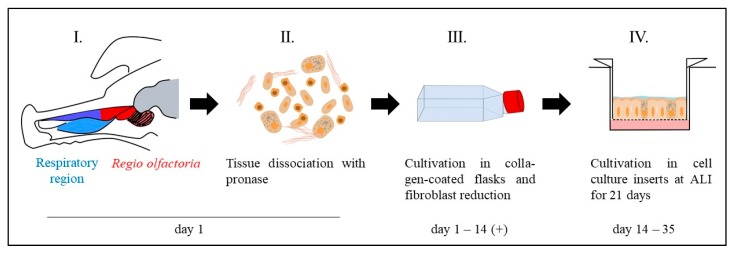
Culture conditions for primary cells from porcine nasal mucosa were optimized and the cells characterised via light microscope, RT-PCR and immunofluorescence. Epithelial barrier function was analysed via transepithelial electrical resistance (TEER), and FITC-dextran was used as model substance for transepithelial permeation. Beating cilia necessary for mucociliary clearance were studied by immunoreactivity against acetylated tubulin.

RESULTS

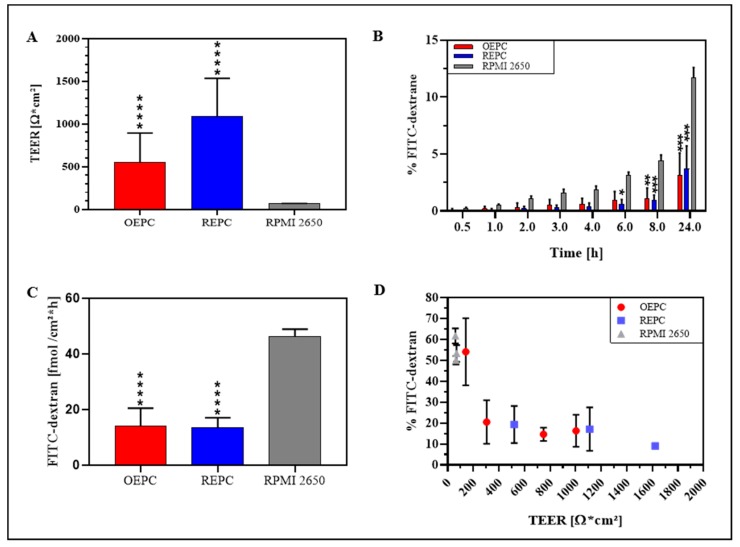
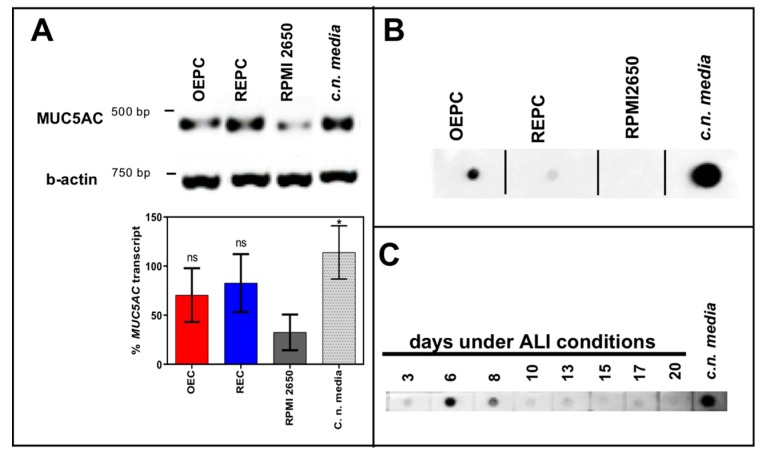
OEPC and REPC barrier models differ in TEER, transepithelial permeation and MUC5AC levels. In contrast, RPMI 2650 displayed lower levels of MUC5AC, cilia markers and TEER, and higher FITC-dextran flux rates.

CONCLUSION

To screen pharmaceutical formulations for intranasal delivery in vitro, translational mucosal models are needed. Here, a novel and comprehensive characterisation of OEPC and REPC against RPMI 2650 is presented. The established primary models display an appropriate model for nasal mucosa with secreted MUC5AC, beating cilia and a functional epithelial barrier, which is suitable for long-term evaluation of sustained release dosage forms.

摘要

背景

鼻黏膜上皮层是鼻腔给药时药物渗透的第一道屏障。随着对鼻腔给药途径的兴趣日益增加,需要合适的体外模型。在此,将猪嗅觉(OEPC)和呼吸(REPC)原代细胞与鼻肿瘤细胞系RPMI 2650进行了表征比较。

方法

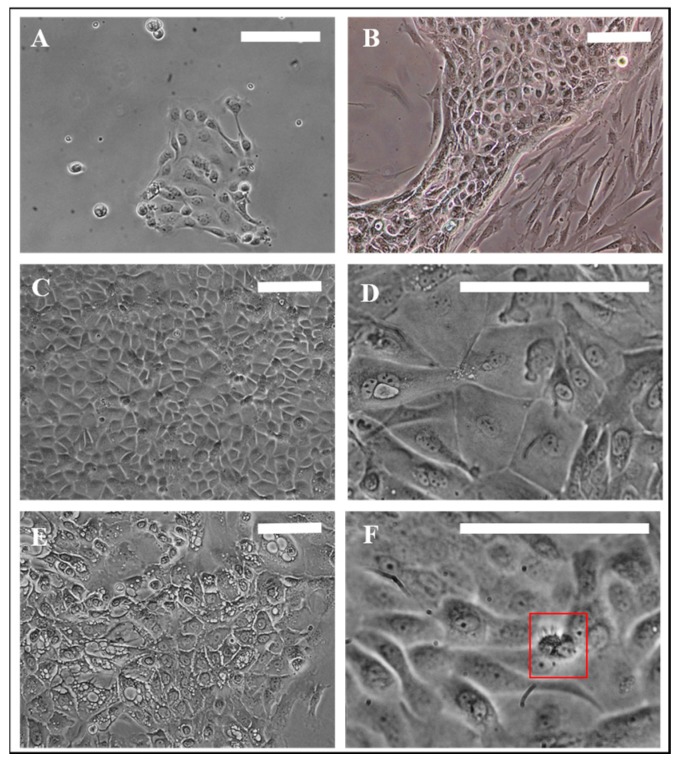
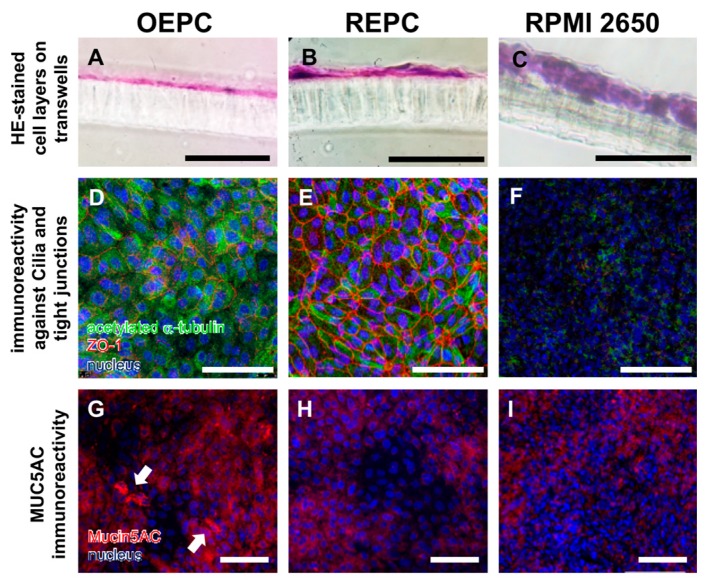
优化了猪鼻黏膜原代细胞的培养条件,并通过光学显微镜、逆转录聚合酶链反应(RT-PCR)和免疫荧光对细胞进行了表征。通过跨上皮电阻(TEER)分析上皮屏障功能,并使用异硫氰酸荧光素(FITC)-葡聚糖作为跨上皮渗透的模型物质。通过针对乙酰化微管蛋白的免疫反应性研究了黏液纤毛清除所必需的摆动纤毛。

结果

OEPC和REPC屏障模型在TEER、跨上皮渗透和MUC5AC水平上存在差异。相比之下,RPMI 2650显示出较低的MUC5AC水平、纤毛标志物和TEER,以及较高的FITC-葡聚糖通量率。

结论

为了在体外筛选鼻腔给药的药物制剂,需要转化性黏膜模型。在此,展示了针对RPMI 2650对OEPC和REPC进行的新颖而全面的表征。所建立的原代模型显示出一个适用于鼻黏膜的模型,具有分泌的MUC5AC、摆动的纤毛和功能性上皮屏障,适用于对缓释剂型进行长期评估。
https://cdn.ncbi.nlm.nih.gov/pmc/blobs/f944/6723747/25a000811272/pharmaceutics-11-00367-g005.jpg
https://cdn.ncbi.nlm.nih.gov/pmc/blobs/f944/6723747/4fcbe7321f3e/pharmaceutics-11-00367-g001.jpg
https://cdn.ncbi.nlm.nih.gov/pmc/blobs/f944/6723747/ed4aafa43ce6/pharmaceutics-11-00367-g002.jpg
https://cdn.ncbi.nlm.nih.gov/pmc/blobs/f944/6723747/131c2d1845e0/pharmaceutics-11-00367-g003.jpg
https://cdn.ncbi.nlm.nih.gov/pmc/blobs/f944/6723747/f59853ed8613/pharmaceutics-11-00367-g004.jpg
https://cdn.ncbi.nlm.nih.gov/pmc/blobs/f944/6723747/25a000811272/pharmaceutics-11-00367-g005.jpg
https://cdn.ncbi.nlm.nih.gov/pmc/blobs/f944/6723747/4fcbe7321f3e/pharmaceutics-11-00367-g001.jpg
https://cdn.ncbi.nlm.nih.gov/pmc/blobs/f944/6723747/ed4aafa43ce6/pharmaceutics-11-00367-g002.jpg
https://cdn.ncbi.nlm.nih.gov/pmc/blobs/f944/6723747/131c2d1845e0/pharmaceutics-11-00367-g003.jpg
https://cdn.ncbi.nlm.nih.gov/pmc/blobs/f944/6723747/f59853ed8613/pharmaceutics-11-00367-g004.jpg
https://cdn.ncbi.nlm.nih.gov/pmc/blobs/f944/6723747/25a000811272/pharmaceutics-11-00367-g005.jpg

相似文献

1
Improved In Vitro Model for Intranasal Mucosal Drug Delivery: Primary Olfactory and Respiratory Epithelial Cells Compared with the Permanent Nasal Cell Line RPMI 2650.用于鼻内黏膜给药的改进体外模型:原代嗅觉和呼吸道上皮细胞与永生化鼻细胞系RPMI 2650的比较
Pharmaceutics. 2019 Aug 1;11(8):367. doi: 10.3390/pharmaceutics11080367.
2
Application of RPMI 2650 as a cell model to evaluate solid formulations for intranasal delivery of drugs.应用RPMI 2650作为细胞模型来评估用于鼻腔给药的固体剂型。
Int J Pharm. 2016 Dec 30;515(1-2):1-10. doi: 10.1016/j.ijpharm.2016.09.086. Epub 2016 Oct 1.
3
Impact of Glycosylation and Species Origin on the Uptake and Permeation of IgGs through the Nasal Airway Mucosa.糖基化和物种来源对IgG通过鼻气道黏膜的摄取和渗透的影响
Pharmaceutics. 2020 Oct 23;12(11):1014. doi: 10.3390/pharmaceutics12111014.
4
The Path from Nasal Tissue to Nasal Mucosa on Chip: Part 1-Establishing a Nasal In Vitro Model for Drug Delivery Testing Based on a Novel Cell Line.从鼻腔组织到芯片上鼻腔黏膜的路径:第1部分——基于新型细胞系建立用于药物递送测试的鼻腔体外模型。
Pharmaceutics. 2023 Aug 30;15(9):2245. doi: 10.3390/pharmaceutics15092245.
5
RPMI 2650 epithelial model and three-dimensional reconstructed human nasal mucosa as in vitro models for nasal permeation studies.RPMI 2650 上皮模型和三维重建的人鼻腔黏膜作为鼻黏膜渗透研究的体外模型。
Eur J Pharm Biopharm. 2010 Feb;74(2):290-7. doi: 10.1016/j.ejpb.2009.08.008. Epub 2009 Sep 4.
6
Tailoring Formulations for Intranasal Nose-to-Brain Delivery: A Review on Architecture, Physico-Chemical Characteristics and Mucociliary Clearance of the Nasal Olfactory Mucosa.定制用于鼻内鼻-脑递送的制剂:关于鼻嗅黏膜的结构、物理化学特性和黏液纤毛清除的综述
Pharmaceutics. 2018 Aug 3;10(3):116. doi: 10.3390/pharmaceutics10030116.
7
An Investigation on Drug Permeability of Sheep Nasal Epithelial Tissue Membranes from the Respiratory and Olfactory Regions.绵羊呼吸区和嗅区鼻上皮组织膜的药物渗透性研究。
Curr Drug Deliv. 2024;21(1):115-125. doi: 10.2174/1567201820666221214105836.
8
Comparison of RPMI 2650 cell layers and excised sheep nasal epithelial tissues in terms of nasal drug delivery and immunocytochemistry properties.RPMI 2650 细胞层与离体绵羊鼻腔黏膜组织在鼻腔给药和免疫细胞化学特性方面的比较。
J Pharmacol Toxicol Methods. 2022 Jan-Feb;113:107131. doi: 10.1016/j.vascn.2021.107131. Epub 2021 Oct 24.
9
Allogenic Fc Domain-Facilitated Uptake of IgG in Nasal Lamina Propria: Friend or Foe for Intranasal CNS Delivery?同种异体Fc结构域促进鼻黏膜固有层中IgG的摄取:对鼻内中枢神经系统给药是福是祸?
Pharmaceutics. 2018 Jul 26;10(3):107. doi: 10.3390/pharmaceutics10030107.
10
The characterization of the human nasal epithelial cell line RPMI 2650 under different culture conditions and their optimization for an appropriate in vitro nasal model.人鼻上皮细胞系RPMI 2650在不同培养条件下的特性及其对合适的体外鼻模型的优化。
Pharm Res. 2015 Feb;32(2):665-79. doi: 10.1007/s11095-014-1494-0. Epub 2014 Aug 22.

引用本文的文献

1
Intranasal Drug Delivery Technology in the Treatment of Central Nervous System Diseases: Challenges, Advances, and Future Research Directions.鼻腔给药技术在中枢神经系统疾病治疗中的应用:挑战、进展与未来研究方向
Pharmaceutics. 2025 Jun 13;17(6):775. doi: 10.3390/pharmaceutics17060775.
2
Intranasal Delivery of Metabolically Resilient Glutathione: Pharmacokinetic, Permeation, and Efficacy Studies.代谢适应性谷胱甘肽的鼻腔给药:药代动力学、渗透及疗效研究
Mol Pharm. 2025 Jul 7;22(7):4145-4157. doi: 10.1021/acs.molpharmaceut.5c00382. Epub 2025 May 22.
3
Development and Characterization of a Primary Ciliated Porcine Airway Model for the Evaluation of In Vitro Mucociliary Clearance and Mucosal Drug Delivery.

本文引用的文献

1
Differential Expression of Mucins in Murine Olfactory Versus Respiratory Epithelium.黏蛋白在鼠类嗅觉与呼吸上皮中的差异表达。
Chem Senses. 2019 Sep 7;44(7):511-521. doi: 10.1093/chemse/bjz046.
2
Pharmacological characterization of the 3D MucilAir™ nasal model.3D MucilAir™ 鼻模型的药理学特征。
Eur J Pharm Biopharm. 2019 Jun;139:186-196. doi: 10.1016/j.ejpb.2019.04.002. Epub 2019 Apr 3.
3
Effect of lipopolysaccharide on diesel exhaust particle-induced junctional dysfunction in primary human nasal epithelial cells.
用于评估体外黏液纤毛清除和黏膜药物递送的原发性纤毛猪气道模型的开发与特性研究
Pharmaceutics. 2025 Apr 2;17(4):462. doi: 10.3390/pharmaceutics17040462.
4
Safe-by-Design Strategies for Intranasal Drug Delivery Systems: Machine and Deep Learning Solutions to Differentiate Epithelial Tissues via Attenuated Total Reflection Fourier Transform Infrared Spectroscopy.鼻内给药系统的设计安全策略:通过衰减全反射傅里叶变换红外光谱法区分上皮组织的机器学习和深度学习解决方案
ACS Pharmacol Transl Sci. 2025 Feb 27;8(3):762-773. doi: 10.1021/acsptsci.4c00643. eCollection 2025 Mar 14.
5
Characterization of a primary cellular airway model for inhalative drug delivery in comparison with the established permanent cell lines CaLu3 and RPMI 2650.与已建立的永生化细胞系CaLu3和RPMI 2650相比,一种用于吸入药物递送的原代细胞气道模型的表征。
In Vitro Model. 2024 Nov 25;3(4-6):183-203. doi: 10.1007/s44164-024-00079-y. eCollection 2024 Dec.
6
Intranasal Nose-to-Brain Drug Delivery via the Olfactory Region in Mice: Two In-Depth Protocols for Region-Specific Intranasal Application of Antibodies and for Expression Analysis of Fc Receptors via In Situ Hybridization in the Nasal Mucosa.鼻腔内嗅区经鼻脑递药:两种用于抗体局部鼻腔应用和通过原位杂交在鼻黏膜中分析 Fc 受体表达的深入方案。
Methods Mol Biol. 2024;2754:387-410. doi: 10.1007/978-1-0716-3629-9_21.
7
A Cell-Based Nasal Model for Screening the Deposition, Biocompatibility, and Transport of Aerosolized PLGA Nanoparticles.一种用于筛选雾化聚乳酸-羟基乙酸共聚物纳米颗粒沉积、生物相容性和转运的基于细胞的鼻腔模型
Mol Pharm. 2024 Mar 4;21(3):1108-1124. doi: 10.1021/acs.molpharmaceut.3c00639. Epub 2024 Feb 9.
8
Research progress in brain-targeted nasal drug delivery.脑靶向鼻腔给药的研究进展
Front Aging Neurosci. 2024 Jan 17;15:1341295. doi: 10.3389/fnagi.2023.1341295. eCollection 2023.
9
The Path from Nasal Tissue to Nasal Mucosa on Chip: Part 2-Advanced Microfluidic Nasal In Vitro Model for Drug Absorption Testing.从鼻组织到芯片上鼻黏膜的路径:第2部分——用于药物吸收测试的先进微流控鼻体外模型。
Pharmaceutics. 2023 Oct 9;15(10):2439. doi: 10.3390/pharmaceutics15102439.
10
The Gut-brain Connection and Episodic Migraine: an Update.肠道-大脑连接与发作性偏头痛:最新进展。
Curr Pain Headache Rep. 2023 Nov;27(11):765-774. doi: 10.1007/s11916-023-01175-6. Epub 2023 Oct 4.
脂多糖对原代人鼻腔上皮细胞中柴油废气颗粒诱导的连接功能障碍的影响。
Environ Pollut. 2019 May;248:736-742. doi: 10.1016/j.envpol.2019.02.082. Epub 2019 Feb 26.
4
Drug targeting strategies into the brain for treating neurological diseases.针对治疗神经疾病的脑部药物靶向策略。
J Neurosci Methods. 2019 Jan 1;311:133-146. doi: 10.1016/j.jneumeth.2018.10.015. Epub 2018 Oct 16.
5
Tailoring Formulations for Intranasal Nose-to-Brain Delivery: A Review on Architecture, Physico-Chemical Characteristics and Mucociliary Clearance of the Nasal Olfactory Mucosa.定制用于鼻内鼻-脑递送的制剂:关于鼻嗅黏膜的结构、物理化学特性和黏液纤毛清除的综述
Pharmaceutics. 2018 Aug 3;10(3):116. doi: 10.3390/pharmaceutics10030116.
6
Allogenic Fc Domain-Facilitated Uptake of IgG in Nasal Lamina Propria: Friend or Foe for Intranasal CNS Delivery?同种异体Fc结构域促进鼻黏膜固有层中IgG的摄取:对鼻内中枢神经系统给药是福是祸?
Pharmaceutics. 2018 Jul 26;10(3):107. doi: 10.3390/pharmaceutics10030107.
7
Pharmacological Characterization of the RPMI 2650 Model as a Relevant Tool for Assessing the Permeability of Intranasal Drugs.RPMI 2650 模型作为评估鼻内药物渗透性的相关工具的药理学特征。
Mol Pharm. 2018 Jun 4;15(6):2246-2256. doi: 10.1021/acs.molpharmaceut.8b00087. Epub 2018 May 10.
8
Mechanism of intranasal drug delivery directly to the brain.鼻内给药直接作用于大脑的机制。
Life Sci. 2018 Feb 15;195:44-52. doi: 10.1016/j.lfs.2017.12.025. Epub 2017 Dec 22.
9
A comprehensive screening platform for aerosolizable protein formulations for intranasal and pulmonary drug delivery.一种用于鼻内和肺部给药的可雾化蛋白质制剂的综合筛选平台。
Int J Pharm. 2017 Oct 30;532(1):537-546. doi: 10.1016/j.ijpharm.2017.09.027. Epub 2017 Sep 14.
10
Is RPMI 2650 a Suitable In Vitro Nasal Model for Drug Transport Studies?RPMI 2650是用于药物转运研究的合适体外鼻腔模型吗?
Eur J Drug Metab Pharmacokinet. 2018 Feb;43(1):13-24. doi: 10.1007/s13318-017-0426-x.