Koch Eugen Viktor, Bendas Sebastian, Nehlsen Kristina, May Tobias, Reichl Stephan, Dietzel Andreas
Institute of Microtechnology, TU Braunschweig, Alte Salzdahlumer Str. 203, 38124 Braunschweig, Germany.
Center of Pharmaceutical Engineering, Franz-Liszt Str. 35 a, 38106 Braunschweig, Germany.
Pharmaceutics. 2023 Oct 9;15(10):2439. doi: 10.3390/pharmaceutics15102439.
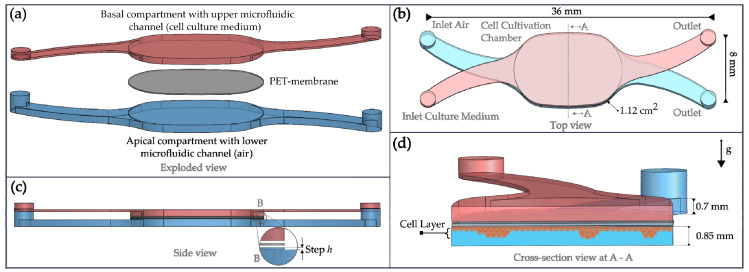
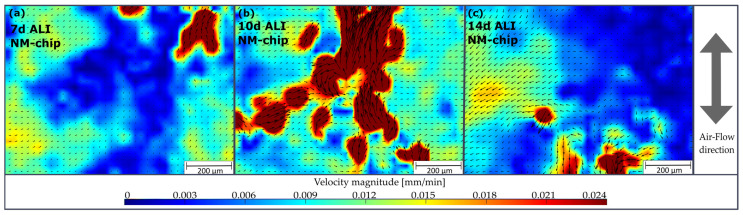
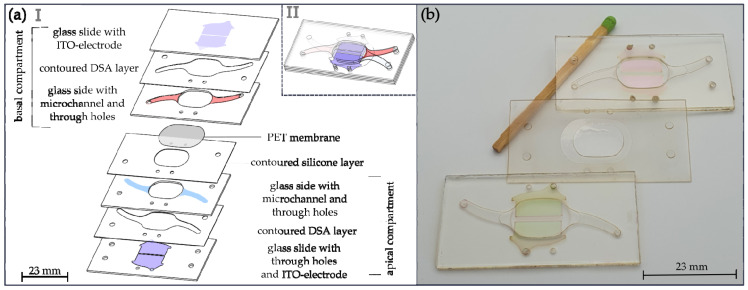
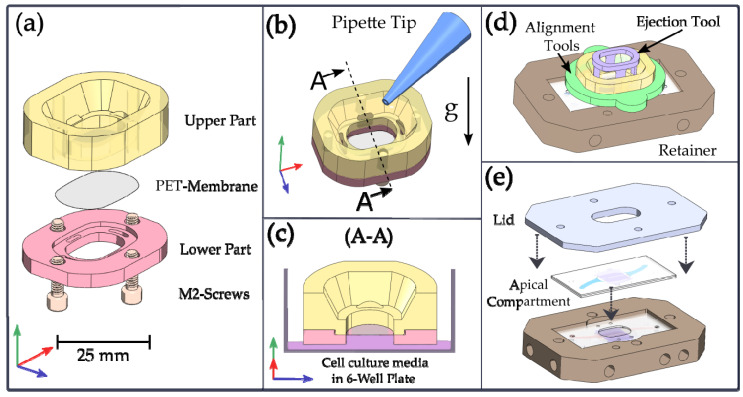
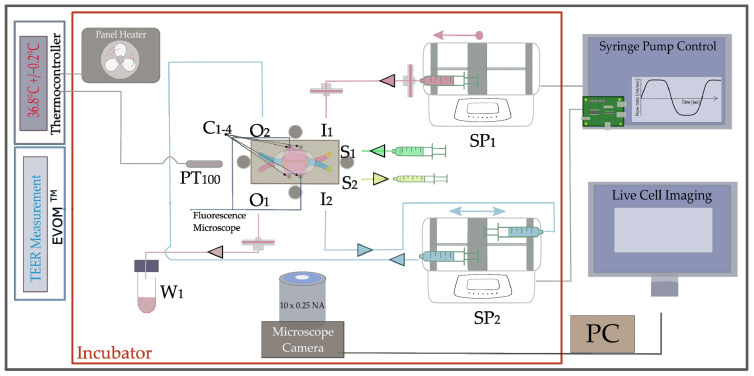
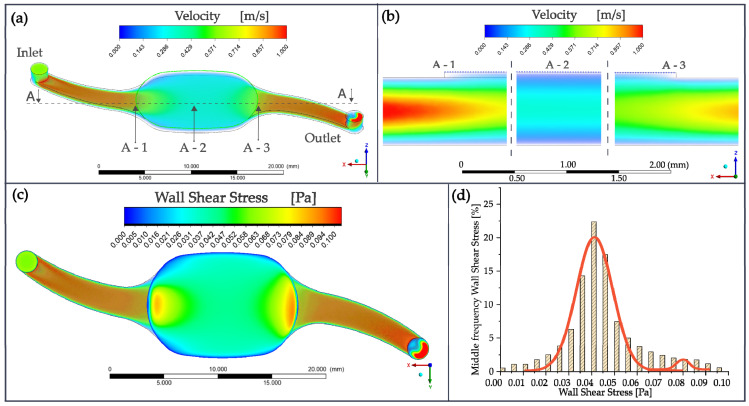
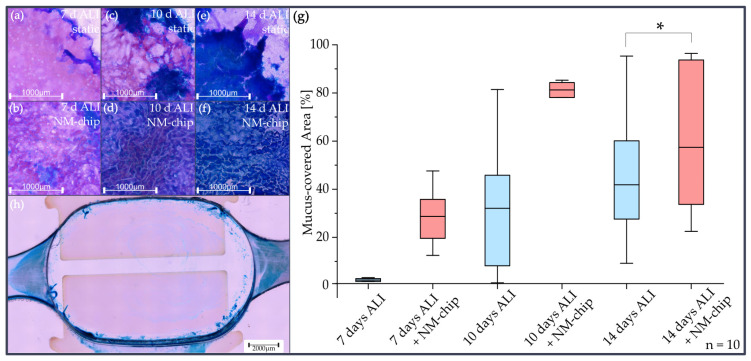
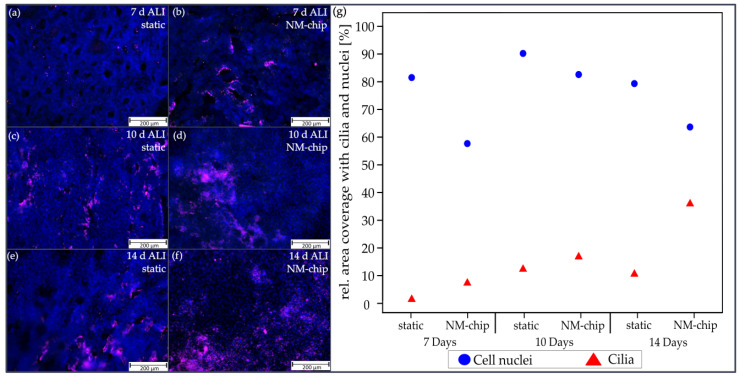
The nasal mucosa, being accessible and highly vascularized, opens up new opportunities for the systemic administration of drugs. However, there are several protective functions like the mucociliary clearance, a physiological barrier which represents is a difficult obstacle for drug candidates to overcome. For this reason, effective testing procedures are required in the preclinical phase of pharmaceutical development. Based on a recently reported immortalized porcine nasal epithelial cell line, we developed a test platform based on a tissue-compatible microfluidic chip. In this study, a biomimetic glass chip, which was equipped with a controlled bidirectional airflow to induce a physiologically relevant wall shear stress on the epithelial cell layer, was microfabricated. By developing a membrane transfer technique, the epithelial cell layer could be pre-cultivated in a static holder prior to cultivation in a microfluidic environment. The dynamic cultivation within the chip showed a homogenous distribution of the mucus film on top of the cell layer and a significant increase in cilia formation compared to the static cultivation condition. In addition, the recording of the ciliary transport mechanism by microparticle image velocimetry was successful. Using FITC-dextran 4000 as an example, it was shown that this nasal mucosa on a chip is suitable for permeation studies. The obtained permeation coefficient was in the range of values determined by means of other established in vitro and in vivo models. This novel nasal mucosa on chip could, in future, be automated and used as a substitute for animal testing.
鼻粘膜易于接触且血管高度丰富,为药物的全身给药开辟了新的机会。然而,存在几种保护功能,如粘液纤毛清除功能,这是一种生理屏障,对候选药物来说是难以克服的障碍。因此,在药物研发的临床前阶段需要有效的测试程序。基于最近报道的永生化猪鼻上皮细胞系,我们开发了一种基于组织相容性微流控芯片的测试平台。在本研究中,微制造了一种仿生玻璃芯片,该芯片配备了可控的双向气流,以在上皮细胞层上诱导生理相关的壁面剪应力。通过开发一种膜转移技术,上皮细胞层可以在微流控环境中培养之前,先在静态支架中进行预培养。与静态培养条件相比,芯片内的动态培养显示细胞层顶部的粘液膜分布均匀,纤毛形成显著增加。此外,通过微粒图像测速法成功记录了纤毛运输机制。以异硫氰酸荧光素 - 葡聚糖4000为例,表明这种芯片上的鼻粘膜适用于渗透研究。获得的渗透系数在通过其他已建立的体外和体内模型确定的值范围内。这种新型的芯片上鼻粘膜未来可以实现自动化,并用作动物试验的替代方法。