Department of Pharmacy, Independent University, Bangladesh (IUB) Bashundhara R/A, Dhaka1229, Bangladesh
School of Biomedical Sciences, Ulster University, Coleraine BT52 1SA, Co. Londonderry, Northern Ireland, United Kingdom.
Biosci Rep. 2019 Aug 23;39(8). doi: 10.1042/BSR20190723. Print 2019 Aug 30.
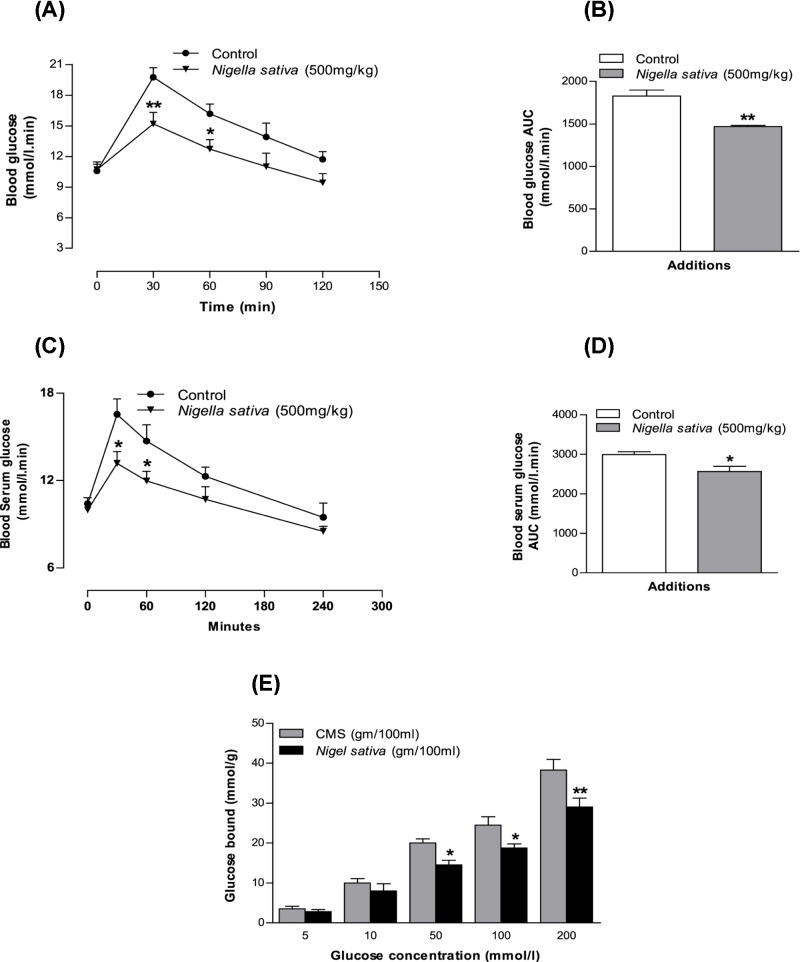
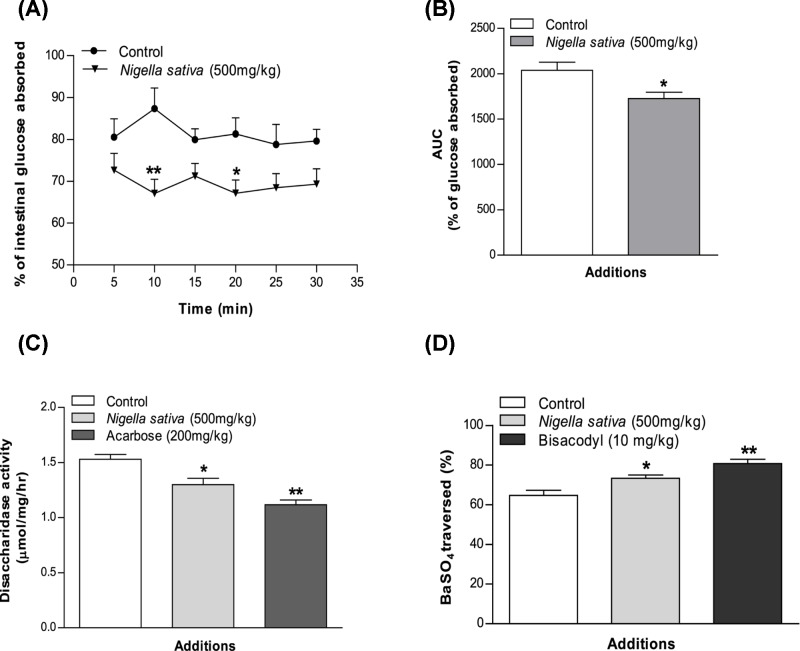
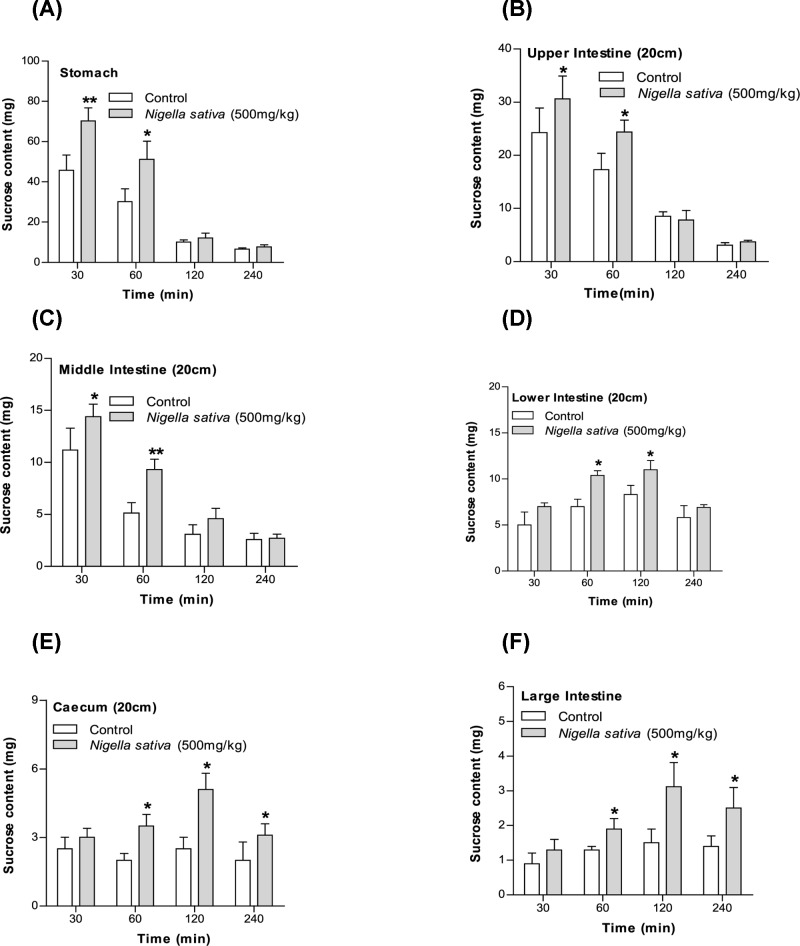
seeds are traditionally reputed as possessing anti-diabetic properties. As a result, we aim to explore the mechanism of its anti-hyperglycemic activity. The present study uses various experimental designs including gastrointestinal (GI) motility, intestinal disaccharidase activity and inhibition of carbohydrate digestion and absorption in the gut. The animals used as type 2 diabetic models were induced with streptozotocin to make them as such. Oral glucose tolerance test was performed to confirm that the animals were indeed diabetic. The extract reduced postprandial glucose, suggesting it interfered with glucose absorption in the gut. It also improved glucose (2.5g/kg, b/w) tolerance in rats. Furthermore, treatment with produced a significant improvement in GI motility, while reduced disaccharidase enzyme activity in fasted rats. The extract produced a similar effect within an acute oral sucrose (2.5g/kg, b/w) load assay. Following sucrose administration, a substantial amount of unabsorbed sucrose was found in six different parts of the GI tract. This indicates that has the potentiality to liberate GI content and reduce or delay glucose absorption. A potential hypoglycemic activity of the extract found in insulin release assay, where the extract significantly improved insulin secretion from isolated rat islets. These concluded present findings give rise to the implication that seeds are generating postprandial anti-hyperglycemic activity within type 2 diabetic animal models via reducing or delaying carbohydrate digestion and absorption in the gut as well as improving insulin secretion in response to the plasma glucose.
种子传统上被认为具有抗糖尿病的特性。因此,我们旨在探索其降血糖活性的机制。本研究使用了各种实验设计,包括胃肠道(GI)蠕动、肠二糖酶活性以及抑制肠道碳水化合物消化和吸收。用于 2 型糖尿病模型的动物用链脲佐菌素诱导使其成为此类动物。口服葡萄糖耐量试验用于确认动物确实患有糖尿病。提取物降低餐后血糖,表明它干扰了肠道中的葡萄糖吸收。它还改善了大鼠的葡萄糖(2.5g/kg,bw)耐量。此外, 治疗显著改善了 GI 蠕动,同时降低了禁食大鼠的二糖酶活性。提取物在急性口服蔗糖(2.5g/kg,bw)负荷试验中产生了类似的效果。在给予蔗糖后,在胃肠道的六个不同部位发现了大量未被吸收的蔗糖。这表明 具有释放 GI 内容物并减少或延迟葡萄糖吸收的潜力。在胰岛素释放测定中发现了提取物的潜在降血糖活性,其中提取物显著改善了从分离的大鼠胰岛中释放的胰岛素。这些结论得出的发现表明, 种子通过减少或延迟肠道碳水化合物的消化和吸收以及改善对血糖的胰岛素分泌,在 2 型糖尿病动物模型中产生餐后抗高血糖活性。