Department of Rheumatology, Erasmus Medical Center, Rotterdam, Netherlands.
Department of Immunology, Erasmus Medical Center, Rotterdam, Netherlands.
Front Immunol. 2019 Jul 17;10:1504. doi: 10.3389/fimmu.2019.01504. eCollection 2019.
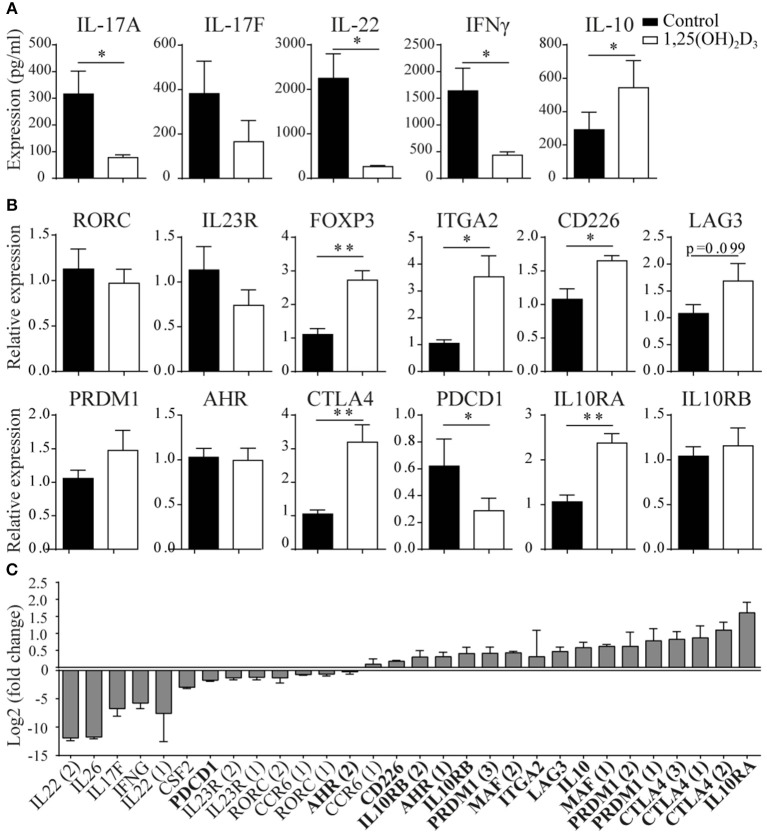
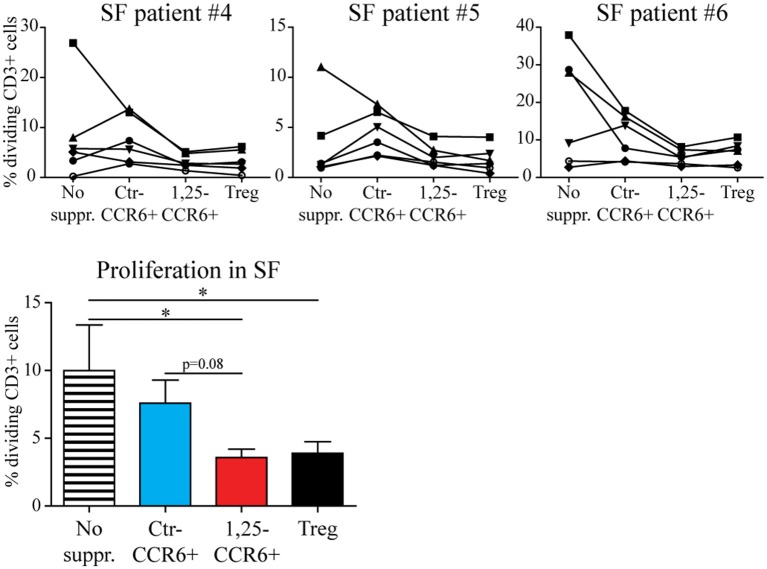
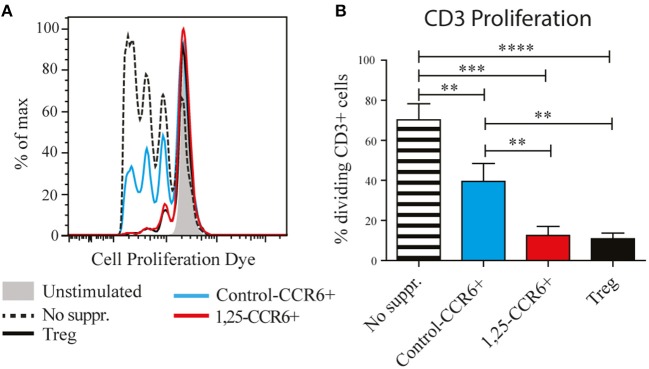
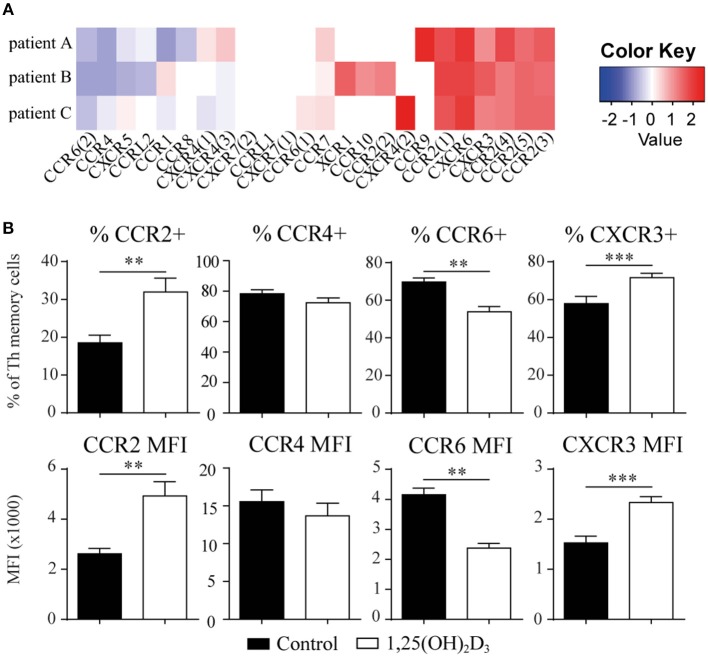
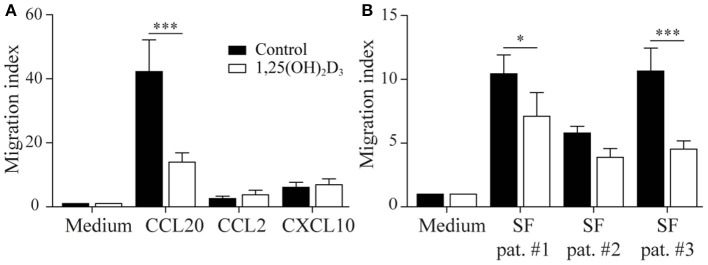
Autoimmune diseases are characterized by an aberrantly activated immune system, resulting in tissue damage and functional disability in patients. An important therapeutic goal is to restore the deregulated immunological balance between pro- and anti-inflammatory T cells. This imbalance is illustrated by elevated levels and activity of memory Th17 cell populations, such as Th17, Th1/Th17, and Th17.1 cells, in various autoimmune diseases. These cells are characterized by the chemokine receptor CCR6, RORC expression and production of IL-17A, IFNγ, and TNFα. Using rheumatoid arthritis (RA) as a model of autoimmune disease, we here demonstrate that pro-inflammatory memory CCR6+ Th cells can switch into anti-inflammatory cells with regulatory capacity using the active vitamin D metabolite 1,25(OH)D. Memory CCR6+ Th cells, excluding Tregs, were sorted from healthy controls or treatment-naïve patients with early rheumatoid arthritis (RA) and cultured with or without 1,25(OH)D. Treatment with 1,25(OH)D inhibited pro-inflammatory cytokines such as IL-17A, IL-17F, IL-22 and IFNγ in memory CCR6+ Th cells from both healthy controls and RA patients. This was accompanied by induction of anti-inflammatory factors, including IL-10 and CTLA4. Interestingly, these formerly pathogenic cells suppressed proliferation of autologous CD3+ T cells similar to classical Tregs. Importantly, the modulated memory cells still migrated toward inflammatory milieus , modeled by RA synovial fluid, and retained their suppressive capacity in this environment. These data show the potential to reset the pathogenic profile of human memory Th cells into non-pathogenic cells with regulatory capacity.
自身免疫性疾病的特征是免疫系统异常激活,导致患者组织损伤和功能障碍。一个重要的治疗目标是恢复促炎和抗炎 T 细胞之间失调的免疫平衡。这种失衡表现在各种自身免疫性疾病中记忆性 Th17 细胞群体(如 Th17、Th1/Th17 和 Th17.1 细胞)水平和活性升高。这些细胞的特征是趋化因子受体 CCR6、RORC 表达和 IL-17A、IFNγ 和 TNFα 的产生。我们以类风湿关节炎(RA)作为自身免疫性疾病的模型,证明了促炎记忆性 CCR6+Th 细胞可以通过使用活性维生素 D 代谢物 1,25(OH)D 转化为具有调节能力的抗炎细胞。从健康对照者或未经治疗的早期类风湿关节炎(RA)患者中分选记忆性 CCR6+Th 细胞,然后在有或没有 1,25(OH)D 的情况下进行培养。用 1,25(OH)D 处理可抑制健康对照者和 RA 患者记忆性 CCR6+Th 细胞中促炎细胞因子如 IL-17A、IL-17F、IL-22 和 IFNγ 的产生。这伴随着抗炎因子的诱导,包括 IL-10 和 CTLA4。有趣的是,这些以前的致病性细胞类似于经典 Tregs 抑制自身 CD3+T 细胞的增殖。重要的是,调节后的记忆细胞仍然向 RA 滑膜液模拟的炎症环境中迁移,并在这种环境中保持其抑制能力。这些数据显示了将人类记忆性 Th 细胞的致病谱重置为具有调节能力的非致病性细胞的潜力。