Charalampaki Patra, Nakamura Makoto, Athanasopoulos Dimitrios, Heimann Axel
Department of Neurosurgery, Cologne Medical Center, University Witten-Herdecke, Witten, Germany.
Institute of Neurosurgical Pathophysiology, Medical University Mainz, Mainz, Germany.
Front Oncol. 2019 Jul 18;9:583. doi: 10.3389/fonc.2019.00583. eCollection 2019.
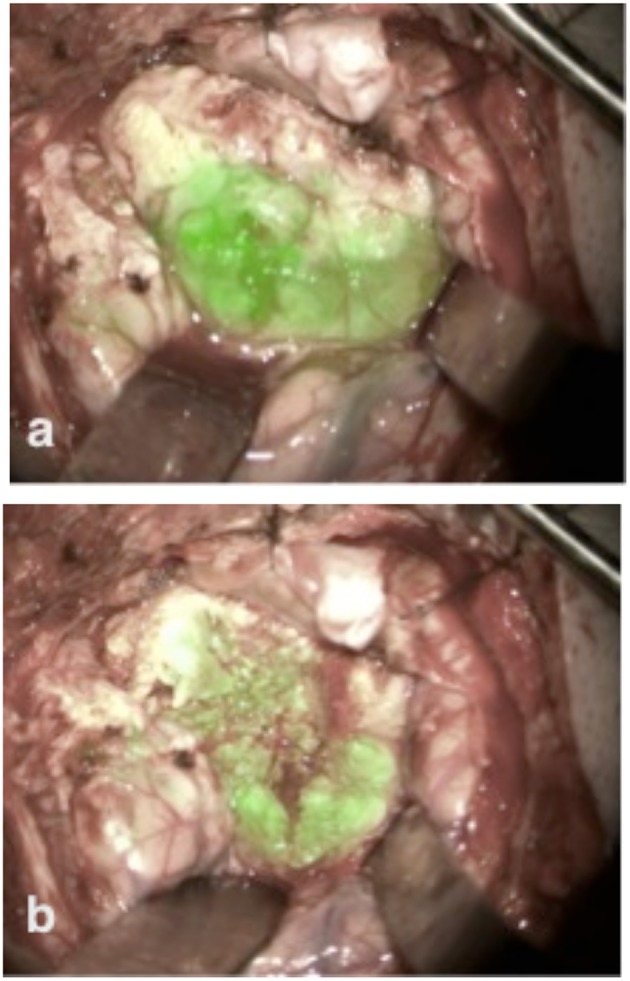
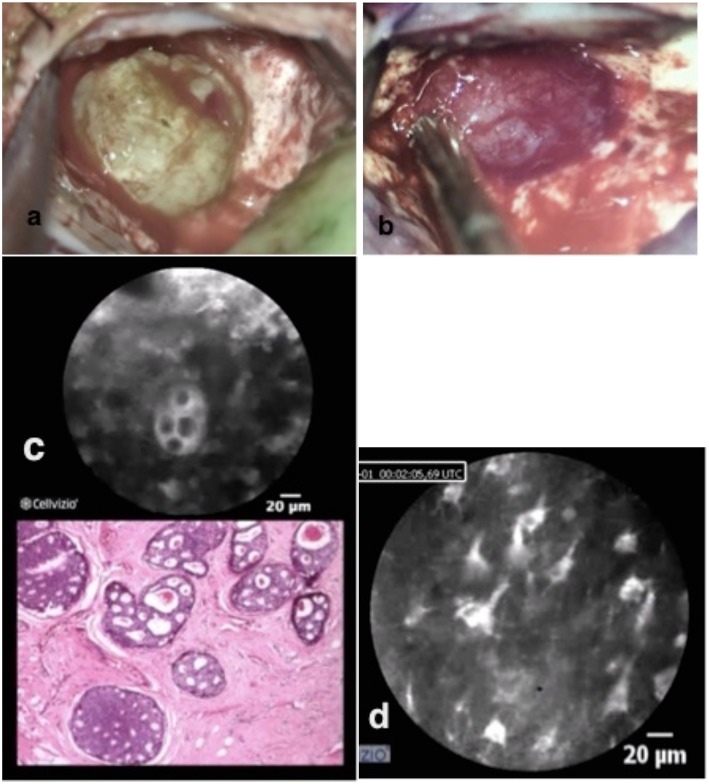
Optimal surgical therapy for brain tumors is the combination of complete resection with minimal invasion and damage to the adjacent normal tissue. To achieve this goal, we need advanced imaging techniques on a scale from macro- to microscopic resolution. In the last decade, the development of fluorescence-guided surgery has been the most influential breakthrough, marginally improving outcomes in brain tumor surgery. Multispectral fluorescence microscopy (MFL) is a novel imaging technique that allows the overlapping of a fluorescent image and a white light image in real-time, with delivery of the merged image to the surgeon through the eyepieces of a surgical microscope. MFL permits the detection and characterization of brain tumors using fluorescent molecular markers such as 5-aminolevulinic acid (5-ALA) or indocyanine green (ICG), while simultaneously obtaining high definition white light images to create a pseudo-colored composite image in real-time. Limitations associated with the use of MFL include decreased light imaging intensity and decreased levels of magnification that may compromise maximal tumor resection on a cellular scale. Confocal laser endomicroscopy (CLE) is another novel advanced imaging technique that is based on miniaturization of the microscope imaging head in order to provide the possibility of microscopy at the cellular level. Clear visualization of the cellular cytoarchitecture can be achieved with 400-fold-1,000-fold magnification. CLE allows on the one hand the intra-operative detection and differentiation of single tumor cells (without the need for intra-operative histologic analysis of biopsy specimens) as well as the definition of borders between tumor and normal tissue at a cellular level, dramatically improving the accuracy of surgical resection. The application and implementation of CLE-assisted surgery in surgical oncology increases not only the number of options for real-time diagnostic imaging, but also the therapeutic options by extending the resection borders of cancer at a cellular level and, more importantly, by protecting the functionality of normal tissue in the adjacent areas of the human brain. In this article, we describe our experience using these new techniques of confocal-assisted fluorescent surgery including analysis on the technology, usability, indications, limitations, and further developments.
脑肿瘤的最佳手术治疗方法是在对相邻正常组织侵袭和损伤最小的情况下进行完全切除。为实现这一目标,我们需要从宏观到微观分辨率的先进成像技术。在过去十年中,荧光引导手术的发展是最具影响力的突破,在一定程度上改善了脑肿瘤手术的结果。多光谱荧光显微镜(MFL)是一种新型成像技术,它允许荧光图像和白光图像实时重叠,并通过手术显微镜的目镜将合并后的图像传送给外科医生。MFL允许使用荧光分子标记物(如5-氨基乙酰丙酸(5-ALA)或吲哚菁绿(ICG))来检测和表征脑肿瘤,同时获得高清晰度白光图像以实时创建伪彩色合成图像。与使用MFL相关的局限性包括光成像强度降低和放大倍数降低,这可能会影响细胞水平上肿瘤的最大切除。共聚焦激光内镜显微镜(CLE)是另一种新型先进成像技术,它基于显微镜成像头的小型化,以便在细胞水平上提供显微镜检查的可能性。通过400倍至1000倍的放大倍数,可以清晰地观察细胞的细胞结构。CLE一方面允许术中检测和区分单个肿瘤细胞(无需对活检标本进行术中组织学分析),以及在细胞水平上定义肿瘤与正常组织之间的边界,从而显著提高手术切除的准确性。CLE辅助手术在外科肿瘤学中的应用和实施不仅增加了实时诊断成像的选择数量,还通过在细胞水平上扩展癌症切除边界,更重要的是通过保护人脑相邻区域正常组织的功能,增加了治疗选择。在本文中,我们描述了我们使用这些共聚焦辅助荧光手术新技术的经验,包括对技术、可用性、适应症、局限性和进一步发展的分析。