Leon-Mimila Paola, Wang Jessica, Huertas-Vazquez Adriana
Division of Cardiology, David Geffen School of Medicine, Department of Medicine, University of California, Los Angeles, Los Angeles, CA, United States.
Front Cardiovasc Med. 2019 Jul 17;6:91. doi: 10.3389/fcvm.2019.00091. eCollection 2019.
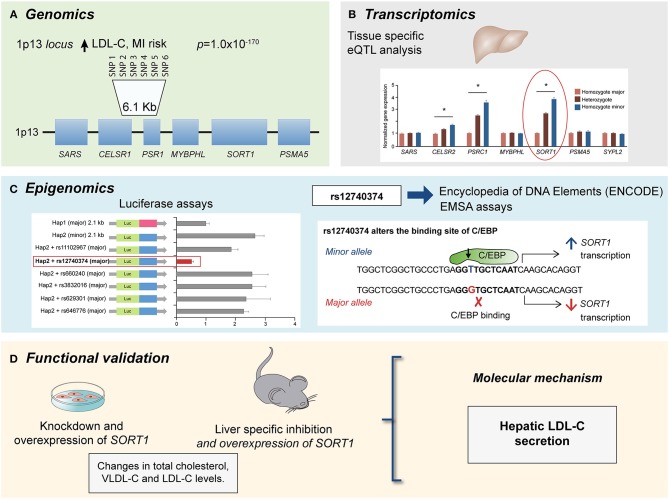
Cardiovascular diseases are the leading cause of death around the world. Despite the larger number of genes and loci identified, the precise mechanisms by which these genes influence risk of cardiovascular disease is not well understood. Recent advances in the development and optimization of high-throughput technologies for the generation of "omics data" have provided a deeper understanding of the processes and dynamic interactions involved in human diseases. However, the integrative analysis of "omics" data is not straightforward and represents several logistic and computational challenges. In spite of these difficulties, several studies have successfully applied integrative genomics approaches for the investigation of novel mechanisms and plasma biomarkers involved in cardiovascular diseases. In this review, we summarized recent studies aimed to understand the molecular framework of these diseases using multi-omics data from mice and humans. We discuss examples of omics studies for cardiovascular diseases focused on the integration of genomics, epigenomics, transcriptomics, and proteomics. This review also describes current gaps in the study of complex diseases using systems genetics approaches as well as potential limitations and future directions of this emerging field.
心血管疾病是全球主要的死亡原因。尽管已鉴定出大量基因和基因座,但这些基因影响心血管疾病风险的确切机制仍未完全明了。用于生成“组学数据”的高通量技术在开发和优化方面的最新进展,使人们对人类疾病所涉及的过程和动态相互作用有了更深入的了解。然而,“组学”数据的综合分析并非易事,存在若干逻辑和计算方面的挑战。尽管存在这些困难,一些研究已成功应用整合基因组学方法来研究心血管疾病中涉及的新机制和血浆生物标志物。在本综述中,我们总结了近期旨在利用来自小鼠和人类的多组学数据来理解这些疾病分子框架的研究。我们讨论了专注于基因组学、表观基因组学、转录组学和蛋白质组学整合的心血管疾病组学研究实例。本综述还描述了使用系统遗传学方法研究复杂疾病时当前存在的差距,以及这一新兴领域的潜在局限性和未来方向。