Hefei University of Technology, Hefei 230009, China.
Int J Mol Sci. 2019 Aug 3;20(15):3800. doi: 10.3390/ijms20153800.
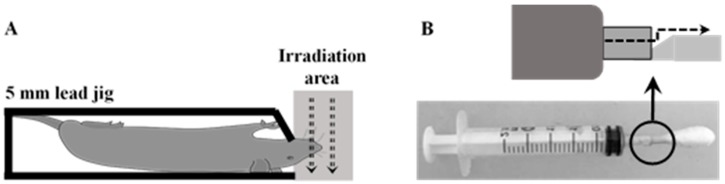
Radiation-induced oral mucositis represents an influential factor in cancer patients' accepted radiation therapy, especially in head and neck cancer. This research investigates the treatment effect of Ecdysterone (a steroid derived from the dry root of ) and Paeonol (a compound derived from ) on radiation-induced oral mucositis and possible underlying mechanisms. Concisely, 20 Gy of X-rays (single-dose) irradiated the cranial localization in rats for the modeling of oral mucositis. The therapeutic effects of Ecdysterone-Paeonol oral cavity directly administered on radiation-induced oral mucositis were investigated by weight changes, direct observations, visual scoring methods, ulcer area/total area, and basic recovery days. Assessments of tumor necrosis factor α and interleukin-6 were performed to evaluate the inflammatory cytokines secretion in the damaged areas of tongues harvested post-treatment, and changes in signaling pathways were investigated by Western blotting. System Drug Target (SysDT) methods revealed the targets of Ecdysterone-Paeonol in order to support compound-target network construction. Four representative targets with different functions were chosen. The binding interactions between the compound and receptor were evaluated by molecular docking to investigate the binding affinity of the ligand to their protein targets. Ecdysterone-Paeonol, administered orally, effectively improved radiation-induced oral mucositis in rats, and the therapeutic effect was better than Ecdysterone administered orally on its own. In this study, calculational chemistry revealed that Ecdysterone-Paeonol affected 19 function targets associated with radiation-induced oral mucositis, including apoptosis, proliferation, inflammation, and wound healing. These findings position Ecdysterone-Paeonol as a potential treatment candidate for oral mucositis acting on multiple targets in the clinic.
辐射诱导的口腔粘膜炎是癌症患者接受放射治疗的一个重要影响因素,尤其是头颈部癌症患者。本研究旨在探讨蜕皮甾酮(一种从干燥的 根部提取的甾体)和丹皮酚(一种从 根皮中提取的化合物)对辐射诱导的口腔粘膜炎的治疗作用及其潜在机制。简要地说,用 20 Gy 的 X 射线(单次剂量)照射大鼠颅定位以建立口腔粘膜炎模型。通过体重变化、直接观察、视觉评分法、溃疡面积/总面积和基本恢复天数,研究蜕皮甾酮-丹皮酚直接用于治疗辐射诱导的口腔粘膜炎的疗效。通过检测肿瘤坏死因子-α和白细胞介素-6,评估治疗后舌损伤部位的炎症细胞因子分泌情况,并通过 Western blot 检测信号通路变化。采用系统药物靶点(SysDT)方法揭示蜕皮甾酮-丹皮酚的靶点,以支持化合物-靶点网络构建。选择了四个具有不同功能的代表性靶点。通过分子对接评估化合物与受体的结合相互作用,以研究配体与蛋白靶标的结合亲和力。蜕皮甾酮-丹皮酚经口给药可有效改善大鼠辐射诱导的口腔粘膜炎,其治疗效果优于单独经口给予蜕皮甾酮。本研究通过计算化学揭示,蜕皮甾酮-丹皮酚影响了与辐射诱导的口腔粘膜炎相关的 19 个功能靶点,包括凋亡、增殖、炎症和伤口愈合。这些发现表明,蜕皮甾酮-丹皮酚可能成为一种针对多种靶点的口腔粘膜炎治疗候选药物。