Faculty of Biotechnology, Department of Molecular Microbiology, University of Wroclaw, Wroclaw, Poland
Faculty of Biotechnology, Department of Molecular Microbiology, University of Wroclaw, Wroclaw, Poland.
Antimicrob Agents Chemother. 2019 Sep 23;63(10). doi: 10.1128/AAC.00739-19. Print 2019 Oct.
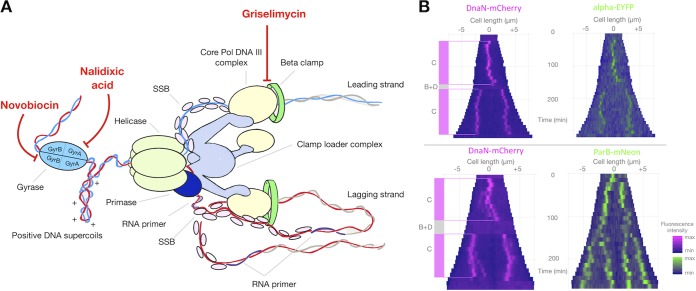
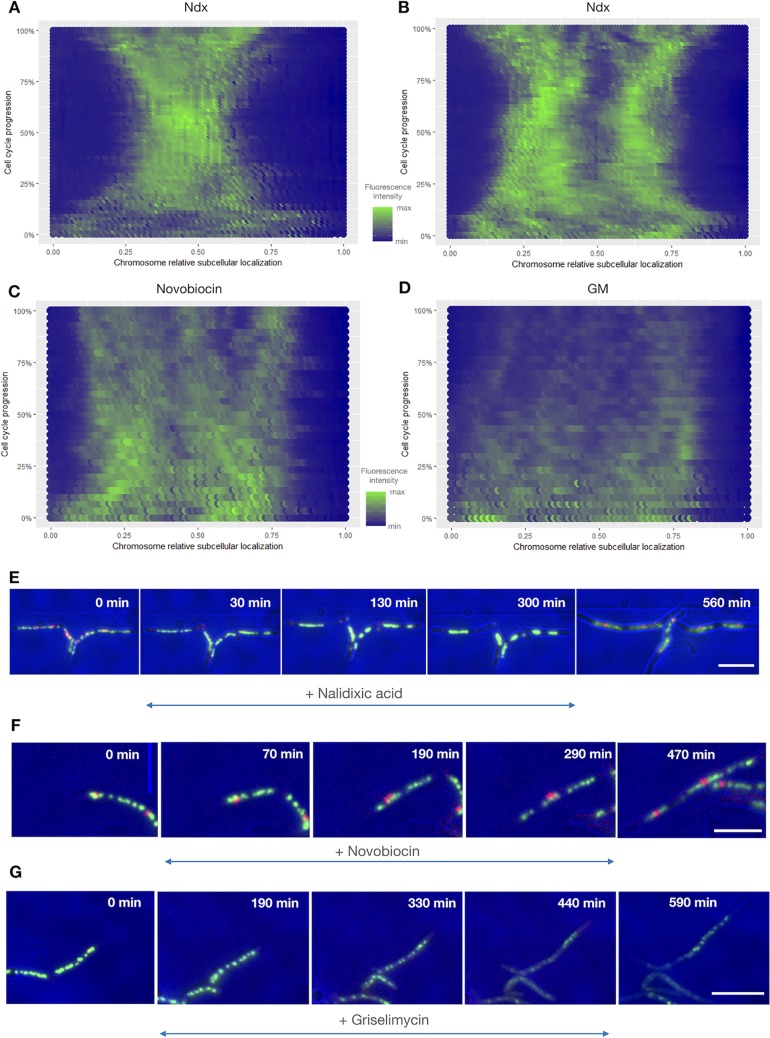
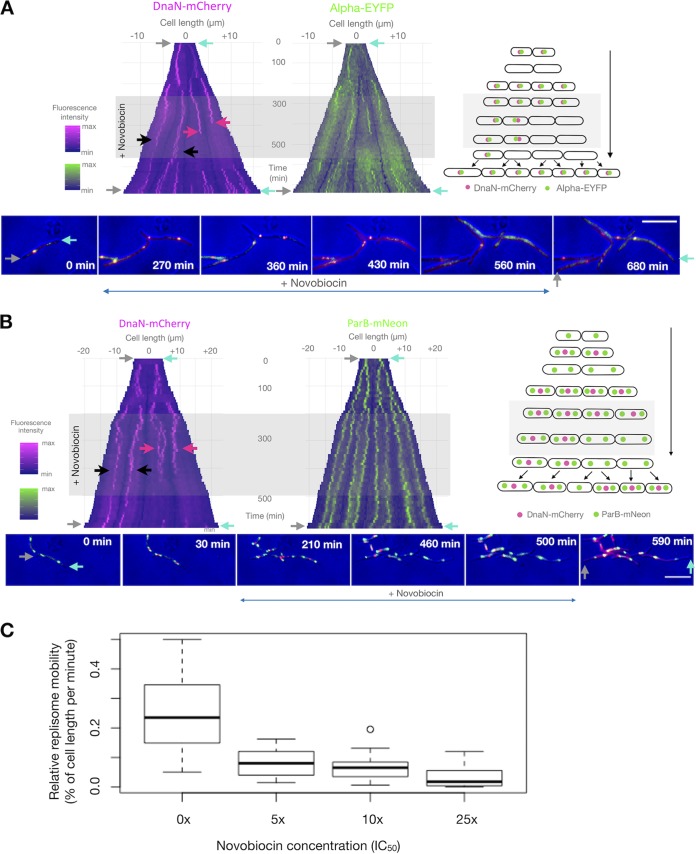
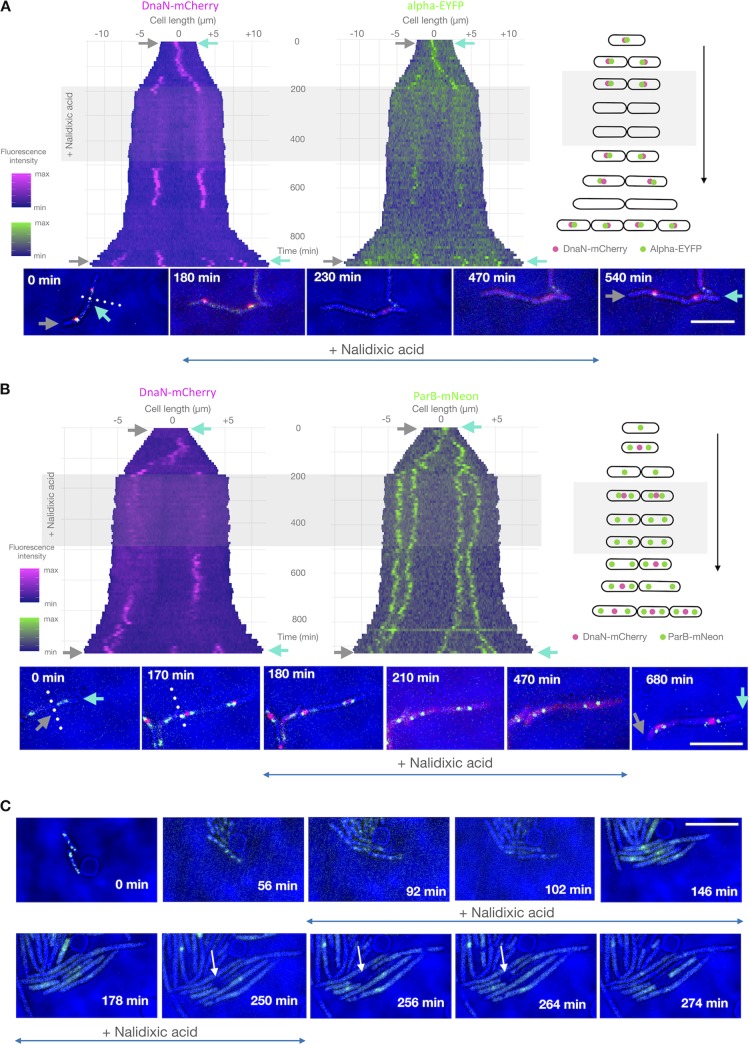
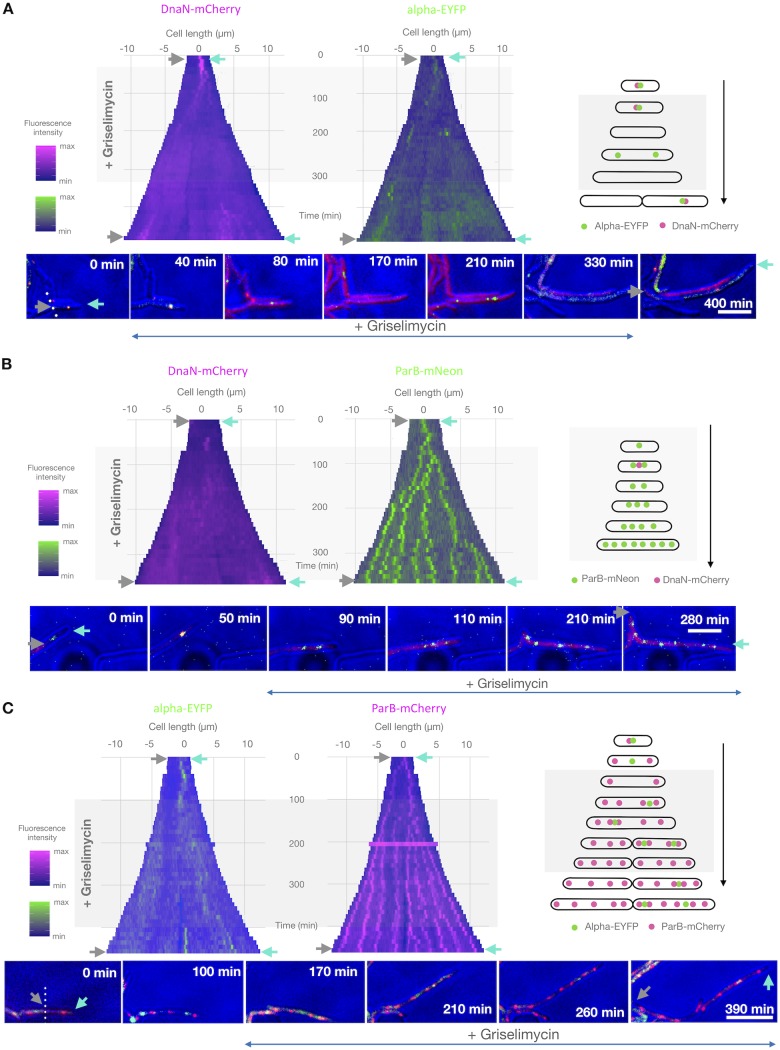
Spreading resistance to antibiotics and the emergence of multidrug-resistant strains have become frequent in many bacterial species, including mycobacteria, which are the causative agents of severe diseases and which have profound impacts on global health. Here, we used a system of microfluidics, fluorescence microscopy, and target-tagged fluorescent reporter strains of to perform real-time monitoring of replisome and chromosome dynamics following the addition of replication-altering drugs (novobiocin, nalidixic acid, and griselimycin) at the single-cell level. We found that novobiocin stalled replication forks and caused relaxation of the nucleoid and that nalidixic acid triggered rapid replisome collapse and compaction of the nucleoid, while griselimycin caused replisome instability, with the subsequent overinitiation of chromosome replication and overrelaxation of the nucleoid. In addition to study target-drug interactions, our system also enabled us to observe how the tested antibiotics affected the physiology of mycobacterial cells (i.e., growth, chromosome segregation, etc.).
抗生素耐药性的传播和多药耐药菌株的出现已在许多细菌物种中变得频繁,包括分枝杆菌,分枝杆菌是严重疾病的病原体,对全球健康有深远影响。在这里,我们使用微流控系统、荧光显微镜和靶向标记荧光报告菌株,在单细胞水平上实时监测复制改变药物(新生霉素、萘啶酸和格氏霉素)添加后复制体和染色体动力学。我们发现新生霉素会使复制叉停滞,并导致核区松弛,萘啶酸会触发快速的复制体崩溃和核区的压缩,而格氏霉素会导致复制体不稳定,随后会过度引发染色体复制和核区过度松弛。除了研究靶标-药物相互作用外,我们的系统还使我们能够观察测试抗生素如何影响分枝杆菌细胞的生理学(即生长、染色体分离等)。